Winter Enrichment for Indoor Cats: 15 Ideas
Winter boredom in indoor cats: 15 cold-weather enrichment ideas, from play and Cat TV to warm perches, puzzles and short daily hunting sessions.
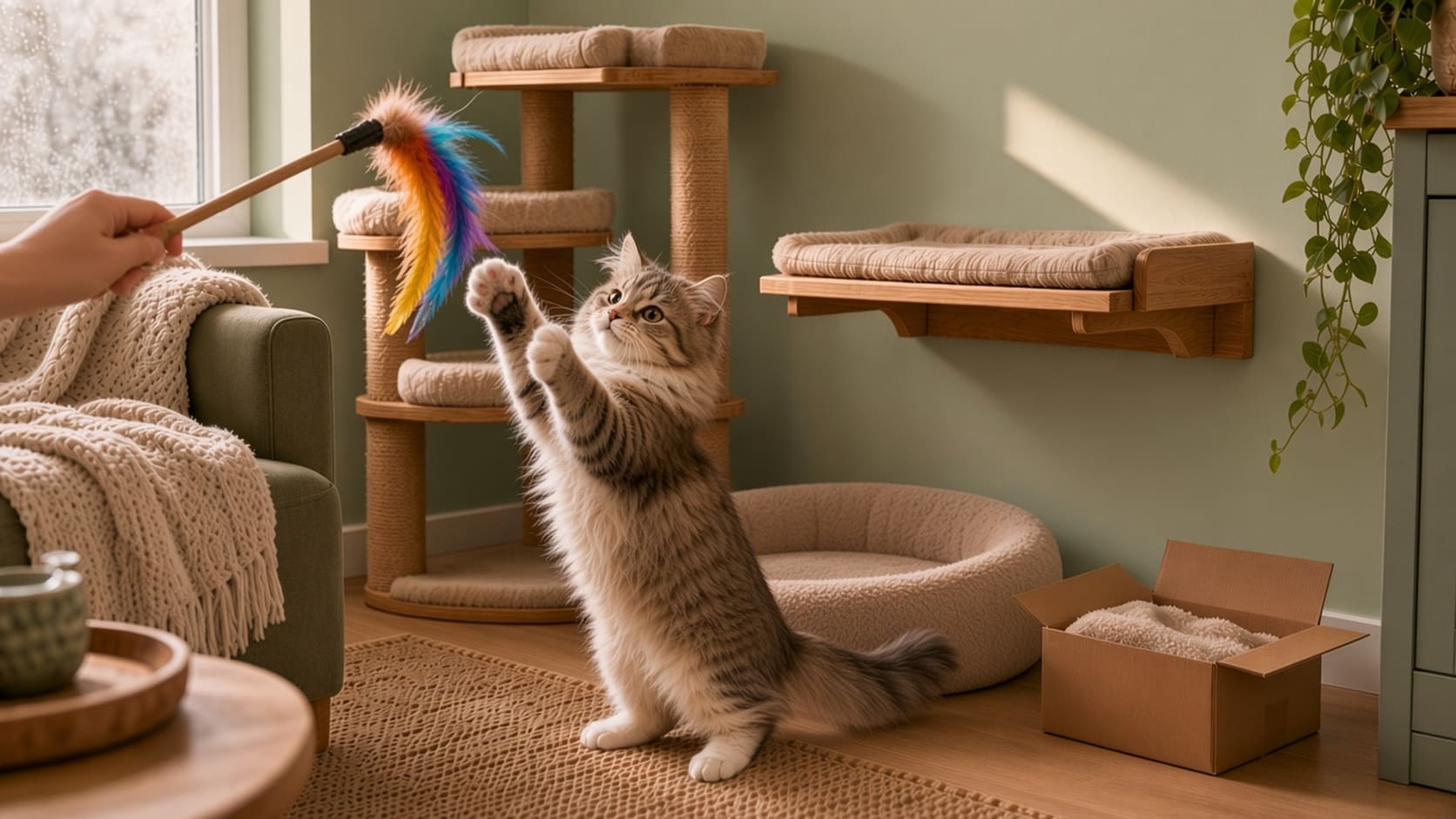
Quick answer: Winter enrichment for indoor cats is a daily hunting sequence, not a new toy dumped under the tree. Use short wand sessions, put part of each meal in a puzzle, add a warm window perch or cat tree, and rotate toys (silvervine is a fair next try if catnip failed). A heated bed helps a cat rest. It does not replace play. If energy or appetite drops suddenly, call the vet before you buy more gear.
Closed windows and 4:30 p.m. sunsets make an apartment quieter than it was in July. That can look like “the cat is lazy,” or it can look like evening zoomies you would rather not have. Ohio State’s Indoor Pet Initiative and the AAFP / FelineVMA well-being principles both treat play, vertical space and foraging as core needs year-round. Winter just makes the gaps more obvious. This is a practical list, not a clinical protocol, and we have not timed these ideas in a lab.
We may earn a commission if you buy through links on this page, at no extra cost to you.
Key takeaways
- Play first, gadgets second. Two or three short wand sessions beat one expensive toy left out all week.
- Move part of the meal into a puzzle. A PetSafe SlimCat is an easy start.
- Give a warm, legal high spot: a heated window perch or a sturdy cat tree.
- Rotate scents and toys. Silvervine is the evidence-based next try if catnip does nothing.
- Warmth is comfort, not enrichment by itself. See how to keep cats warm without heat and heated vs self-warming beds.
- Rule out illness if the change is sudden. Start with is my cat bored, lonely or sick.
15 Winter Enrichment Ideas
1. A short wand session, twice a day
Use a wand such as the Go Cat Da Bird for five to ten minutes, then let the cat “catch” the feather and follow with a small meal or treat. That hunt-pounce-eat sequence is the core of indoor play. Put the wand away when you are done. Details are in how to tire out a cat and best interactive cat toys.
2. A third, even shorter session on dark afternoons
When the sun goes down early, add a three-minute hallway chase before you start dinner. You do not need a new toy for this. The same wand, a different room, and a slightly later time are enough variety.
3. Put part of the kibble in a puzzle
A PetSafe SlimCat turns dry food into a rolling hunt. Start with the openings wide and tighten them as the cat learns. Our best puzzle feeders guide has harder options once this one is easy. Do not switch a wet-food cat to kibble just to use a ball.
4. Hide a few pieces and call it a “snow-day hunt”
Scatter a small handful of the regular food in paper bags (handles cut off), open boxes, or around a cat tree. Stay in the room the first times you do this. It is foraging, not a treasure hunt so difficult the cat gives up.
5. Give the window back
A perch in the sun is winter television that actually has birds in it. If the sill is cold, a K&H heated kitty sill is the product we cover in heated cat window perches. Follow the maker’s cord and wattage instructions, and always let the cat leave the heat.
6. Add height in the room, not only at the window
A sturdy Feandrea-style cat tree or well-anchored shelves give a cat a circuit when the patio is closed. See cat wall shelves vs cat trees and small-apartment vertical space.
7. Rotate the toy box every few days
Leave out two or three toys, box the rest, and swap twice a week. Cats often “get bored of toys” because every mouse is out at once. Do cats get bored of their toys explains the rotation idea.
8. Run a silvervine or catnip session
If catnip has always been a shrug, try silvervine. A 2017 study of 100 cats found 79% responded to silver vine and 68% to catnip, including 22 of 31 catnip non-responders. Use SmartyKat Silly Silver Stix for a short, supervised session and put the stick away.
9. Refresh an old kicker with a pinch of blend
A jar such as From The Field catnip and silver vine makes last year’s mouse interesting again. Recap the jar. This is cheaper than buying a new gadget every gray weekend.
10. Offer a warm rest after play, not instead of play
A K&H Thermo-Kitty heated bed or a self-warming pad is for the nap that follows a hunt. Seniors often need this more than kittens. Compare options in best heated beds for senior cats and self-warming vs heated. A heated bed does not make a cold room safe; the AVMA’s cold-weather safety page is still the baseline for the house itself.
11. Set up a tunnel or cardboard “burrow”
A paper-safe box with two exits, or a tunnel (including a year-round tree-skirt tunnel), gives chase-and-hide play when you cannot roam a yard. Cut handles off bags. Skip string, ribbon and tinsel — tinsel is a veterinary emergency, not décor for a burrow.
12. Use “Cat TV” as a bonus, not a babysitter
A real window beats a screen. If you play a nature video, keep it short, watch the cat, and stop if the staring turns into frustrated chatter with no outlet. Follow it with idea 1 so the “hunt” can end.
13. Teach one simple cue
A target, a high-five, or “up” onto a stool is mental work you can do in a kitchen. Keep sessions under five minutes and pay with a usual treat, not a pile of Thanksgiving turkey. Training is enrichment, not a circus act.
14. Time dry meals, then still play
An automatic feeder can hold breakfast steady on dark workdays. It does not count as enrichment. If you want one, see PETLIBRO vs PetSafe, and still do a wand session when you get home. How to keep a cat busy while at work covers the weekday version of this plan.
15. Build a weekend circuit, then rest
On a raw, indoor Saturday, combine three ideas: a wand hunt, a puzzle breakfast, and a new perch or box. Then leave the cat alone to nap in the warm spot. Enrichment is a rhythm, not a six-hour festival. If you have holiday guests, add a quiet room, as the ASPCA suggests, and keep the circuit in that room so the cat is not entertaining the hallway.
Get the indoor cat checklist
A free setup checklist for busy and holiday weeks, plus occasional notes when useful cat gear actually drops in price.
By subscribing you agree to receive emails from Paw & Sage. Double opt-in, unsubscribe anytime. See our privacy policy.
A Simple Winter Week
| When | What to do |
|---|---|
| Morning | Puzzle or scatter for part of breakfast, then leave a window perch open to the sun |
| After work or school | Wand session, catch, then the rest of the meal |
| Dark late afternoon | Three-minute hallway play if the cat is already restless |
| Two evenings a week | Swap toys or offer a silvervine session |
| Weekend | One “circuit” day, plus a nap zone that is actually warm |
If you share the home with more than one cat, run play separately if they compete, and give each one a high spot and a food station. Resource tension often looks like “winter crankiness.” A calming diffuser can be a support after the environment is fair, not a substitute for enough beds.
When “Boredom” Might Be Something Else
Less play in a 10-year-old cat can be arthritis. A sudden hiding streak can be pain or a urinary problem. Use signs your cat is bored, indoor cat depression, and a vet visit when the change is abrupt, the cat stops eating, or the litter box changes. Enrichment is for a well cat that needs a job.
Products That Support This List
How We Put This List Together
- Play and environment principles come from Ohio State’s Indoor Pet Initiative and the AAFP / FelineVMA well-being statement.
- Cold-weather context comes from the AVMA and PetMD, not from invented indoor temperature rules for every home.
- Product examples are verified listings already used on this site. This is a research guide, not a hands-on test of each toy. See our editorial policy.
Winter does not have to be a lost season for an indoor cat. A wand, a puzzle breakfast, a warm high spot and a toy box you actually rotate will do more than a single holiday gadget.
Get our free indoor cat enrichment checklist
Plus seasonal picks and deals worth knowing about. No spam, unsubscribe anytime.
By subscribing you agree to receive emails from Paw & Sage. Double opt-in, unsubscribe anytime. See our privacy policy.
Sources
This article cites 4 sources in the text. They are linked below.
- Feline Environmental Needs (Ohio State University Indoor Pet Initiative)
- General Principles of Feline Well-Being (American Association of Feline Practitioners / FelineVMA)
- Cold Weather Animal Safety (AVMA)
- How Cold Is Too Cold for Cats? (PetMD)
Common questions
Do indoor cats get bored in winter?
They can. Shorter days, closed windows and fewer outdoor smells cut the background interest in a room. That is not a medical diagnosis. If your cat is hiding, not eating, or suddenly much less active, rule out illness first, then add play, vertical space and foraging. See our guides on signs of boredom and indoor cat depression.
How much play does an indoor cat need in winter?
There is no single official minute count that fits every cat. Feline well-being guidance from the AAFP / FelineVMA and Ohio State's Indoor Pet Initiative emphasizes regular predatory play and environmental variety, not one toy left on the floor. Two or three short wand sessions a day, plus part of a meal in a puzzle, is a practical starting pattern.
What is the best winter enrichment for indoor cats?
A mix works better than one gadget: a daily wand chase, a puzzle or treat ball for part of the food, a warm window perch or cat tree, and a rotating toy box. Warmth matters in a cold room, but a heated bed is a rest spot, not the whole plan.
Are heated beds and window perches safe in winter?
Use models made for pets, follow the maker's instructions, and give the cat a way to leave the heat. Our heated-bed and self-warming guides cover when to pick a plug-in bed versus a self-warming pad. Keep cords protected and do not use human heating pads unless a veterinarian has approved a specific product.
Can I leave an indoor cat in a cold room if they have a heated bed?
No. The AVMA and PetMD both treat cold weather as a safety issue, and a small heated pad does not make an icy room a good place to spend a workday. Keep the living space in a comfortable range, then add beds and perches as extra comfort.
Is Cat TV enough winter enrichment?
A bird window or a short, nature-style video can be a bonus, not a workday plan. Some cats watch; some ignore it; a few get frustrated if they cannot reach the 'prey.' Pair any screen time with a real play session and a way to look out a real window.