How Much Playtime Does a Cat Need a Day? (By Age)
How much playtime does a cat need? AAHA: kittens need several short sessions a day, adults 1–2. When to play, how to mimic the hunting sequence, and signs of too little play.
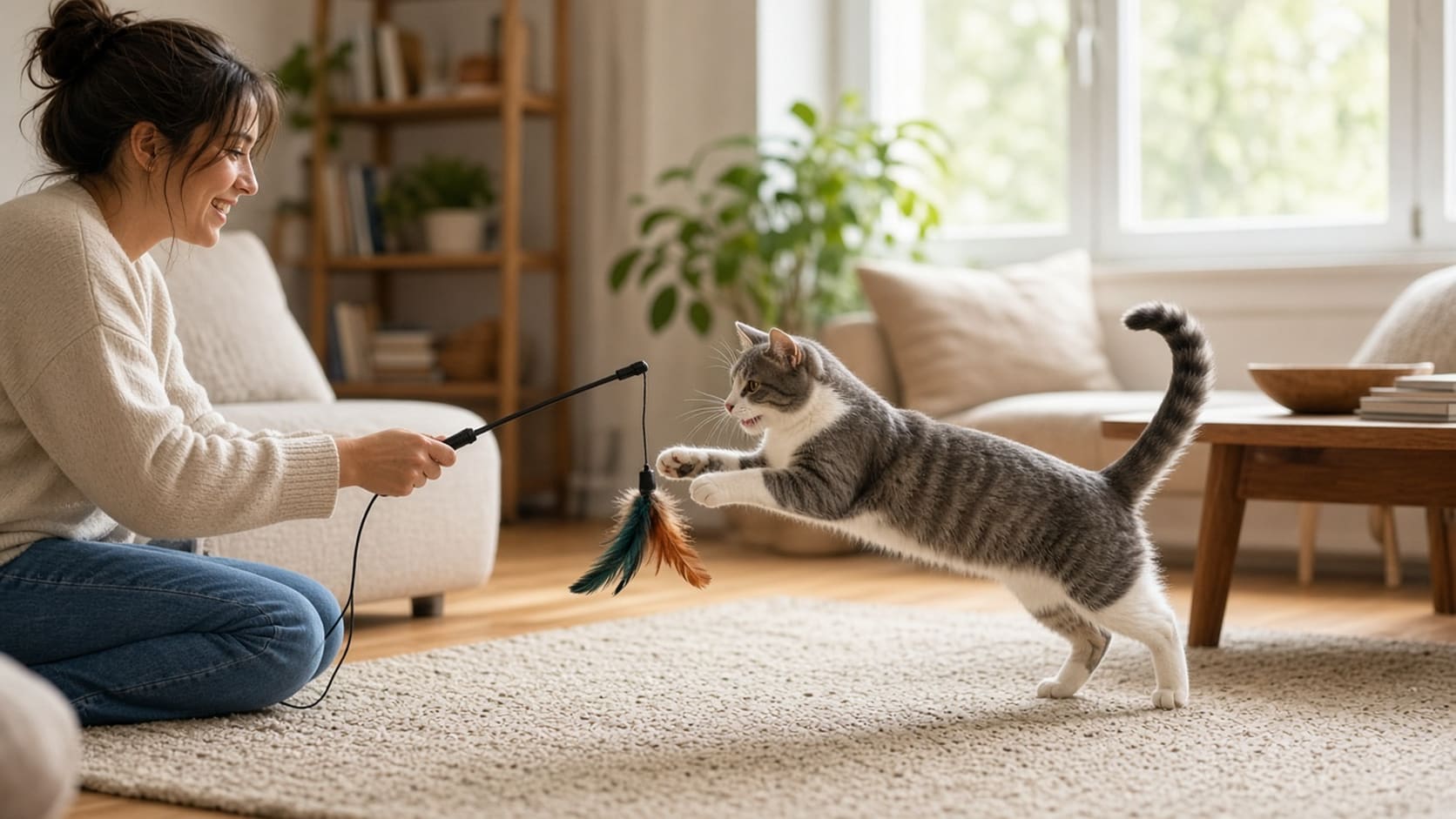
Quick answer: AAHA (the American Animal Hospital Association) says kittens and younger cats typically need several short play sessions a day, while adult cats may thrive with 1–2 daily sessions. Senior cats still enjoy play, at a slower pace and for shorter durations. Mornings, evenings and right before bed work best.
By age
| Age | Sessions (AAHA) |
|---|---|
| Kittens and young cats | Several short sessions a day |
| Adults | 1–2 sessions a day |
| Seniors | Slower pace, shorter sessions |
Individual cats vary. AAHA notes a shy or anxious cat may do better with slow, spaced-out play, and a cat prone to overstimulation needs shorter, more structured sessions so play doesn’t tip into aggression.
When to play
AAHA says cats are crepuscular, most active at dawn and dusk, so mornings and evenings are natural playtimes. A session before bed can help tire your cat out so they’re less likely to wake you at night; see why your cat wakes you at 3 AM.
How to play: follow the hunt
AAHA recommends mimicking the natural hunting sequence: stare, stalk/chase, pounce, grab, kill.
- Drag a wand toy across the floor, or swing it through the air for jumpers and climbers (AAHA).
- Hide it under a blanket and wiggle it (AAHA).
- Slow down near the end and let your cat catch the “prey.”
- Finish with a treat to complete the sequence (AAHA).
Wand toys and puzzle feeders do this best; see our best interactive cat toys and best puzzle feeders.
Signs your cat needs more play
AAHA says cats without outlets for their hunting instincts can become frustrated, leading to aggression, furniture scratching and yowling. VCA Animal Hospitals adds that a stimulating daytime routine with food, social play and exploratory toys can help a cat that vocalizes at night. More ideas: how to tire out a cat, signs your cat is bored, and the indoor enrichment guide.
Paw & Sage is not a veterinary practice. This guide summarizes the cited veterinary sources; ask your veterinarian about any sudden change in behavior.
Get our free indoor cat enrichment checklist
Plus seasonal picks and deals worth knowing about. No spam, unsubscribe anytime.
By subscribing you agree to receive emails from Paw & Sage. Double opt-in, unsubscribe anytime. See our privacy policy.
Sources
This article cites 2 sources in the text. They are linked below.
- How Often Should You Play with Your Cat? (American Animal Hospital Association (AAHA))
- Cat Behavior Problems: Vocalization (VCA Animal Hospitals)
Common questions
How many minutes a day should I play with my cat?
AAHA describes sessions by number rather than total minutes: several short sessions for kittens and young cats, and 1–2 daily sessions for adults. Seniors do better with shorter, slower play.
What time of day should I play with my cat?
Mornings and evenings, because cats are most active at dawn and dusk (AAHA). A session before bed can reduce night waking.
What happens if a cat does not get enough play?
AAHA says frustrated hunting instincts can lead to aggression, furniture scratching and yowling.