Best Cat Scratchers: Cardboard, Sisal, Couch and Mushroom Picks (2026)
The best cat scratchers by type: cardboard lounges, tall sisal posts, couch protectors, mushroom scratchers and a wall-mount board, chosen from ASPCA and Cornell advice.
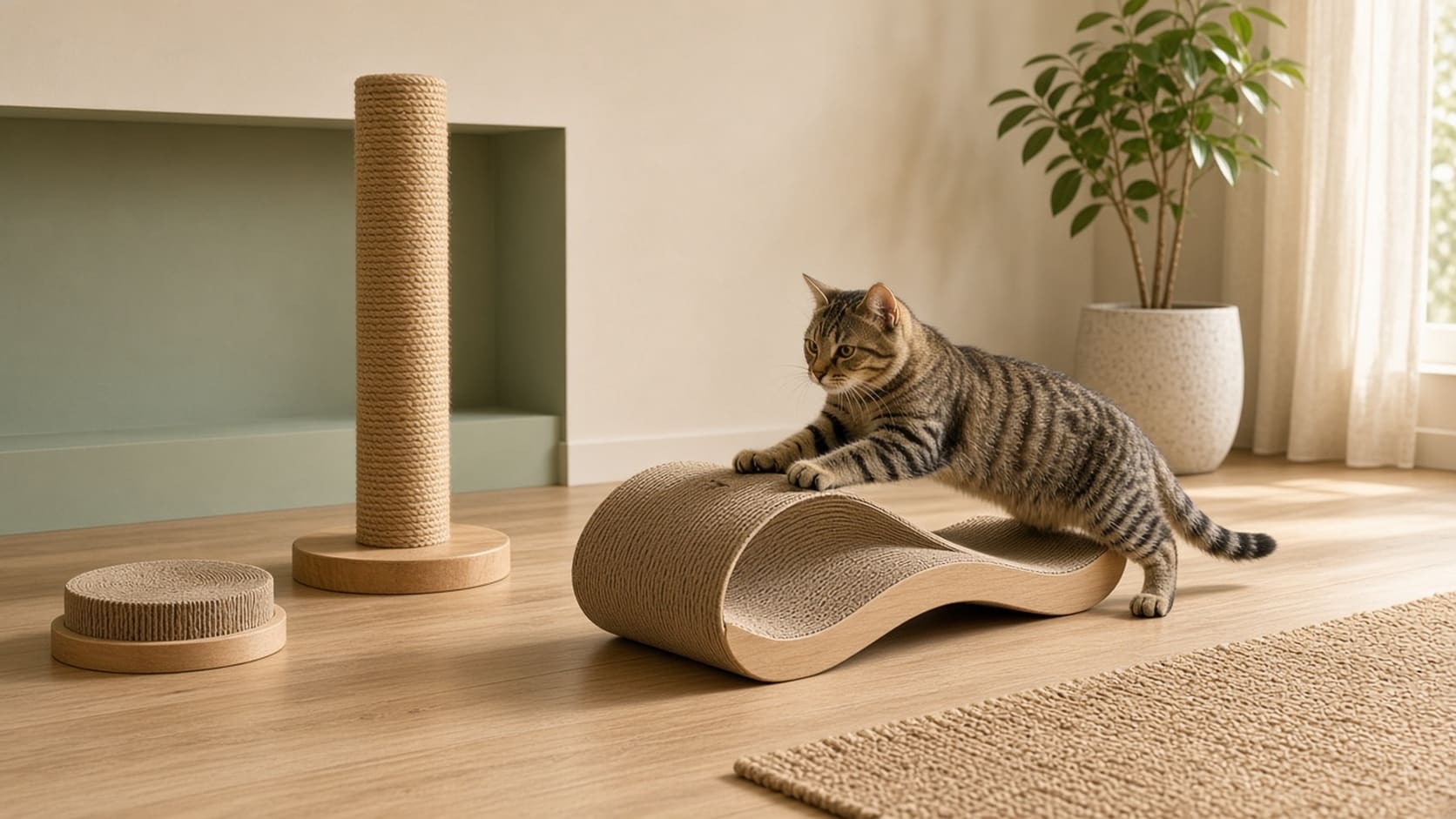
Quick answer: Most cats need two scratchers: a tall, heavy sisal post for vertical stretching and a cardboard pad for flat scratching. Our picks: the SmartCat Pioneer Ultimate Scratching Post (32 in sisal, 16 × 16 in base), the PetFusion Cat Scratching Flip Pad (reversible cardboard lounge), and the Amazon Basics 4-Pack Cardboard Scratchers to put one in every room. For a scratched couch, add a sisal sofa protector. For a design-led wall-mount board, Tuft & Paw’s Tab works flat, inclined or vertical (code PURR20).
We may earn a commission if you buy through links on this page, at no extra cost to you. We have not tested these scratchers at home. Picks are based on ASPCA, Cornell and AAFP scratching guidance and the sellers’ listed specs, checked November 18, 2026.
Key takeaways
- Scratching is normal, not bad behavior: cats scratch to mark territory, stretch and maintain their claws, per the ASPCA and Cornell.
- Offer variety first. Cardboard, sisal, carpet and wood; horizontal, vertical and slanted. Then buy more of what your cat picks.
- Sturdy and tall wins for vertical posts. A post that wobbles gets ignored.
- Location matters as much as material. Put a scratcher next to the couch your cat is attacking.
- Behavior problem? Read how to stop a cat scratching furniture alongside this list.
Best Cat Scratchers at a Glance
| Pick | Type | Listed size | Best for |
|---|---|---|---|
| SmartCat Pioneer Ultimate Scratching Post | Vertical sisal post | 32 in tall, 16 × 16 in base | Full-stretch scratchers |
| PetFusion Cat Scratching Flip Pad | Reversible cardboard lounge | 19.7 × 10.2 × 3.2 in (27 in option) | Cats that scratch and nap |
| SmartyKat Super Scratcher Chaise | Catnip-infused cardboard lounge | See listing | Cats that ignore plain cardboard |
| Amazon Basics Cardboard Scratcher 4-Pack | Flat cardboard pads | 17.4 × 10 × 1.5 in each | Budget, multi-room |
| Sisal Cat Scratch Sofa Protector | Couch-arm sisal mat | 19.7 × 23.6 in | Saving a couch |
| PETEPELA Mushroom Cat Scratching Post | Sisal mushroom | 15.3 in base | Kittens, cute decor |
| Tuft & Paw Tab Scratching Board | Carpet board, wall-mountable | See Tuft & Paw | Modern homes, vertical without a post |
Best Sisal Post: SmartCat Pioneer Ultimate Scratching Post
This is the post most behavior guides describe: tall, heavy-based, sisal. The listing gives a 32-inch height for a full stretch and a 16 × 16 inch base meant to stop tipping and wobbling, with woven sisal instead of carpet. That matches the ASPCA’s point that all cats want a sturdy post that will not shift or collapse, and that most like one tall enough to stretch fully.
Best Cardboard Scratcher: PetFusion Cat Scratching Flip Pad
Searching “cardboard cat scratcher”? PetFusion’s flip pad is reversible, with two designs in one, curved so it doubles as a lounge, and comes with organic catnip leaf. The listing gives 19.7 × 10.2 × 3.2 inches, mentions a larger 27-inch version for bigger cats and a 6-month warranty for manufacturing defects. Flipping it extends its life, which matters because cardboard wears down.
Best for Reluctant Cats: SmartyKat Super Scratcher Chaise
If your cat walks past plain cardboard, a catnip-infused one is the easy next test. SmartyKat says each corrugated layer is infused with concentrated catnip, so scent is released as the cat scratches, with no loose catnip mess. The boxy chaise also works as a bed. Not every cat reacts to catnip; if yours does not, try silver vine on a plain pad instead.
Best Budget Multi-Pack: Amazon Basics Cardboard Scratcher 4-Pack
Four reversible cardboard pads (17.4 × 10 × 1.5 in each, per the listing) mean you can put one by the couch, one by the bed, one at the window and one in the hall. Once you know your cat likes flat cardboard, the ASPCA’s advice is exactly this: add more of that kind in several locations.
Get the indoor cat checklist
A free enrichment and setup checklist for indoor cats, plus occasional notes when useful cat gear drops in price.
By subscribing you agree to receive emails from Paw & Sage. Double opt-in, unsubscribe anytime. See our privacy policy.
Best Cat Scratcher for the Couch: Sisal Sofa Protector
A couch protector does two jobs: it covers the spot your cat is shredding and gives it a sisal surface in the exact place it wants to scratch. This one is a 19.7 × 23.6 inch natural sisal and linen mat that ties around the sofa leg. Read the fit notes: the seller says it needs a couch you can secure with leg ties and an armrest 12 inches thick or less. Pair it with a tall post right next to the couch so you can move the habit over time.
Best Mushroom Scratcher: PETEPELA Mushroom Cat Scratching Post
“Mushroom cat scratcher” is a popular search mostly for looks. This PETEPELA version is 100% sisal with a 15.3-inch-wide base, a pompom and a spring toy, per the listing. It is short, so treat it as a kitten or small-cat scratcher, or a decorative second post, not a replacement for a tall stretching post.
Best Design-Led Board: Tuft & Paw Tab Scratching Board
Tuft & Paw’s Tab lies flat, sits on an incline, or mounts vertically on the wall with the optional mount, so one board covers three scratching styles without a post taking up floor space. Its weight and rubber grounding are meant to stop it sliding. Note the surface: Tuft & Paw says it uses durable carpet, not sisal or cardboard, so it suits cats that already like carpet. Code PURR20 is listed for 20% off furniture and accessories through December 31, 2026; see our Tuft & Paw review.
How to Choose a Cat Scratcher
- Watch where and how your cat scratches. Standing up on the couch arm means a tall post; raking the rug means a flat pad.
- Match the texture. The ASPCA notes some cats prefer a vertical grain for raking and others a horizontal grain for picking.
- Stability first. A post that moves once can be ignored forever.
- Placement. Next to the target furniture, near sleeping spots and in the main room.
- Make it attractive. Rub catnip or silver vine on it, play with a wand toy around it, and reward use.
- Trim nails. Regular trims reduce damage while you retrain: how to trim cat nails at home.
Do You Need a Cat Tree Instead?
A cat tree combines scratching posts with climbing and resting spots, which helps bored indoor cats. If you have room and want one that looks good, see best modern cat trees and the current cat tree Black Friday deals. Short on floor space? Cat wall shelves vs cat trees compares the options.
How We Picked
We started from ASPCA, Cornell and AAFP/ISFM guidance on scratching (surface variety, stability, height, placement), then chose one strong pick per scratcher type from Amazon listings and Tuft & Paw’s catalog, checked November 18, 2026. We did not test durability at home. More side-by-sides are on Compare.
Get our free indoor cat enrichment checklist
Plus seasonal picks and deals worth knowing about. No spam, unsubscribe anytime.
By subscribing you agree to receive emails from Paw & Sage. Double opt-in, unsubscribe anytime. See our privacy policy.
Sources
This article cites 4 sources in the text. They are linked below.
- Destructive Scratching (ASPCA)
- Feline Behavior Problems: Destructive Behavior (Cornell Feline Health Center)
- Feline Environmental Needs Guidelines (AAFP / ISFM)
- Tab Scratching Board (Tuft & Paw)
Common questions
What is the best type of cat scratcher?
The one your cat actually uses. The ASPCA suggests offering several surfaces (cardboard, carpet, wood, sisal) and angles (horizontal, vertical, slanted), then adding more of the kind your cat prefers. Most cats need at least one sturdy vertical post tall enough for a full stretch plus one horizontal cardboard pad.
Are cardboard or sisal scratchers better?
They suit different cats. Cardboard is cheap, satisfying for cats that like to scratch flat, and wears out quickly. Sisal lasts longer and is the usual choice for tall vertical posts. Many homes do best with one of each.
How do I stop my cat scratching the couch?
Put an appealing scratcher right next to the spot your cat is scratching, make the couch less attractive for a while (a sisal sofa protector or double-sided tape), and reward your cat for using the scratcher. Our step-by-step guide on how to stop a cat scratching furniture covers the full plan.
How tall should a cat scratching post be?
Tall enough for your cat to stretch fully, which the ASPCA says most cats like, and sturdy enough not to wobble or tip. For an average adult cat, posts around 30 inches or more are a common target; the SmartCat Pioneer post is listed at 32 inches with a 16 by 16 inch base.
Where should I put a cat scratcher?
Near the places your cat already scratches, near sleeping spots (cats often scratch after waking) and in main living areas. Once you know your cat's preference, add more of that type in several locations, as the ASPCA recommends.
Did Paw & Sage test these scratchers?
No. Picks are based on ASPCA, Cornell and AAFP guidance on scratching plus each product's listed size, material and design. We do not claim durability results we did not measure.