How to Tire Out a Hyper Cat (Especially Before Bed)
A practical plan to burn off a hyper cat's energy, with a play structure that mimics the hunt, the right self-play gear, and an evening routine that ends the 3 AM zoomies.
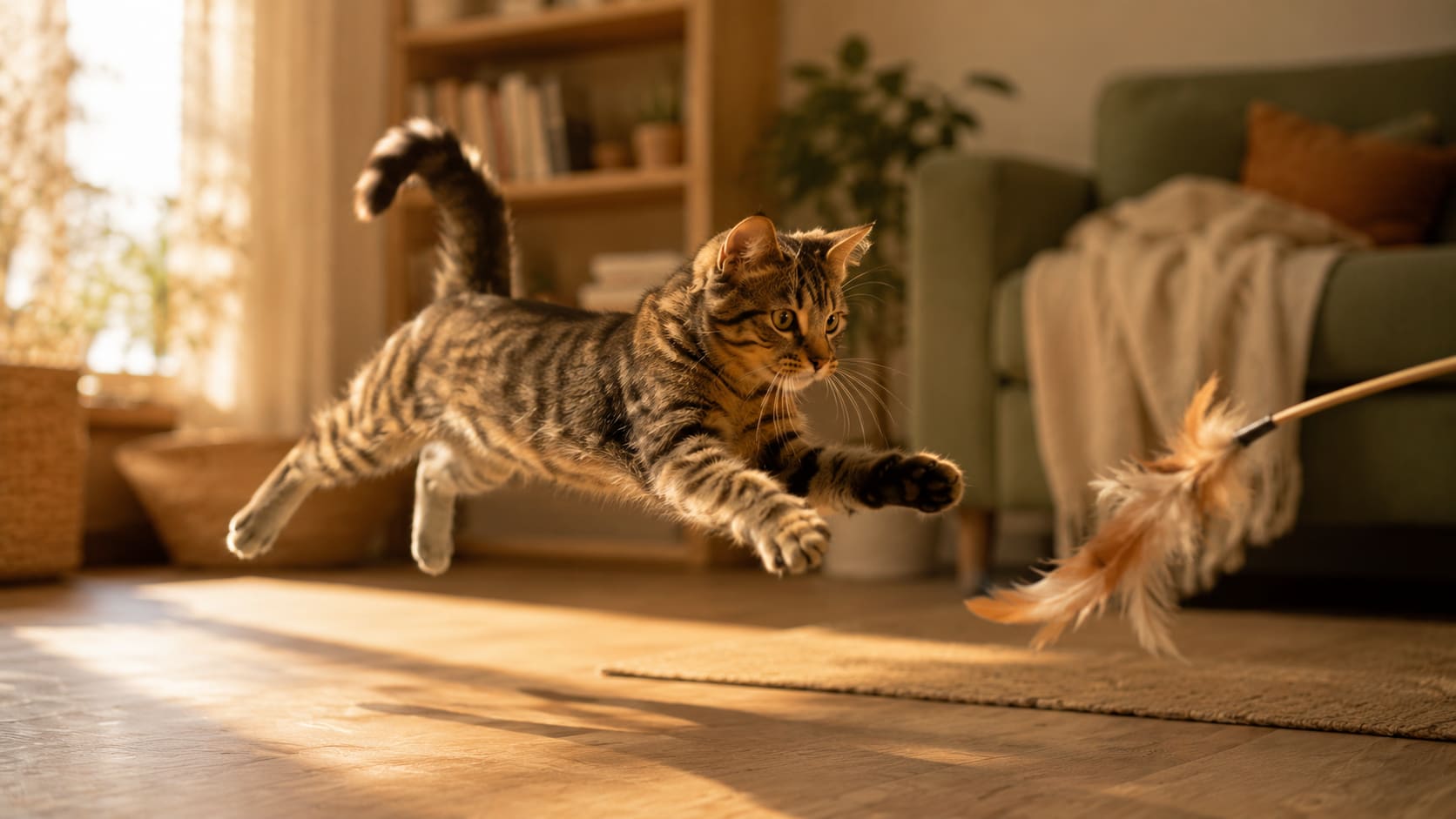
It is 11 PM. You are in bed. Somewhere in the dark, a small set of paws hits the hallway at full speed, ricochets off the couch, and knocks something off a shelf. Your cat is not broken. Your cat is a crepuscular predator with a full tank and nowhere to put it.
A hyper cat is almost never a behavior problem. It is an energy problem, and energy problems have a simple shape: if you do not give the fuel somewhere to go on purpose, your cat will spend it at 3 AM on your blinds. The fix is not to wear your cat out with brute force. It is to run them through the hunt properly, then let the body do what it is built to do next, eat and sleep.
Here is how to actually tire out a hyper cat.
Play the Hunt, Not Just “Play”
Waving a toy around is not the same as tiring a cat out. A cat’s energy drains when it completes a full predatory sequence: stalk, chase, pounce, catch, kill. Random flailing skips most of that and leaves your cat frustrated rather than satisfied.
Run each session like a hunt. Let the toy act like prey: dart it away from your cat, let it “hide” behind furniture, slow it down so your cat can stalk, then let them have the occasional catch so they do not give up.
What helps: A wand toy with a realistic flutter is the most reliable way to trigger a true chase. The Go Cat Da Bird moves like a real bird and pulls even lazy cats into a genuine stalk-and-pounce instead of a bored swat.
End Every Session With a Catch and a Meal
This is the step most people skip, and it is the one that matters most at bedtime.
In the wild the sequence ends with a kill and a meal, which triggers grooming and then sleep. You can recreate that exactly: let your cat catch and “kill” the toy at the end of the session, then feed them. Done right before you go to bed, this rolls your cat straight into the sleepy end of the cycle instead of leaving them revved up.
A cat that hunts, catches, and eats is a cat that sleeps.
Give the Energy a Self-Service Outlet
You cannot be the only source of exercise, especially for a high-drive young cat. Self-play gear lets your cat burn energy when you are busy, at work, or asleep.
What helps: An automatic toy like the SmartyKat Loco Motion moves a wand in unpredictable patterns on a timer, so your cat gets short bursts of chase through the day rather than one big dump of stimulation. A safety note: never leave string or laser toys running unsupervised.
Let Them Actually Run
Some cats, especially young, lean, high-energy breeds, simply need to run, and a 600-square-foot apartment does not allow it. For these cats, an exercise wheel can be a genuine game changer, giving them a way to sprint flat-out indoors.
It is a bigger investment and not every cat takes to one, but for the right cat it converts the 3 AM hallway sprint into a productive outlet.
What helps: The One Fast Cat exercise wheel gives high-drive cats a way to actually run at speed indoors. Introduce it slowly with treats rather than placing your cat on it, and many energetic cats start using it on their own.
Use a Laser, But End It Right
A laser pointer is fantastic cardio and terrible on its own, because your cat can never catch light. Chasing something uncatchable can leave a cat wound up and frustrated.
The fix is simple: always end a laser session by landing the dot on a physical toy or a treat your cat can finally pounce on and “win.” That gives the chase a real conclusion.
What helps: An automatic laser like the PetSafe Bolt adds hands-free cardio, but follow the same rule, finish with a catchable toy so your cat gets the satisfaction of a kill.
Build the Evening Routine
Put it together and the bedtime zoomies usually disappear. The pattern that works for most hyper cats:
- Morning: 10 minutes of wand play before you leave, to take the edge off the day.
- Daytime: a self-play toy on a timer and a window view so the tank does not refill into boredom.
- Evening (the big one): 15 minutes of hunt-style play, building to a real catch.
- Right before bed: the meal, immediately after that catch.
Consistency matters more than intensity. A cat that learns the day reliably ends with a hunt and a meal stops inventing its own 3 AM entertainment.
When Hyper Is Something Else
Most hyper cats are just under-exercised, but watch for the exceptions. A sudden jump in energy or restlessness in an older cat, paired with weight loss or extra hunger, is worth a vet visit to rule out a thyroid issue. And destructive bursts during the day are often boredom rather than excess energy, which is a different fix, covered in why your bored cat destroys everything.
If the night waking is the real problem, we go deep on it in why your cat wakes you up at 3 AM. And if you are still building out a full daily plan, signs your cat is bored helps you read what your cat is actually asking for.
Want to see whether your evening routine is actually working? We’re building CatPlay, a simple app for tracking your cat’s daily play and energy so you can spot the pattern that finally settles them at night.
Sources
This article cites 3 sources in the text. They are linked below.
- Feline Environmental Needs and Enrichment (MSPCA-Angell)
- Playing With Your Cat (Battersea)
- Indoor Pet Initiative — Cats (The Ohio State University College of Veterinary Medicine)
Common questions
How long should I play with my cat to tire them out?
Aim for two daily sessions of ten to fifteen minutes each, with the longer one in the evening. What tires a cat is not the clock but the structure: a build-up, a real chase, and a catch at the end. A focused ten minutes beats a distracted twenty.
Why does my cat get hyper at night?
Cats are crepuscular, most active at dawn and dusk, so an evening energy surge is normal. The problem is an indoor cat with no outlet for it. A structured play session followed by a meal right before your bedtime redirects that surge into the natural hunt-eat-sleep cycle.
Will a second cat tire out a hyper cat?
Sometimes, but it is not a guaranteed fix. A well-matched companion can absorb a lot of energy, but a mismatched pairing can create stress instead. Structured play and self-play outlets are a more reliable first step before adding another cat.
The Indoor Cat Enrichment Starter Plan
A simple download with play, food puzzle, and routine ideas you can use this week.
No spam. Unsubscribe anytime. We respect your inbox.