Best Treat Dispenser Toys for Indoor Cats Who Get Bored
Treat dispenser toys can turn snacks into hunting work. Here is how to choose safe, useful options for bored indoor cats.
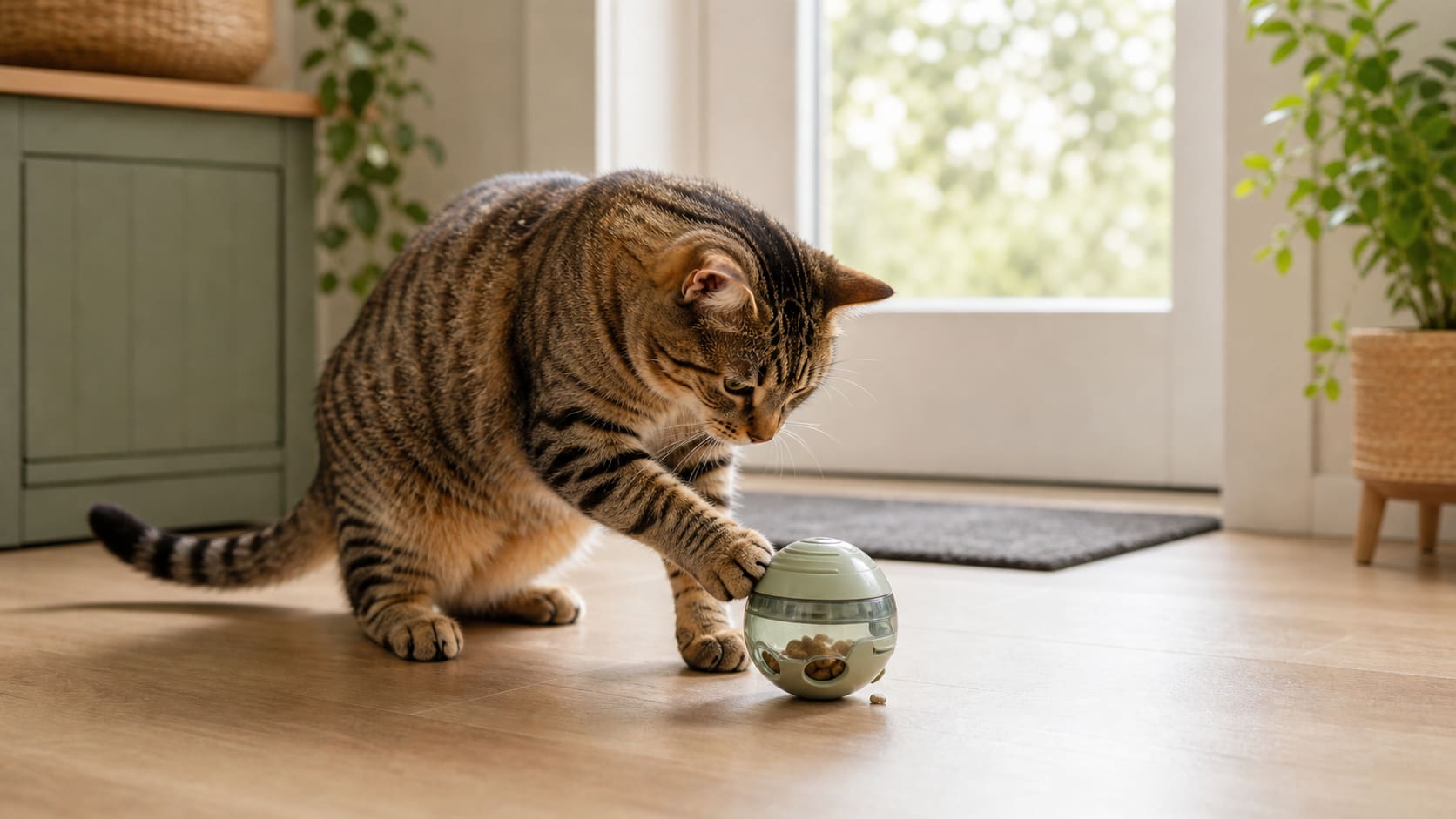
Treat dispenser toys work because they make food behave more like prey.
Instead of a snack appearing in a bowl, your cat has to sniff, paw, bat, wait, and solve. That small amount of effort can turn a bored afternoon into a satisfying hunting task.
The best toy is not the most complicated one. It is the one your cat can solve without quitting.
Start With Easy Wins
Begin with a simple rolling treat ball or beginner puzzle. If the toy is too hard, your cat learns that puzzles are frustrating. If it is too easy, it becomes a bowl with extra steps.
Use part of a meal so the calories are already accounted for.
Add Movement Carefully
Some cats love toys that move, hang, rattle, or flutter. Others get overstimulated or start chewing. This is why the first sessions matter.
What helps: The NHCASURUE Hanging Door-Frame Treat Dispenser fits cats who like batting upward and investigating movement. It combines a treat dispenser with feathers and a bell, so use it as a short supervised puzzle at first. Check the attachment, inspect parts, and put it away if your cat chews instead of plays.
Match the Toy to the Boredom Pattern
For fast eaters, use rolling balls or maze feeders.
For cats who pace, use a small room treat hunt.
For cats who paw at doors or curtains, try vertical or doorway-based puzzles under supervision.
For anxious cats, use quieter food puzzles and lick mats.
For the full brain-work menu, read mental stimulation for cats.
Safety Rules
Do not leave out toys with strings, elastic, loose feathers, bells that can detach, or small parts unless you know your cat uses them safely. Even then, inspect regularly.
Also avoid creating a toy that only works when your cat is frantic. Food puzzles should lower boredom, not wind the cat up until they are crashing around the room.
The Best Routine
Use treat dispenser toys at predictable times:
- After morning play.
- During your work block.
- In the hot afternoon when chase play is too much.
- Before dinner as a small hunting task.
Rotate them so they stay interesting. A toy left out forever becomes furniture. A toy that appears for ten focused minutes can stay valuable for months.
Sources
This article cites 3 sources in the text. They are linked below.
- Feline Environmental Needs and Enrichment (MSPCA-Angell)
- Feline Environmental Needs (Ohio State University Indoor Pet Initiative)
- What Your Cat Needs to Feel Secure (Cat Friendly Homes)
Common questions
Are treat dispenser toys good for cats?
Yes, when they are safe and matched to the cat's skill level. They turn food into problem-solving, which is one of the most natural forms of mental stimulation.
Can I leave treat toys out when I am not home?
Only if the toy has no strings, loose parts, or chewable pieces and your cat has used it calmly under supervision. Many toys should stay supervised.
How many treats should I use?
Use part of a normal meal or a small treat portion. The point is food work, not extra calories.
The Indoor Cat Enrichment Starter Plan
A simple download with play, food puzzle, and routine ideas you can use this week.
No spam. Unsubscribe anytime. We respect your inbox.