20 Indoor Cat Enrichment Ideas That Take 5 Minutes to Set Up
Real, practical ways to make your indoor cat's life less boring — from things you already have at home to small purchases under $30.
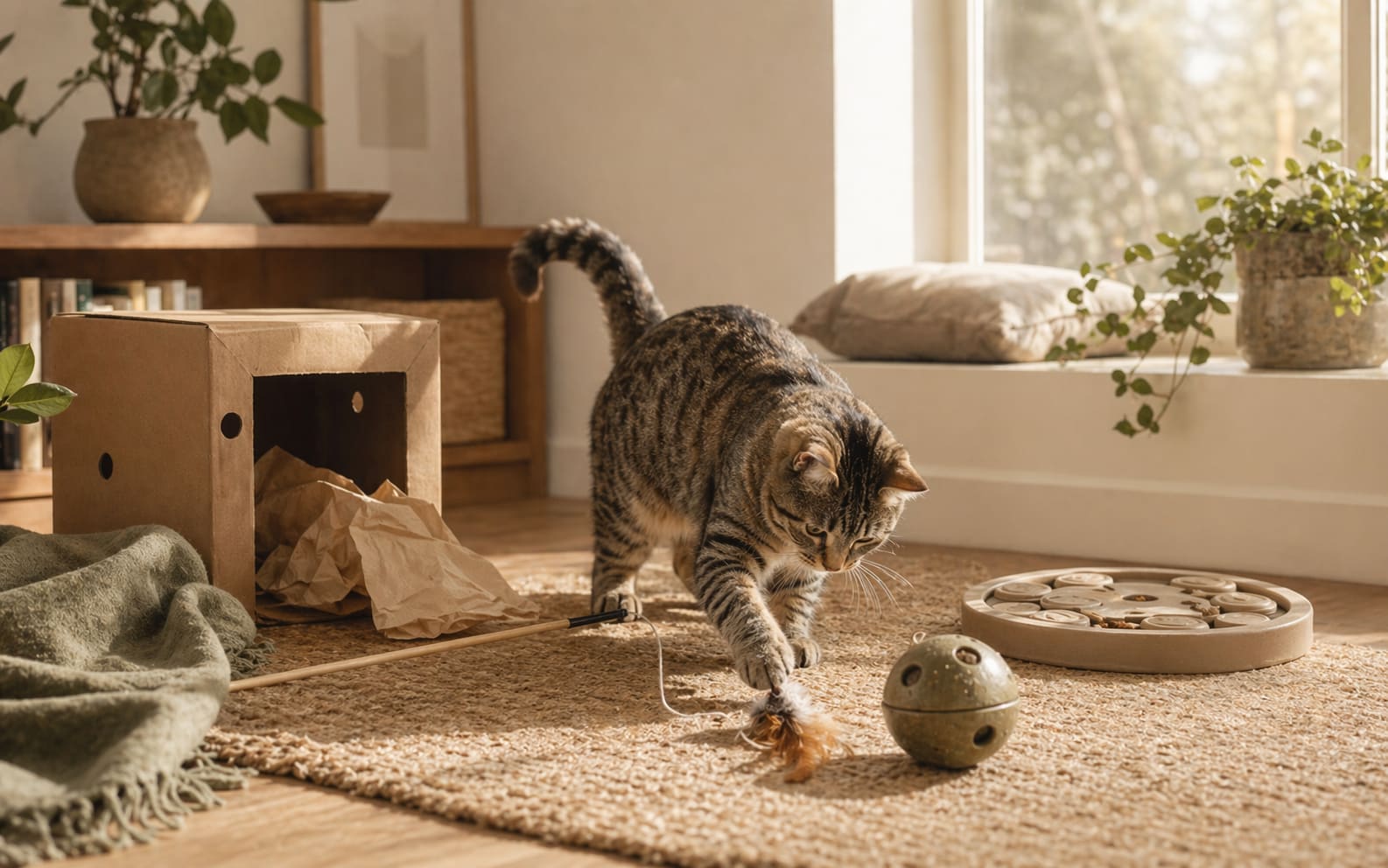
TL;DR: Most “enrichment” advice online assumes you have unlimited time and a renovation budget. Here are 20 things you can actually do — half use what you already have, the rest cost less than $30.
A cat who knocks a glass off the counter at 3 AM isn’t always being mischievous. Often, they’re just under-stimulated, awake, and looking for anything to do.
This is the cost of indoor life: safer than outdoors, but rarely as interesting. The good news is that fixing it doesn’t require a catio or a wall of climbing shelves. Most of what cats actually need is novelty, a sense of agency, and something that taps into their hunting instincts.
Here are 20 ways to deliver that, sorted by how quickly you can set them up.
Things you can do in the next 10 minutes (using what you have)
1. Cardboard box rotation
The single most underrated cat enrichment item: a plain cardboard box. Cats love them because boxes simulate the safe, enclosed spaces their wild ancestors used to ambush prey. Rotate which boxes are out — pull one from the recycling, put another back — and you’ve created novelty for free.
2. Paper bag (handles cut off)
A paper grocery bag tipped on its side becomes a hunting blind. Cut the handles to prevent them from getting caught around your cat’s neck. Free, recyclable, instantly engaging.
3. Hide treats around the house
Take 5–10 pieces of dry food or a few treats and hide them in safe spots — on top of the scratching post, behind a chair leg, on a low shelf. Your cat goes from passive eater to active forager.
4. Move the food bowl
This sounds absurdly small, but moving the food bowl to a new spot weekly creates a reset in your cat’s mental map of the home. They re-explore the route to it. It’s free environmental enrichment.
5. Open the curtains
Cats spend more time at windows than almost anywhere else. If you keep curtains drawn during the day, you’re cutting off hours of free entertainment. A window with a view of birds, leaves, or street activity is “Cat TV.”
Small purchases under $30 that pay off forever
6. A wand toy with a feather end
Spend $10–15 on a quality wand toy and play with your cat for 10 minutes a day. This single change helps many cats that are bored and acting out. The Go Cat Da Bird is still the easiest recommendation here because the spinning feather motion reads like actual prey.
7. A puzzle feeder
A basic puzzle feeder is around $15 and replaces a bowl that takes 30 seconds to empty with a 10-minute foraging session. The Catit Senses 2.0 Digger is a strong beginner option because it’s simple enough that most cats understand it quickly.
8. A treat ball
Even simpler than a puzzle feeder: a hollow ball with a small hole that releases kibble when batted. Around $8. The PetSafe SlimCat is great for cats who need to slow down their eating.
If your cat likes to paw upward or chase small movements, a doorway treat toy can add a different kind of foraging. The NHCASURUE Hanging Door-Frame Treat Dispenser works best as a short supervised game at first: treats make the puzzle rewarding, while the feathers and bell add movement. Check the attachment before every session and put it away if your cat starts chewing parts instead of playing.
9. A window perch
If you don’t have furniture by a window, a suction-cup window perch is around $25 and gives your cat front-row seats to the outdoor show.
10. Catnip toys (rotated)
Buy 3–4 small catnip toys, but only put one out at a time. Rotate weekly. The same toy, after two weeks in a drawer, becomes “new” again.
Slightly bigger investments (under $80)
11. A second scratching surface
Most homes have one scratching post. Adding a second — ideally horizontal (a flat scratch pad) — gives your cat a choice and reduces furniture scratching dramatically.
12. A small cat tunnel
Collapsible fabric tunnels are around $15 and unlock hours of stalking and ambush play. Bonus: they fold flat for storage.
13. A bird feeder outside the window
Mount a bird feeder where your cat can see it. The first week you do this, you’ll find your cat parked at the window for hours.
14. A small water fountain
Around $30. Many cats drink more from running water — and a hydrated cat has fewer urinary issues, less constipation, and a better coat. The Catit Flower Fountain is a reliable starter pick with multiple flow settings.
15. Vertical space (a single cat shelf)
A wall-mounted cat shelf adds a vertical perch for around $40. Cats live in three dimensions — adding height is the single best spatial change you can make. If you don’t want to drill into the wall, a Feandrea 56.3” Cat Tree by a window gets you most of the same payoff.
For a more complete wall route, the Lynadri Cat Wall Shelves 5-in-1 combines steps, a condo, a scratch area, and a post. That matters because good vertical enrichment is not just one perch; it is a mini route with places to climb, pause, scratch, and observe.
Daily routines that cost nothing
16. Two play sessions per day, 10 minutes each
Morning and evening, ideally before meals (mimicking the natural hunt-eat-groom-sleep cycle). Use the wand toy. Be consistent.
17. Talk to your cat
Cats develop specific vocabularies with their owners. Talking to them — even narrating what you’re doing — strengthens the bond and gives them social engagement.
18. Brush them (if they like it)
Most cats enjoy brushing once they’re used to it. It’s social grooming, removes loose fur, and gives you both a quiet 5-minute ritual.
19. Clicker training
Yes, you can clicker-train a cat. “Sit,” “high five,” and “come” are all achievable. It’s mental enrichment and bonding rolled together.
20. Watch them. Actually watch them.
The most overlooked enrichment is paying attention. Notice which corner they avoid, which time of day they’re most active, what makes them perk up. Cats are constantly telling you what they want — most owners just aren’t watching.
The point of all this: indoor life isn’t a sentence. It’s a setup that needs to be designed. The cats whose owners commit to even three or four of these are noticeably calmer, more confident, and easier to live with.
Pick three to start with this week. See what changes.
Sources
This article cites 3 sources in the text. They are linked below.
- 2025 Meeting the Physical and Emotional Needs of Indoor Cats (FelineVMA)
- What Your Cat Needs to Feel Secure (Cat Friendly Homes)
- General Principles of Feline Well-being (FelineVMA)
Common questions
How can I enrich my indoor cat without spending much money?
Boxes, paper bags with handles removed, treat hunts, moved food locations, window access, and short wand sessions are all low-cost ways to make indoor life more stimulating.
How much enrichment does an indoor cat need each day?
There is no perfect number, but most indoor cats benefit from at least one or two short periods of active play plus chances to climb, watch, forage, and explore during the day.
What are signs my indoor cat is bored?
Common signs include night waking, destructive play, knocking things over, pacing, overgrooming, and repeated attention-seeking at predictable times.
The Indoor Cat Enrichment Starter Plan
A simple download with play, food puzzle, and routine ideas you can use this week.
No spam. Unsubscribe anytime. We respect your inbox.