Silvervine vs Catnip: Which Works Better (2026)
Silvervine vs catnip: response rates from a peer-reviewed study, plus how honeysuckle and valerian compare and which toys to try.
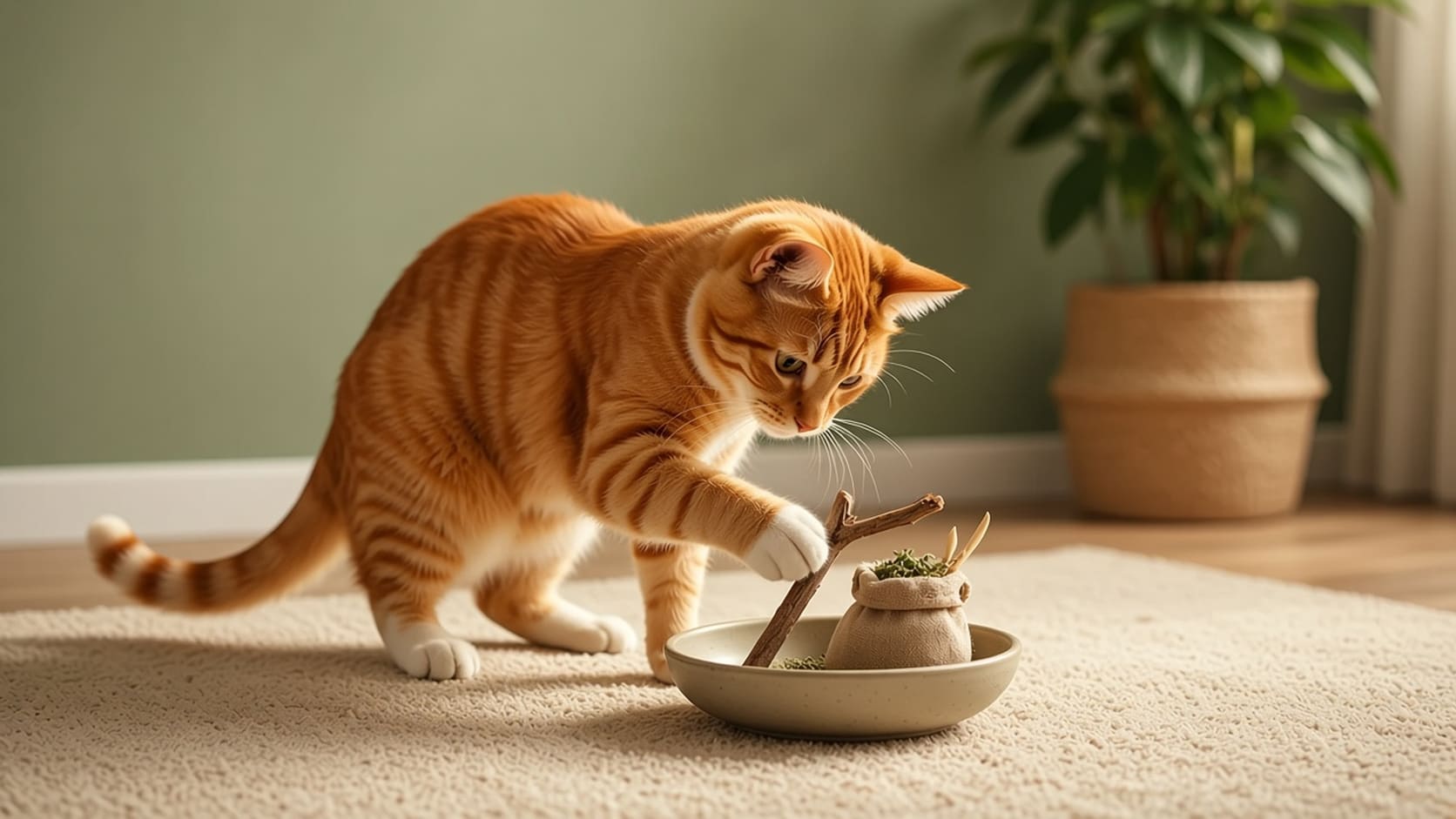
Quick answer: If your cat shrugs at catnip, try silvervine. A 2017 study in BMC Veterinary Research found 79% of cats responded to silver vine and 68% to catnip, and 22 of 31 catnip non-responders still responded to silver vine. Start with SmartyKat Silly Silver Stix or RYERCAT silvervine sticks. A blend such as From The Field catnip and silver vine covers both plants.
Catnip is famous, and it is not magic for every cat. Silvervine (also sold as silver vine or matatabi) is the plant to reach for next, not a stronger “drug” and not a medical treatment. We have not run our own lab trial. The response rates below come from a peer-reviewed paper, and the products are verified Amazon listings we already use in our cat stocking stuffers guide.
We may earn a commission if you buy through links on this page, at no extra cost to you. Percentages come from the cited study, not from brand ads.
Key takeaways
- Silvervine reached more cats than catnip in the 2017 BMC Veterinary Research study (79% vs 68%).
- Most catnip non-responders still had a chance: 22 of 31 responded to silver vine.
- Tatarian honeysuckle and valerian root were also tested; they worked for some cats, usually at lower rates than silver vine.
- Short sessions beat a toy left on the floor all week. Put the stick or sack away when play ends.
- This is enrichment, not a behavior fix. A bored indoor cat still needs play, perches and puzzle meals, which we cover in indoor cat enrichment ideas.
Silvervine vs Catnip at a Glance
| Plant or product | What the 2017 study found | A practical way to try it |
|---|---|---|
| Silver vine (fruit galls / plant material) | 79% of cats responded; 22 of 31 catnip non-responders responded | SmartyKat Silly Silver Stix or RYERCAT sticks |
| Catnip | 68% responded | Yeowww! organic catnip stocking or a pinch of a fresh blend |
| Blend of both | Not a separate study arm, but a practical “try both” option | From The Field catnip and silver vine |
| Tatarian honeysuckle | Some cats responded, at a lower rate than silver vine in that paper | Worth a later try if both silvervine and catnip fail; we do not invent a second study |
| Valerian root | Some cats responded, also at a lower rate in that paper | Same as honeysuckle: an extra option, not the first buy |
The study is “Response of cats to the chemical and biological properties of silver vine, catnip, and other plants” (Bol et al., 2017, PMC5356310). Use those figures as they were published. They are not a promise that your cat is in the 79%.
What the 2017 Study Actually Measured
Researchers offered 100 domestic cats plant materials — including silver vine, catnip, Tatarian honeysuckle and valerian root — and scored the classic response: sniffing, licking, chewing, rubbing and rolling. Silver vine was the strongest overall attractant in that group. Catnip was close behind. Importantly for anyone who has bought “the good catnip” and seen nothing, most cats that ignored catnip still responded to silver vine.
The paper also looked at the chemistry. Silver vine’s effect is not the same single-compound story people often tell about catnip (nepetalactone). The study discussed compounds such as actinidine in silver vine. You do not need to memorize the molecules. You only need to know that “my cat is a non-responder” is often catnip-specific, not a life sentence.
The study does not tell you which brand of stick is best, how many minutes the high lasts in your living room, or whether a kitten will react. It also does not say these plants treat anxiety, spraying or boredom on their own.
How to Run a Fair Test at Home
A stale bag and a toy that has been on the sofa for a month is a poor test.
- Pick a quiet time when your cat is already a little restless, not right after a meal or during a nap.
- Offer one item for 5 to 15 minutes: a stick, a stuffed toy, or a pinch of blend on a mouse. Watch. Some cats lick and chew; others roll and rub; a few just sniff and walk away.
- Put it away. The AAFP / FelineVMA well-being principles treat play and predatory sequences as part of a healthy indoor life. A disappearing toy keeps the sequence interesting, which is the same idea as in do cats get bored of their toys.
- If there is no response, try the other plant on another day, not both dumped on the carpet at once.
Kittens often show little interest. Senior cats may still enjoy a gentle rub with a soft toy even if they do not roll. If your cat starts eating large pieces of stick or plastic, take it away and switch to a supervised stuffed toy.
Which Product to Buy First
If catnip already failed: start with a dedicated silvervine item. SmartyKat Silly Silver Stix are an easy introductory stick. RYERCAT silvervine sticks are a better match for cats that like to chew.
If you have never tried either, or you want one jar to refresh old toys: From The Field’s catnip and silver vine blend lets you pinch both plants onto a kicker or mouse.
If your cat already loves catnip: keep it in the rotation and add a silvervine stick as a second scent, the same way you rotate wand toys. A Yeowww! catnip stocking is a holiday-shaped toy, not actual tinsel — a useful distinction in December, when real tinsel is a veterinary hazard.
Get the indoor cat checklist
A free setup checklist for busy and holiday weeks, plus occasional notes when useful cat gear actually drops in price.
By subscribing you agree to receive emails from Paw & Sage. Double opt-in, unsubscribe anytime. See our privacy policy.
What a “Response” Looks Like — and What It Does Not
In the 2017 study, researchers scored the familiar sequence: sniffing, licking, chewing, rubbing the face and rolling. At home you will usually see a mix, not a dramatic cartoon “high.” Some cats lick a stick, walk away, and come back. Some roll hard for a few minutes and then groom. A cat that sniffs once and leaves is a non-response for that session, not a moral failure on your part.
The paper used 100 domestic cats. That is a solid sample for this kind of work, and it is still a single study. It does not measure how long the interest lasts in a living room, and it does not compare brands of sticks. If your cat responds, end the session while it is still fun and offer a short wand chase or a puzzle meal afterward. That is the predatory sequence — hunt, pounce, “kill,” eat — that feline well-being guidelines treat as part of a healthy indoor day, not a pile of herbs left out until they go stale.
If there is still no interest after a fresh silvervine try and a fresh catnip try, you can look later at Tatarian honeysuckle or valerian root, which the same paper also tested. We are not attaching invented percentages to those arms here. Treat them as backup scents, not as a reason to skip silvervine.
Safety, Holidays and What These Plants Will Not Fix
Silvervine and catnip are for play. They will not replace a wand session, a puzzle feeder or a vet visit if your cat has suddenly stopped eating or hiding more than usual. If you are stuffing a stocking, skip ribbon, string and tinsel ties. Cornell’s holiday-hazard notes and VCA’s linear foreign body article are why our stocking guide is firm about that. Pair a herb toy with safe wrapping, not with tinsel on the tree.
Store the jar or sticks in a dry, closed container. A little goes further than a pile on the carpet, which just gets vacuumed up and can tempt a cat to eat a large amount of loose plant.
How We Compared
- Response rates come from Bol et al., 2017, BMC Veterinary Research (PMC5356310), the same paper we cite in cat stocking stuffers.
- Product picks are verified Amazon listings already used on this site. We have not independently lab-tested each bag’s chemistry.
- This is a research guide, not a hands-on product test. See our editorial policy.
If catnip has always been a shrug in your house, silvervine is the evidence-based next try — a short session, one stick, and a fair look at whether your cat is in that 22-of-31 group.
Get our free indoor cat enrichment checklist
Plus seasonal picks and deals worth knowing about. No spam, unsubscribe anytime.
By subscribing you agree to receive emails from Paw & Sage. Double opt-in, unsubscribe anytime. See our privacy policy.
Sources
This article cites 3 sources in the text. They are linked below.
- Response of cats to the chemical and biological properties of silver vine, catnip, and other plants (BMC Veterinary Research)
- General Principles of Feline Well-Being (American Association of Feline Practitioners / FelineVMA)
- Beware of Holiday Hazards (Cornell Feline Health Center)
Common questions
Is silvervine better than catnip?
For many cats, yes as a first try if catnip did nothing. A 2017 BMC Veterinary Research study found that 79 percent of cats responded to silver vine and 68 percent to catnip, and 22 of 31 catnip non-responders still responded to silver vine. It is not a sedative, and not every cat will react.
What is silvervine?
Silvervine (Actinidia polygama), sometimes sold as silver vine or matatabi, is a plant whose fruit galls and sticks are used as a cat attractant. The 2017 study tested plant material and identified actinidine and other compounds as part of the response. Sticks are often sold for chewing; powders and stuffed toys are sold for rolling and rubbing.
Why does my cat ignore catnip?
Response to catnip is not universal. In the same study, about one in three cats did not respond to catnip, but a large share of those non-responders still responded to silver vine. Age, scent freshness and how you offer it also matter: stale catnip and a toy left out all week are weaker tests than a short, supervised session with a fresh pinch.
Can kittens use silvervine or catnip?
Young kittens often show little or no response to these plants. The 2017 paper is about adult response rates. Wait until your kitten is older, use short sessions, and skip any toy with strings or small parts they could swallow. If you are unsure, ask your veterinarian.
Is silvervine safe for cats?
The studied plant materials are widely sold as cat enrichment. Offer them in short sessions, do not let a cat chew plastic packaging or swallow large amounts of stick, and put the item away afterward. If your cat has a history of eating non-food items, choose a stuffed toy you can supervise rather than loose powder on the carpet.
How should I offer silvervine or catnip?
Use a pinch on a toy or a single stick for 5 to 15 minutes, then put it away. Freshness matters: recap the jar. You can also refresh an old mouse or kicker with a From The Field-style blend. Never use holiday tinsel or ribbon as the 'toy' the herb is tied to.