Is Tinsel Bad for Cats? What to Do If They Eat It
Is tinsel bad for cats? Why string-like decorations can cause a blockage, what to do, and safer ornament and tree-guard alternatives.
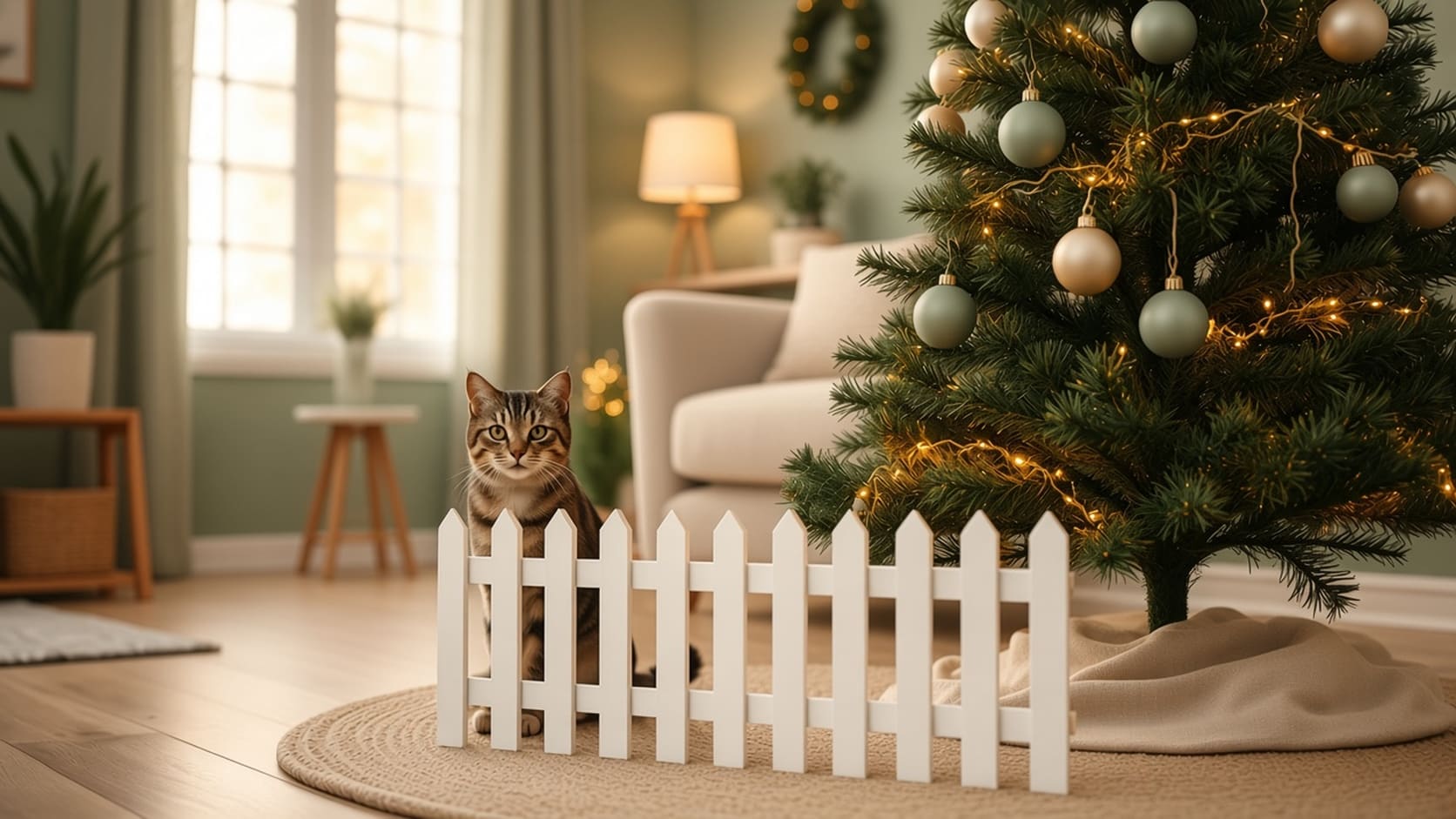
Quick answer: Yes — skip tinsel in a home with cats. The ASPCA says swallowed tinsel can cause severe vomiting, an intestinal obstruction, dehydration and possible surgery. Cornell lists tinsel and ribbons as holiday hazards. If your cat already ate some, call a veterinarian now and do not pull a hanging strand. Decorate with shatterproof ornaments and a tree fence instead.
Tinsel looks like a toy: light, dangly, noisy when it hits a branch. That is exactly why it is a problem. Cats do not need to “eat a lot” for a string-like object to become dangerous. This is a safety guide, not a product review we ran in a clinic. The medical wording below comes from the ASPCA, Cornell and VCA.
We may earn a commission if you buy through links on this page, at no extra cost to you.
Key takeaways
- Tinsel is a linear foreign body risk, not just a “tummy upset” risk. VCA describes how a string can anchor and bunch the intestine.
- The ASPCA is blunt: severe vomiting, obstruction, dehydration, possible surgery. They also flag confetti streamers.
- Do not pull tinsel that is still in the mouth or under the tail. You can make the injury worse.
- Ribbons, yarn, dental floss and gift ties belong in the same ban.
- Safer tree setup: shatterproof baubles, a fence or tunnel skirt, and a legal cat tree in another corner. See how to cat-proof a Christmas tree.
Why Tinsel Is Different From a Swallowed Ornament Hook
A single plastic bauble a cat mouths is a bad idea. A long, thin strand is a different kind of bad idea.
VCA’s article on linear foreign bodies in cats explains the pattern: one end of a string-like object can catch (often at the base of the tongue or in the stomach) while the rest moves through the intestine. As the gut tries to push the “line” along, the intestine can bunch, cut or tear. That is why a veterinarian may recommend surgery even when only a modest length was eaten.
The ASPCA’s holiday-safety page puts tinsel on its “Tinsel-less Town” list and says it can cause severe vomiting, obstruction, dehydration and possible surgery. Cornell’s “Beware of Holiday Hazards” groups tinsel and ribbons with unstable trees, cords and ornaments. None of those sources treat tinsel as a cute risk you can manage with supervision alone. If it is on the tree, it will end up on the floor.
What To Do If Your Cat Ate Tinsel
Act on the same day. Do not wait for the next vomiting episode to “confirm” it.
- Call your regular vet or an emergency clinic. Tell them it is tinsel (or ribbon, yarn, or a streamer) and roughly how much, if you know. If you cannot reach your vet, call an emergency hospital. The ASPCA Animal Poison Control Center at (888) 426-4435 can offer additional advice; a consultation fee may apply. Tinsel is a physical blockage risk, so a clinic is the priority.
- Do not pull. If a strand is hanging from the mouth or the rectum, leave it and get professional help. Pulling can saw at tissue.
- Do not “help it pass” with oil, a large meal, or a laxative unless a veterinarian told you to.
- Watch, but do not delay the call for watching. Vomiting, repeated retching, a painful or tucked belly, lethargy, hiding, or not producing stool are all reasons to go in immediately — and the absence of those signs is not a green light to wait overnight.
- Remove the rest of the tinsel from the house so a second strand is not waiting when you get home.
This page cannot tell you whether your cat needs surgery. Only an exam, and sometimes imaging, can. A veterinarian may ask when the tinsel was eaten, whether any of it is still visible, and whether your cat has vomited or passed stool. They may recommend X-rays or other imaging, observation, or surgery. None of those steps is something to start at home.
If you go in, bring a piece of the leftover decoration so the clinic can see whether it is metallic tinsel, plastic glitter garland, or ribbon. That detail is more useful than an estimate of “a little” or “a lot.”
The Rest of the “String Family”
Treat these the same way you treat tinsel:
- Gift ribbon, curly ribbon and pull bows
- Yarn, embroidery thread and dental floss
- Confetti streamers (the ASPCA calls these out too)
- Loose ornament hangers that are long and flexible
- Sewing kits left on a chair during wrapping night
If you wrap presents on the floor, bag the offcuts before you leave the room. The same rule applies to a cat stocking: skip the decorative tinsel tie and use a toy that is actually made for a cat, such as a Yeowww! catnip stocking or a silvervine stick.
Get the indoor cat checklist
A free setup checklist for busy and holiday weeks, plus occasional notes when useful cat gear actually drops in price.
By subscribing you agree to receive emails from Paw & Sage. Double opt-in, unsubscribe anytime. See our privacy policy.
How to Decorate the Tree Without Tinsel
Sparkle does not have to be a strand.
- Hang shatterproof ornaments with hooks you can close, or with short, tight ties — not long ribbons. The ASPCA warns that broken glass ornaments can injure a mouth and gut.
- Keep the lowest branches simpler, or empty.
- Put a physical buffer around the base: a clear acrylic tree fence, a taller tree guard, or a tunnel tree skirt such as the OurWarm tunnel skirt that turns the tempting zone into a hideout instead of a tinsel buffet.
- Stabilize the tree and cover the water, as we cover in holiday plants toxic to cats and the cat-proof Christmas tree guide.
- Give the cat a better tall object: a sturdy cat tree or a window perch. A short wand session before the lights go on is more useful than a scolding.
After Wrapping Night and When Guests Arrive
Most tinsel emergencies do not start at a perfectly decorated tree. They start on the floor: a pulled bow, a ribbon curling off a box, a strand that fell while you were in the kitchen. Do a floor sweep before you go to bed and again before guests arrive. Put the wrapping bag in a closet, not next to the recycling.
Guests add a second problem: more people, more dropped decorations, and a cat that may bolt under the tree. The ASPCA recommends a quiet interior room pets can retreat to when music and noisemakers start. Make that room tinsel-free, ribbon-free and plant-safe (no lilies; see holiday plants toxic to cats). A closed door is more reliable than asking every visitor to watch their feet.
If you already have tinsel on the tree from last year, take it down now rather than “just this season.” There is no safe height once a strand hits the floor, and a cat that never climbed the tree last December can still bat a fallen piece this year.
A Short Holiday Safety Sweep
While you are pulling tinsel off the tree, walk the rest of the ASPCA list: covered tree water, no lilies in the bouquet, chocolate and xylitol off the coffee table, bones out of the trash, candles not left burning, and a quiet room for when guests get loud. Thanksgiving food has its own rules in can cats eat turkey.
How We Researched This
- Tinsel wording comes from the ASPCA Holiday Safety Tips page, checked in November 2026.
- Cornell’s holiday-hazard article and VCA’s linear foreign body page explain why string-like objects are a surgical risk.
- Product examples are verified listings already used in our tree and stocking guides. This is not a hands-on medical or product test. See our editorial policy.
If the tinsel is still in the box, leave it there. If it is already in the cat, pick up the phone before you pick up a home remedy.
Get our free indoor cat enrichment checklist
Plus seasonal picks and deals worth knowing about. No spam, unsubscribe anytime.
By subscribing you agree to receive emails from Paw & Sage. Double opt-in, unsubscribe anytime. See our privacy policy.
Sources
This article cites 3 sources in the text. They are linked below.
- Holiday Safety Tips (ASPCA)
- Beware of Holiday Hazards (Cornell Feline Health Center)
- Linear Foreign Body in Cats (VCA Animal Hospitals)
Common questions
Is tinsel bad for cats?
Yes. The ASPCA says tinsel can cause severe vomiting, an obstruction, dehydration and possible surgery if a cat swallows it. Cornell also lists tinsel and ribbons among holiday hazards. VCA explains the mechanism: a string-like object can anchor in the gut and bunch the intestine, which is a surgical emergency.
What should I do if my cat ate tinsel?
Call your veterinarian or an emergency clinic now, even if the cat still seems fine. Do not pull tinsel that is hanging from the mouth or the other end, and do not wait to see if it 'passes.' The ASPCA Animal Poison Control Center at (888) 426-4435 can also advise (a fee may apply), but tinsel is a physical obstruction risk, so a clinic visit is the priority.
Can a cat pass a small piece of tinsel?
Sometimes a tiny scrap is found in the litter box, but you cannot know that from the living room. Because linear foreign bodies can do serious damage as they move, 'wait and see' is a decision to make with a veterinarian, not on a forum.
Are ribbons, yarn and confetti strings as bad as tinsel?
Yes in the same way. The ASPCA also warns about confetti streamers. VCA's linear foreign body article covers string, thread, yarn and similar items, not only metallic tinsel. Keep sewing kits, gift ribbon and pull bows away as well.
What can I decorate the tree with instead of tinsel?
Use shatterproof ornaments, well-secured hooks, and no loose ribbons. A tree fence or a tunnel skirt can keep cats out of the lowest branches. Give the cat a legal climbing spot elsewhere so the tree is not the only tall object in the room.
Is flocking or fake snow safer than tinsel?
Skip adding loose flocking or fake snow a cat can lick. The decoration to ban first is still string-like tinsel and ribbon. If you like sparkle, choose large, solid, shatterproof ornaments placed higher on the tree, not strands.