Summer Grooming Checklist for Indoor Cats
A practical summer grooming checklist for indoor cats: brushing, shedding, paw cleanup, nail checks, hydration support, and when skin changes need a vet.
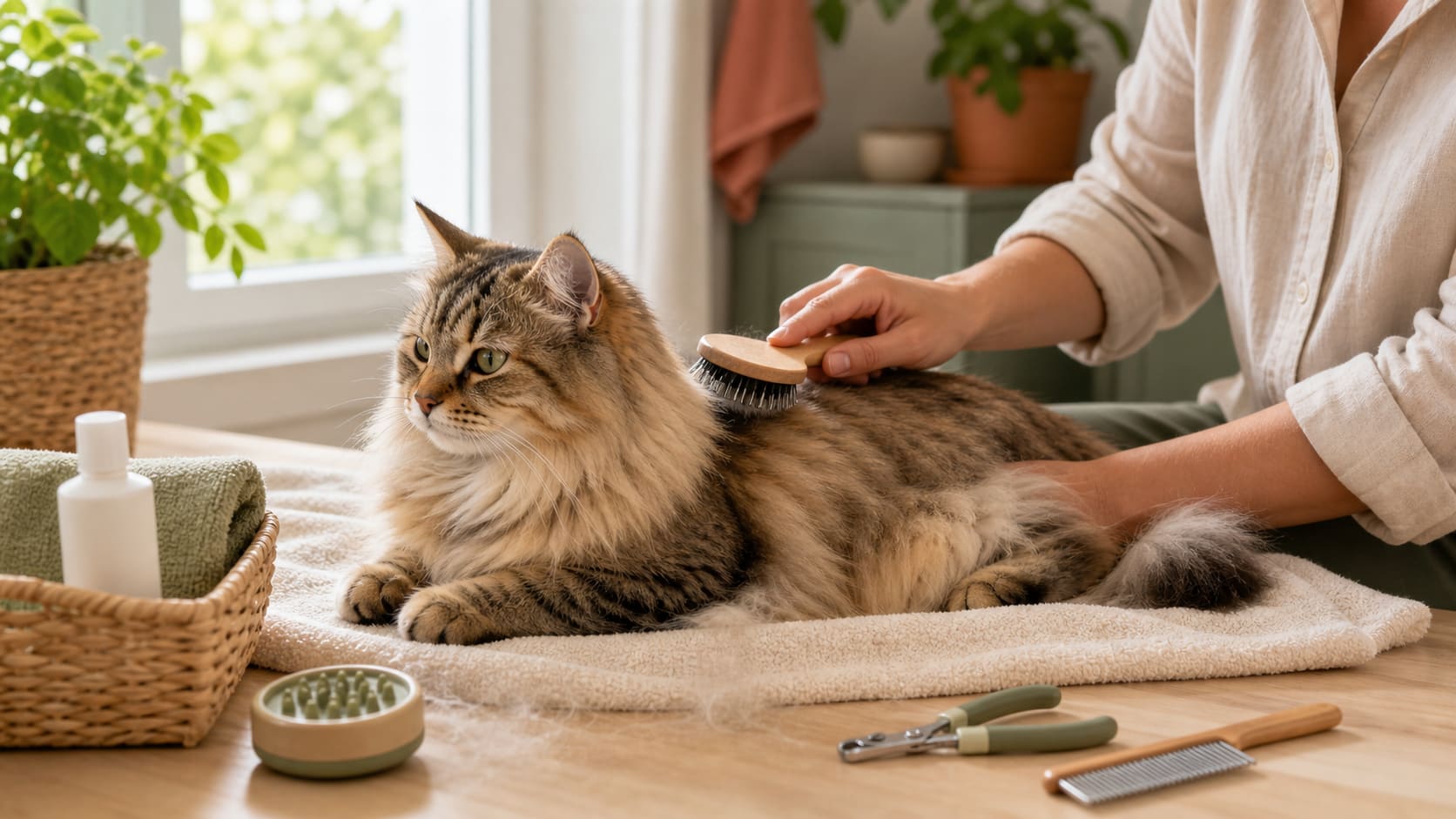
Summer grooming is not about making your cat look tidy. It is about comfort.
Loose coat, mats, sharp claws, litter dust, and travel messes all become more annoying in warm weather. A small routine prevents most of it before it turns into a fight.
1. Brush Before the Coat Mats
Short-haired cats may only need a few quick passes. Long-haired cats need more frequent checks around the armpits, chest, belly, and rear legs, where mats build quietly.
Brush in short sessions. Stop while your cat is still relaxed.
For shedding specifics, read why cats shed so much in summer.
2. Build a Grooming Station
Keep the brush, towel, treats, and cleanup option in one predictable place. The routine becomes easier when you are not hunting for supplies while your cat is still in the mood.
What helps: The ZeaCotio Pet Glove Wipes make sense for small summer messes because they are glove-shaped and individually wrapped. Use them for quick paw, coat, face, or rear-area cleanup when your cat tolerates it. Do not use wipes to treat irritation, wounds, or skin disease.
3. Check Nails Every Two Weeks
Summer scratching, climbing, and grooming can make long claws more noticeable. You do not need to trim every time you check. Just look for sharp tips, snagging, or claws that are getting too curved.
What helps: The Picky zoom 2-in-1 Nail Clippers and Grinder gives you clipping and gradual smoothing in one tool, with a safety guard and LED light. Use it slowly, trim only the tip, and stop before your cat is overwhelmed.
For the full routine, read how to trim cat nails at home.
4. Watch Skin, Not Just Fur
Normal shedding leaves healthy skin underneath. Call your vet if you see bald patches, redness, scabs, fleas, dandruff that suddenly worsens, excessive licking, or pain when touched.
Grooming is a chance to notice changes early. It is not a replacement for diagnosis.
5. Support the Coat From the Inside
Hydration and diet matter. Wet food, clean water stations, and a cooler room all support normal summer comfort. If your cat is a reluctant drinker, start with how to get your cat to drink more water.
The 10-Minute Weekly Checklist
- Brush loose coat.
- Check mat-prone areas.
- Wipe small messes only if needed.
- Check nail tips.
- Check skin.
- Refresh water stations.
Do it before the hottest part of the day, reward generously, and keep the routine boring. Boring grooming is successful grooming.
Sources
This article cites 3 sources in the text. They are linked below.
- General Principles of Feline Well-being (FelineVMA)
- Keeping Cats Safe in Hot Weather (International Cat Care)
- Cornell Feline Health Center (Cornell University College of Veterinary Medicine)
Common questions
Do indoor cats need more grooming in summer?
Many do, especially long-haired cats and heavy shedders. Brushing removes loose coat before it becomes mats, hairballs, or extra heat-trapping fur.
Can I use pet wipes on my cat?
Pet wipes can help with small messes on paws, coat, face, or rear area if your cat tolerates them. They are not a treatment for skin problems and do not replace vet care.
Should I shave my cat in summer?
Usually no. A cat's coat helps protect the skin. Shaving should be discussed with a vet or professional groomer, especially for mats or medical needs.
The Summer Cat Care Checklist
A simple checklist for heat, hydration, grooming, and open-window safety on hot days.
No spam. Unsubscribe anytime. We respect your inbox.