Can Cats Get Sunburn? Sun Safety for Cats in Summer
Yes, cats can get sunburned, and for some cats it's a real skin-cancer risk. Here's which cats are most vulnerable, the warning signs, and how to protect them safely in summer.
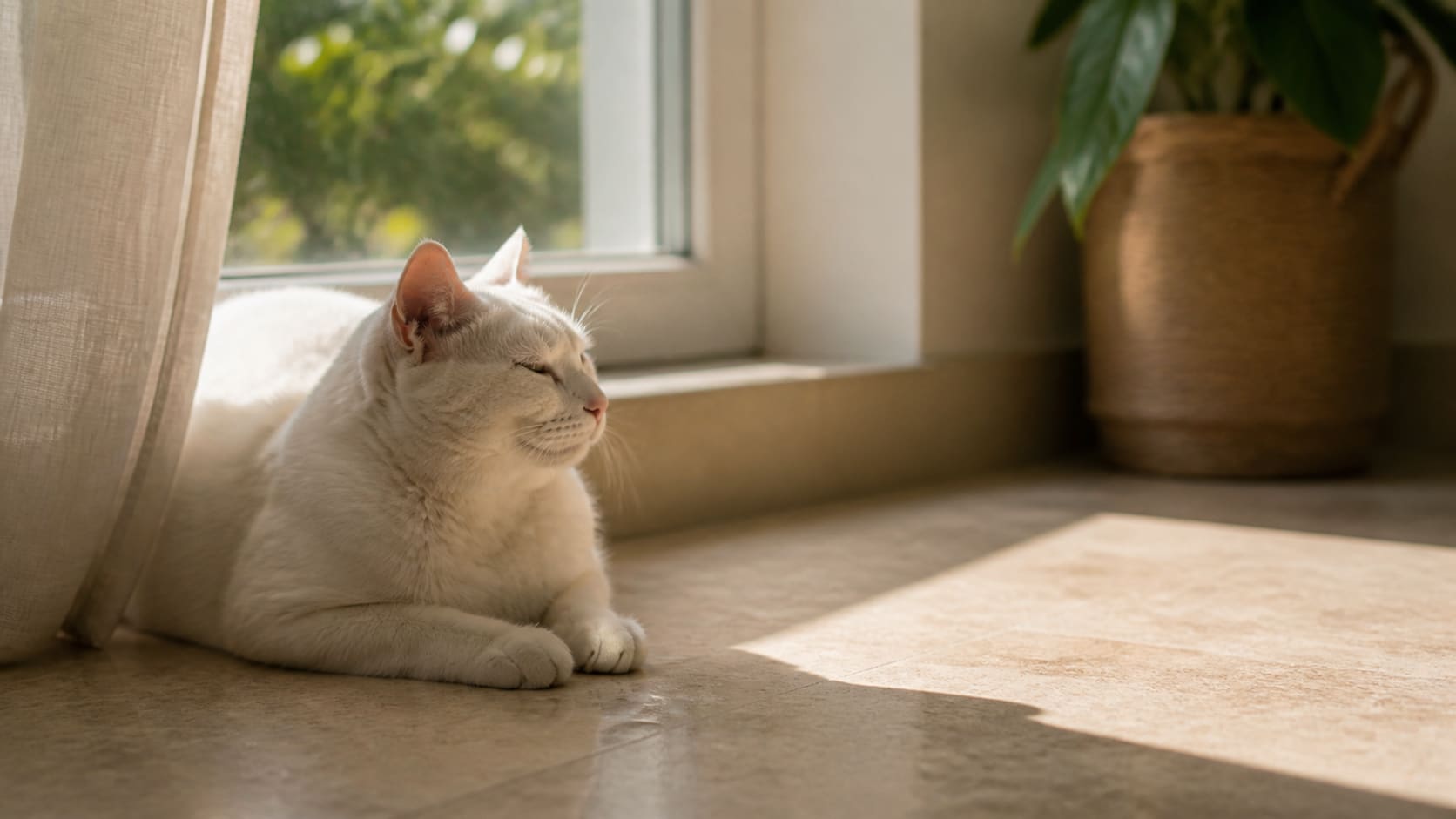
People are often surprised to learn that cats get sunburned, but they do — and for some cats it is more than a temporary discomfort. Repeated sun exposure on pale, thinly furred skin is a leading cause of a skin cancer called squamous cell carcinoma, most often on the ears and nose. The cats most at risk are easy to identify, and protecting them is simple once you know what to watch for.
Which Cats Are Most Vulnerable
Fur and pigment are a cat’s built-in sunscreen, so the cats that lack them burn first:
- White cats, and any cat with white ears, nose, or eyelids
- Pink-skinned areas — the tips of the ears and the bridge of the nose, where fur is thinnest
- Hairless and thin-coated breeds like the Sphynx
- Cats with bald patches from grooming, allergies, or surgery
- Sunbathers — cats that lie in the same hot sun patch for hours
A dark, dense-coated cat is fairly well protected over most of its body. A white cat with pink ear tips is not, and those ear tips are exactly where problems tend to start.
The Warning Signs
Sunburn and early sun damage in cats show up as:
- Red, pink, or inflamed skin, especially on the ear tips and nose
- Skin that feels warm, tender, or flaky
- Curling, crusting, or scaly patches on the ear edges
- Hair loss on the affected area
- Over time: sores that do not heal, scabs that keep returning, or thickened, ulcerated patches
That last group matters most. Any sore, scab, or lesion on a cat’s ear or nose that does not heal deserves a prompt vet visit, because early squamous cell carcinoma is very treatable and late disease is not.
How to Protect Your Cat Safely
The safest protection is not a product — it is managing exposure:
Offer shade and move the nap spot. If your white cat loves a particular sunny windowsill, give them an equally appealing spot in the shade. A window perch positioned out of the direct sun lets them keep the view without baking in UV.
Limit peak-sun hours. Sun is strongest from late morning to mid-afternoon. For at-risk cats, that is the window to keep them out of direct sun, indoors or shaded.
Use UV-filtering window film on windows where your cat sunbathes for hours. It cuts the UV reaching their skin while still letting them enjoy the warmth and the view.
Be very careful with sunscreen. Do not reach for your own. Human and dog sunscreens often contain zinc oxide or salicylates that are toxic to cats once they groom them off. If you think your cat genuinely needs topical protection, ask your vet for a cat-safe product and apply only where directed.
Sun Safety Is Part of the Bigger Summer Picture
Sunburn rarely travels alone in summer. A cat lying in a hot sun patch is also at risk of overheating, so the same shaded, comfortable spot that protects pale skin also helps prevent heat stress — see how to keep your cat cool in hot weather. And because sun-seeking and heat go together, it is worth knowing the warning signs of heatstroke in cats too.
For most cats, sun safety comes down to one habit: give the pale, sun-loving ones a great shaded spot, and check their ears and nose now and then. That small bit of attention is what catches a problem while it is still nothing.
This article is general information, not veterinary advice — have any non-healing skin lesion checked by your vet. We’re also building CatPlay, a simple app for logging your cat’s habits and noticing changes early.
Sources
This article cites 3 sources in the text. They are linked below.
- Sun Exposure and Skin Cancer in Cats (Cornell Feline Health Center)
- Summer Safety for Pets (ASPCA)
- Caring for Cats in Hot Weather (International Cat Care)
Common questions
Can indoor cats get sunburned?
Yes. A cat that suns itself in a favorite window patch for hours can get UV exposure through the glass over time, especially white cats and those with thin fur on the ears and nose. It's less common than for outdoor cats, but it's not zero, particularly for the highest-risk cats.
Which cats are most at risk of sunburn?
White cats and cats with white or pink-skinned ears, noses, and eyelids are most at risk, along with thin-coated or hairless breeds and any cat with bald patches. The sparsely furred, lightly pigmented areas burn first and are where sun-related skin cancers most often develop.
Can I put sunscreen on my cat?
Only a product specifically formulated and labeled as safe for cats, ideally one your vet recommends. Never use human or dog sunscreen — many contain zinc oxide or salicylates that are toxic to cats when groomed off. For most cats, shade and limiting peak-sun exposure are the safer protection.
The Summer Cat Care Checklist
A simple checklist for heat, hydration, grooming, and open-window safety on hot days.
No spam. Unsubscribe anytime. We respect your inbox.