Summer Dangers for Cats: Toxic Plants, Foods & Hidden Hazards
Summer brings hazards cats don't face the rest of the year, from lilies to BBQ scraps to open windows. Here's a room-by-room guide to the dangers and how to keep your cat safe.
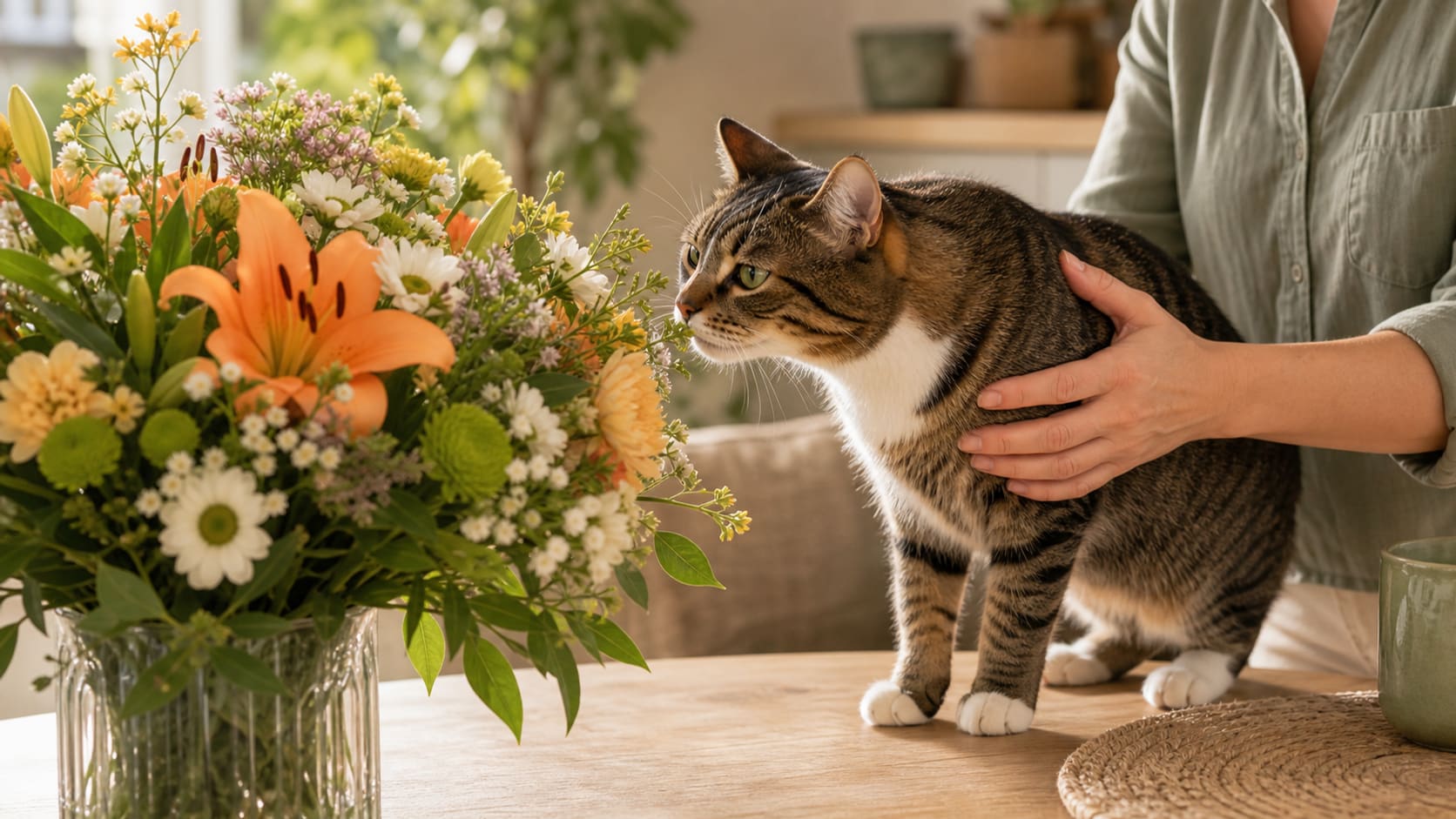
Summer is wonderful for cats, but the season quietly stacks the house and garden with hazards they do not face the rest of the year. Fresh bouquets, open windows, BBQ leftovers, garden chemicals — all arrive together in June and July. None of it is cause for panic; almost every summer danger is easy to manage once you know it exists. Here is a room-by-room run-through so nothing catches you off guard.
In the Vase: Lilies and Cut Flowers
This is the most important one, so it comes first. Lilies are deadly to cats. True lilies and daylilies are so toxic that a cat brushing past the pollen and grooming it off, nibbling a single leaf, or even drinking the vase water can suffer fatal kidney failure. Summer bouquets are full of them.
If you have a cat, the safest rule is simply no lilies in the house, ever. If a lily does come in and your cat may have contacted it, treat it as an emergency and call your vet immediately — early treatment is the difference between a scare and a tragedy. Other common cut-flower and houseplant risks include hydrangea, oleander, and sago palm.
In the Garden: Plants and Chemicals
If your cat has any outdoor access, the garden adds its own list:
- Toxic plants: foxglove, oleander, azalea, many bulbs, and more. Check the ASPCA’s toxic plant database before planting.
- Slug and snail pellets containing metaldehyde are highly poisonous — use pet-safe alternatives.
- Weedkillers, fertilizers, and insecticides should be kept off areas your cat walks, and stored sealed.
- Cocoa mulch can contain the same toxin as chocolate.
The simplest fix is to grow a cat-safe space instead — our guide to building a cat-safe sensory garden covers what you can plant to delight your cat rather than endanger them.
At the BBQ: Food and Drink Hazards
Summer entertaining means tempting smells and dropped scraps. Keep cats away from:
- Onions, garlic, and chives — in many marinades, dips, and sauces; toxic to cats even cooked.
- Cooked bones, which splinter, and fatty trimmings, which can trigger pancreatitis.
- Grapes, raisins, chocolate, and alcohol — all dangerous.
- Xylitol, a sweetener in some drinks, gum, and desserts.
- Corn cobs and skewers, serious choking and blockage risks.
A cat-safe treat or a little plain cooked meat keeps them happily included without the danger.
Open Windows, Hot Cars, and Other Physical Risks
Not every summer danger is something they eat:
- Open windows and balconies cause a seasonal spike in falls — see cat window and balcony safety.
- Hot cars and sealed rooms can become lethal in minutes; never confine a cat in one.
- Sheds, garages, and greenhouses trap cats that wander in and bake or starve — check before closing them.
- Garden tools, twine, and netting can entangle a curious cat.
Bites, Stings, and Parasites
Warm weather brings more bugs, and more interactions with them:
- Bee and wasp stings are usually minor, but a sting in the mouth or throat, or signs of an allergic reaction (swelling, difficulty breathing), is an emergency.
- Fleas and ticks peak now — stay on top of prevention, covered in how to get rid of fleas on cats.
- Overheating is itself a top summer danger; know the signs of heatstroke.
Keep These Two Numbers Handy
Before the season gets busy, save your vet’s number and a pet poison helpline somewhere you can find them fast. With poisoning, minutes matter, and knowing exactly who to call removes the panic from a scary moment.
Summer hazards look like a long list, but managing them is mostly a handful of habits: no lilies, cat-safe plants, scraps off-limits, windows secured, and sheds checked. Do those, and the season goes back to being what it should be for your cat — the best one of the year. For the rest of warm-weather care, start with how to keep your cat cool in hot weather.
This article is general information, not veterinary advice. If you suspect poisoning, contact your vet or a pet poison helpline immediately. We’re also building CatPlay, a simple app for tracking your cat’s daily habits so you notice when something’s off.
Sources
This article cites 3 sources in the text. They are linked below.
- Toxic and Non-Toxic Plants (ASPCA Animal Poison Control)
- Poisons and Hazards for Cats (International Cat Care)
- Feline Toxicology (Cornell Feline Health Center)
Common questions
Which summer plants are most dangerous to cats?
Lilies are the most serious — even a tiny amount of pollen, a leaf, or water from the vase can cause fatal kidney failure in cats. Other common summer offenders include hydrangea, oleander, sago palm, foxglove, and many garden bulbs. When in doubt, check the ASPCA's toxic plant list before bringing anything home.
Are lilies really that dangerous to cats?
Yes. True lilies and daylilies are among the most toxic plants for cats. Ingesting even small amounts of any part of the plant, including pollen groomed off the fur, can cause acute kidney failure. If you suspect lily exposure, treat it as an emergency and call your vet immediately.
What summer foods are toxic to cats?
Keep cats away from onions, garlic, and chives (in many BBQ foods and dips), grapes and raisins, chocolate, alcohol, and anything with the sweetener xylitol. Cooked bones, fatty trimmings, and heavily salted scraps are also risky. Stick to plain, cat-safe treats.
The Summer Cat Care Checklist
A simple checklist for heat, hydration, grooming, and open-window safety on hot days.
No spam. Unsubscribe anytime. We respect your inbox.