How to Get Your Cat to Drink More Water in Summer (9 Tricks)
Cats are famously bad drinkers, and summer heat makes mild dehydration risky. Here are nine vet-informed tricks to get your cat drinking more water, from fountains to food hacks.
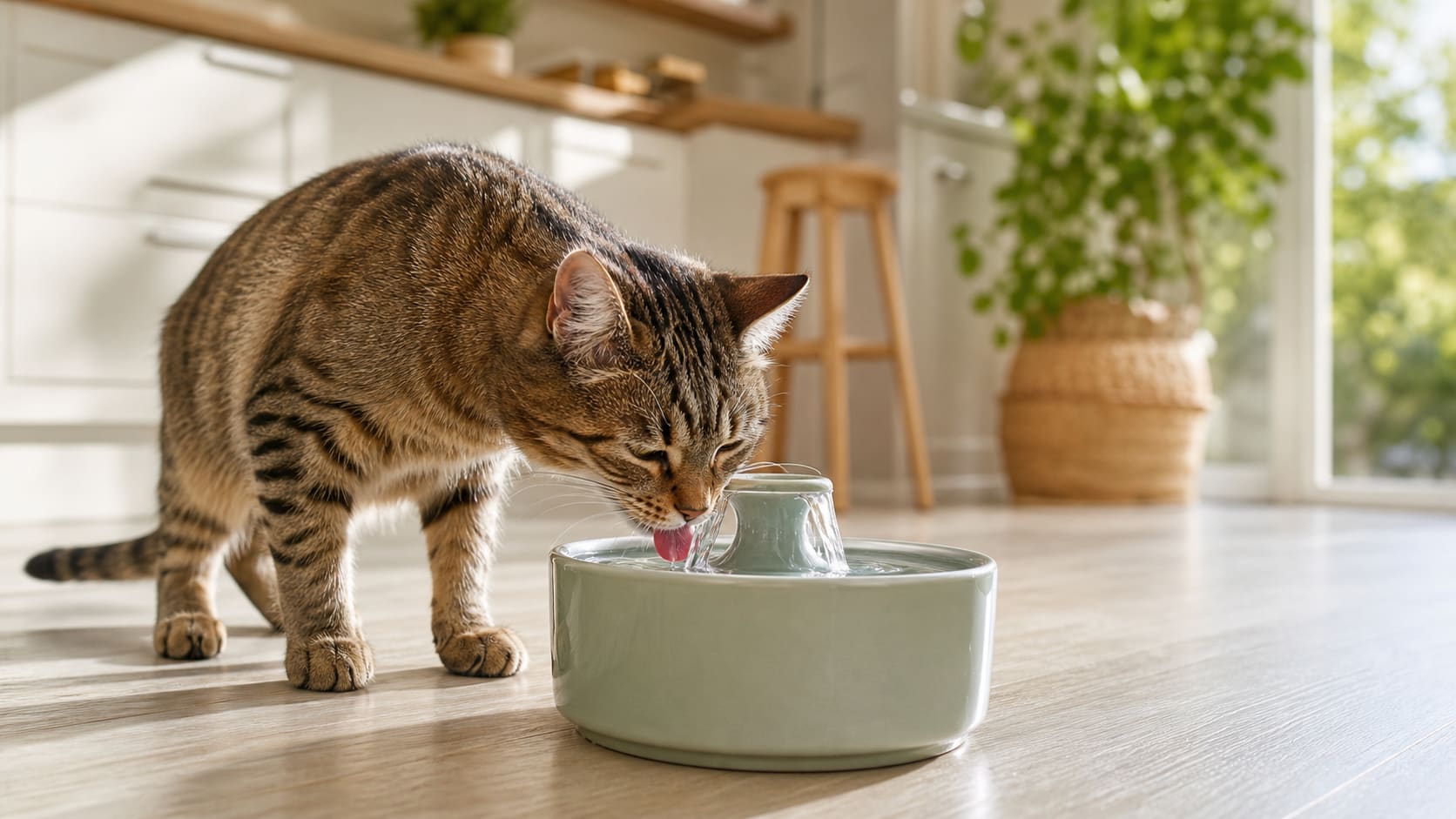
Cats are terrible at drinking water, and it is not their fault. They descend from desert animals built to extract moisture from prey, so they have a weak thirst drive and tend to run slightly dehydrated even on a normal day. Add summer heat, and that small daily deficit becomes a real risk — for urinary and kidney health especially, both of which depend on a well-hydrated cat. The good news is that most cats will happily drink more; you just have to make the water worth their attention. Here are nine ways to do exactly that.
1. Switch to a Fountain
This is the single biggest lever for most cats. In the wild, still water can be stagnant and unsafe, so many cats instinctively prefer moving water and will drink far more from a flowing source.
What helps: A circulating Catit Flower Fountain keeps water aerated, cooler, and more interesting than a bowl that has gone flat by noon. For a lot of reluctant drinkers, a fountain alone solves the problem.
If your cat ignores one fountain, do not assume fountains “do not work.” Look at the setup first: the noise level, the water stream, whether the bowl is wide enough, and where the fountain sits. Some cats want a quiet trickle. Others want a faucet-style stream they can see from across the room.
Worth considering: The PETALPAW Wireless Cat Water Fountain is useful when the best water spot is not near an outlet. A stainless-steel drinking surface, visible water window, and multiple flow modes are the kind of features that make daily placement and cleaning easier. Treat those as setup features, not medical promises: a fountain can make water more appealing, but it does not replace vet care if your cat is drinking suddenly more or less than usual.
For larger homes or multi-pet households, a bigger station can make more sense than a tiny fountain you refill constantly. The Pokpet 10L Stainless Cordless Fountain is a higher-capacity option with a stainless basin, cordless placement, motion sensing, and multiple water modes. That makes it especially relevant for summer, vacation prep, and homes where one small bowl gets ignored.
2. Put Water Everywhere
Cats drink more when water is convenient and they stumble across it. Place bowls in several rooms, on different levels, so a drink is never more than a few steps away. In summer, more stations means more total intake without any nagging.
3. Move Water Away From Food and Litter
In the wild, cats keep their kill and their water apart to avoid contamination, and that instinct survives in your living room. A bowl right beside the food or anywhere near the litter box can quietly put a cat off. Give water its own spot.
The best test is simple: put one water source where you think it belongs, then put another where your cat naturally rests or walks. Many owners discover the second station gets used more. Hallways, bedroom corners, shaded living-room edges, and the quiet end of a kitchen often beat a bowl beside the food dish.
4. Switch the Bowl Itself
Plastic bowls hold odors and can taint the taste; narrow bowls cause “whisker fatigue,” the discomfort of whiskers brushing the sides. Try a wide, shallow ceramic or stainless steel bowl filled to the brim so your cat does not have to dip its face in.
5. Lean on Wet Food
Wet food is roughly 70 to 80 percent water, so feeding more of it is the easiest hydration win there is — your cat drinks without knowing it. In a heatwave, shifting the balance toward wet meals does a lot of quiet work. Our guide on puzzle feeders for wet vs dry food covers how to serve it well.
6. Add Water to Meals
Stir a few tablespoons of warm water or a little cat-safe, unsalted broth into wet food to make a “soup.” Most cats lap up the gravy and take in extra fluid with it. Start small so the new texture does not put them off.
7. Try Ice Cubes
Some cats are fascinated by ice. Drop a cube or two in the water bowl to keep it cold and give them a moving target to bat and lick. A colder bowl is also simply more appealing on a hot day than lukewarm water.
8. Keep It Fresh
Cats turn their noses up at water that has sat out collecting dust and going warm. Refresh bowls at least once or twice a day in summer, more if they sit in a warm room. Fountains help here too, since the circulation keeps water fresher between changes.
With any fountain, freshness still depends on maintenance. Rinse the basin, change filters on schedule, and check the pump or water line before a heatwave or trip. A dirty fountain is not better than a clean bowl; the win is moving, appealing water that is also easy enough for you to maintain consistently.
9. Use a Lick Mat for Watery Treats
Spread a thin layer of wet food, a watery topper, or a cat-safe broth on a LickiMat and let your cat work it off. It stretches a small amount of moisture into a longer, satisfying session — and doubles as light enrichment on a lazy hot afternoon.
How to Tell If It’s Working
A well-hydrated cat has moist gums, elastic skin that springs back when gently lifted, and produces normal amounts of urine. Watch for warning signs that need a vet: lethargy, sunken eyes, skin that stays “tented” when pinched, or noticeably less urine in the litter box. Cats with kidney or urinary history need extra attention in summer, so loop in your vet if you are concerned.
Hydration is one piece of the warm-weather picture. Pair it with a cool retreat and good airflow — see how to keep your cat cool in hot weather — and watch for the warning signs of heatstroke, since dehydration and overheating tend to arrive together.
We’re building CatPlay, a simple app for logging your cat’s daily habits, including drinking and litter box patterns, so you can catch hydration problems before they become serious.
Sources
This article cites 3 sources in the text. They are linked below.
- Feline Hydration and Urinary Health (Cornell Feline Health Center)
- Cat Care — Water and Nutrition (ASPCA)
- Keeping Cats Hydrated (International Cat Care)
Common questions
How much water should a cat drink per day?
A rough guide is about 50 ml of water per kilogram of body weight daily, so a 4 kg cat needs around 200 ml from all sources combined. Cats on wet food get much of this from their meals, while cats on dry food need to drink far more to make up the difference.
Why won't my cat drink water?
Cats evolved from desert animals with a naturally low thirst drive, and they're fussy about water placement, freshness, and bowl type. Many dislike water next to their food or litter, hate plastic bowls, and prefer moving water. It's usually about the setup, not a lack of need.
Is wet food enough to keep a cat hydrated?
It goes a long way. Wet food is around 70 to 80 percent water, so a cat eating mostly wet food gets a big share of its needs from meals. In a heatwave it's still wise to offer fresh water in several spots, since needs rise with the temperature.
The Summer Cat Care Checklist
A simple checklist for heat, hydration, grooming, and open-window safety on hot days.
No spam. Unsubscribe anytime. We respect your inbox.