How to Keep Your Cat Cool in Hot Weather (12 Vet-Backed Ways)
Cats hide heat stress until it's serious. Here are 12 practical ways to keep an indoor cat cool in summer, from water tricks to cooling mats and the rooms that actually stay cold.
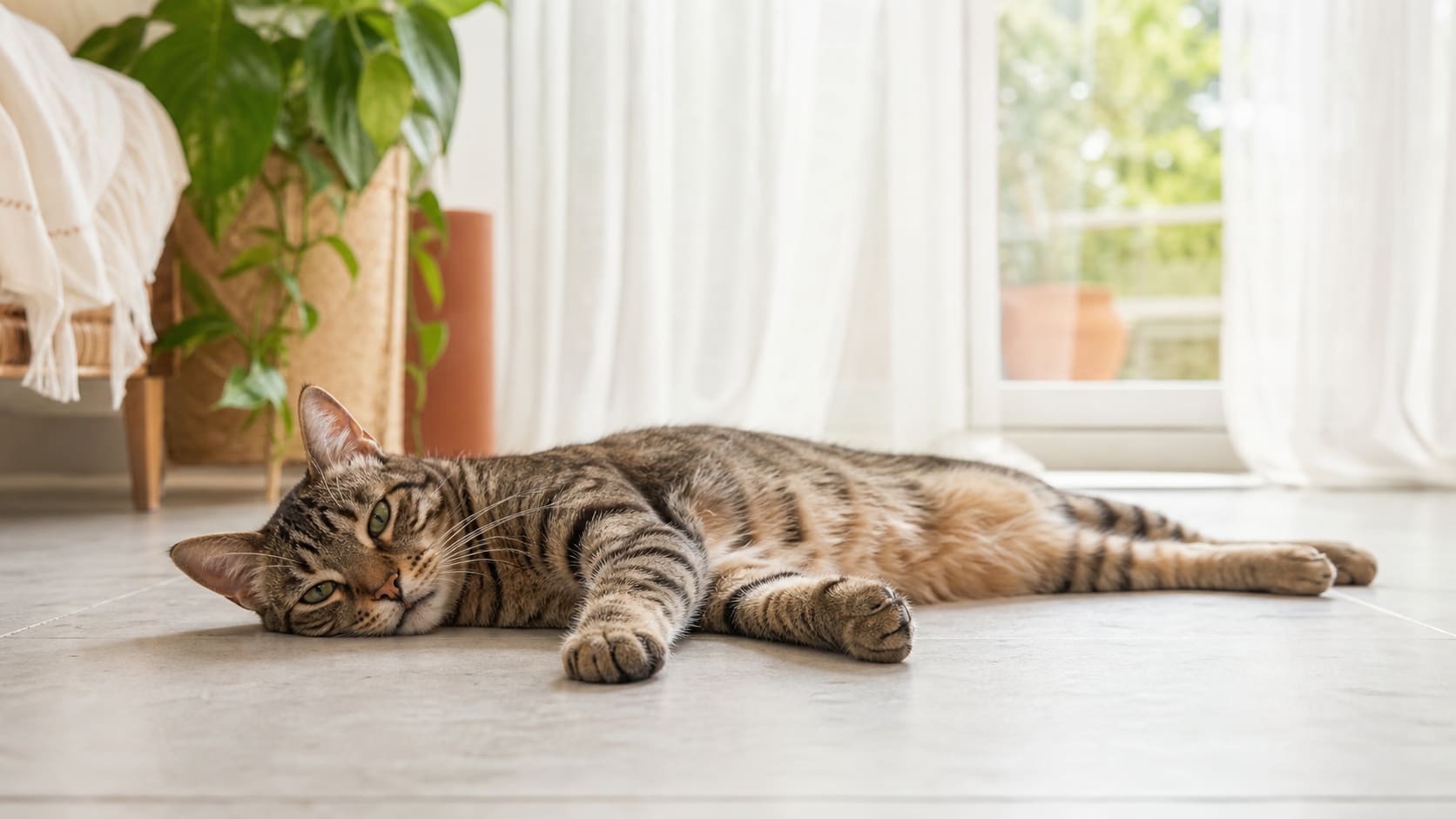
Cats are built to look comfortable. A cat that is quietly overheating does not whine or pace the way a dog does. It just gets a little flatter, a little stiller, and finds the coldest tile in the house, which is exactly why summer heat sneaks up on owners. By the time a cat is panting, it has usually been too hot for a while.
The good news is that keeping a cat cool is mostly about small environmental tweaks, not gadgets. Cats only sweat through their paw pads, so they depend on cool surfaces, airflow, and water far more than on anything you can buy. Here are twelve ways to take the edge off a hot day, starting with the ones that cost nothing.
1. Find the Coldest Room and Open It Up
Every home has a thermal map your cat already knows. Tiled bathrooms, the kitchen floor, a north-facing room, the bottom of a closet, all stay noticeably cooler. On a hot day, make sure your cat can actually reach those spots: prop the bathroom door, clear the cool corner, leave the tub accessible. You are not cooling the whole house, you are guaranteeing one cold retreat.
2. Close the Blinds Before It Heats Up
A sunny window turns a room into a greenhouse by mid-morning. Close blinds or curtains on the sun-facing side early, before the room warms, not after. Pre-empting the heat keeps a room five to ten degrees cooler than chasing it once the sun is already pouring in.
3. Make Water Impossible to Ignore
Cats are famously casual drinkers, and mild dehydration is what tips a warm day into a dangerous one. Put out more water bowls than usual, in more rooms, away from the food. Many cats drink more from a moving source than a still bowl.
What helps: A circulating fountain like the Catit Flower Fountain keeps water cooler and more interesting than a bowl that has gone flat and lukewarm by noon. If your cat is a reluctant drinker year-round, we go deeper in how to get your cat to drink more water.
For a heatwave, think in stations rather than one bowl. The best setup is usually one main water source in a cool, quiet room plus at least one backup bowl somewhere else. If your cat is picky about outlets, cords, or noisy fountains, a cordless option can make placement easier.
What helps: The PETALPAW Wireless Cat Water Fountain is a good small-space option: a 3.5L stainless-steel fountain with a separate battery and multiple flow modes. The point is not that a fountain “prevents” heat illness; it simply makes fresh water easier to place where your cat will actually drink.
For multi-pet homes or owners who refill bowls constantly, the Pokpet 10L Stainless Cordless Fountain is the larger water-station angle. Its 10L capacity, stainless basin, motion sensing, and cordless placement make it a better fit when the problem is volume, placement, or more than one animal using the same station.
4. Drop an Ice Cube in the Bowl
The simplest hydration trick there is. One or two ice cubes in the water bowl keeps it cold for an hour or two and gives curious cats a moving target to bat, which often nudges them into drinking. Some cats will happily lick a cube straight off the floor.
5. Add a Cooling Mat to a Favorite Spot
A gel cooling mat absorbs body heat and gives your cat a deliberately cold surface to stretch out on, no freezer or electricity needed. The trick is placement: put it where your cat already chooses to lie in summer, not where you wish they would.
What helps: A pressure-activated pad like the Chillz Cat Cooling Mat cools on contact and recharges on its own after your cat steps off. Lay it over their usual nap spot and let them discover it. Some cats take a day to trust it, then claim it for the season.
6. Get the Air Moving
Cats do not feel a fan the way we do, because moving air cools us through sweat evaporation and cats barely sweat. But airflow still lowers the room temperature and helps a damp-furred, freshly groomed cat shed heat. Point a fan across the room rather than directly at your cat, and pair it with a cool surface for the real effect.
7. Damp-Stroke Instead of Bathing
Most cats hate baths, and a full bath is stressful enough to do more harm than good on a hot day. Instead, run a damp hand or a wet washcloth gently over your cat’s fur, especially the head, ears, and belly. As the water evaporates it pulls heat away, mimicking the cooling a cat gets from grooming, without the fight.
8. Brush Out the Summer Coat
A matted or overgrown coat traps heat against the skin like a winter jacket in July. Regular brushing removes the dense undercoat cats shed in summer and lets air reach the skin. It is one of the highest-impact things you can do for a long-haired cat, and we cover the full routine in why your cat sheds so much in summer.
9. Serve Wet Food and Cool Treats
Wet food is roughly seventy percent water, so leaning on it during a heatwave quietly boosts hydration without your cat noticing. You can also offer a lick of cat-safe frozen broth or a few licks of wet food half-frozen into a slushy texture. Keep portions small and skip anything with onion, garlic, or added salt.
10. Never Trust a Parked Car or Sealed Room
This is the rule that saves lives. A car interior can hit lethal temperatures in minutes, even with the windows cracked, even in the shade. The same goes for a sunroom, a conservatory, or any small space that bakes. If you are transporting your cat in summer, plan the timing and the cooling before you leave, and never leave them in a stationary vehicle.
11. Set Up a Shaded “Cat TV” Away From the Glass
Cats love a window view, but the spot right against hot glass is a trap on a summer afternoon. Move the perch a foot or two back, into the shaded part of the room, so your cat keeps the entertainment without the radiant heat. A window perch positioned in shade gives them somewhere airy and elevated to lounge while still watching the world.
12. Watch the Cats Who Feel Heat First
Some cats are simply higher risk: kittens and seniors, flat-faced breeds like Persians, very long-haired cats, overweight cats, and any cat with heart or breathing issues. If your cat is in one of these groups, check on them more often during a heatwave and keep the cool retreat and water within easy reach. Knowing your cat’s risk level is half of keeping them safe.
The Five-Minute Heatwave Setup
You do not need all twelve. On a genuinely hot day, the essentials are:
- One guaranteed cool retreat (tiled floor or a cooling mat), reachable all day.
- Blinds closed early on the sunny side.
- Extra water, cold, clean, and in more than one spot.
- A damp-stroke in the afternoon for cats that will tolerate it.
- Eyes on the high-risk cats, more often than usual.
If you only buy one hydration upgrade, choose based on the actual bottleneck. A small cordless fountain helps when the ideal water spot is away from an outlet. A high-capacity fountain helps when multiple pets, travel days, or hot rooms make a normal bowl run low too fast. In both cases, keep a backup bowl out; redundancy matters more than any single gadget.
That covers the way cats actually lose heat, through cool surfaces, water, and evaporation, rather than the way we wish they did. And if your cat ever shows open-mouth panting, drooling, or sudden lethargy in the heat, treat it as urgent and read the warning signs of heatstroke in cats so you know exactly what to do.
Trying to track whether your cat is eating, drinking, and resting normally through a heatwave? We’re building CatPlay, a simple app for logging your cat’s daily habits so changes are easy to spot before they become a problem.
Sources
This article cites 3 sources in the text. They are linked below.
- Hot Weather and Your Pet (ASPCA)
- Keeping Cats Safe in Hot Weather (International Cat Care)
- Feline Hydration and Heat (Cornell Feline Health Center)
Common questions
What temperature is too hot for a cat?
Most cats stay comfortable into the mid-80s Fahrenheit. Sustained heat above about 90 degrees, especially with high humidity, raises the risk of heat stress. Kittens, senior cats, flat-faced breeds, long-haired cats, and overweight cats feel it sooner and should be watched more closely.
Do cats sweat to cool down?
Barely. Cats only have sweat glands in their paw pads, so they rely mostly on grooming, finding cool surfaces, and drinking. That is why a hot, humid day overwhelms them faster than it does us, and why your help matters more than people expect.
How do I know if my indoor cat is too hot?
Watch for panting, lethargy, sprawling on cool floors, drooling, or seeking out the bathroom sink and tub. Open-mouth breathing in a cat is never routine the way it is in a dog. If you see it, cool your cat down and read the warning signs of heatstroke.
The Summer Cat Care Checklist
A simple checklist for heat, hydration, grooming, and open-window safety on hot days.
No spam. Unsubscribe anytime. We respect your inbox.