Build a Cat-Safe Summer Sensory Garden (Balcony or Windowsill)
A cat sensory garden brings the enrichment of the outdoors safely inside. Here's how to grow cat-safe plants on a windowsill or balcony, what to plant, and what to never let near your cat.
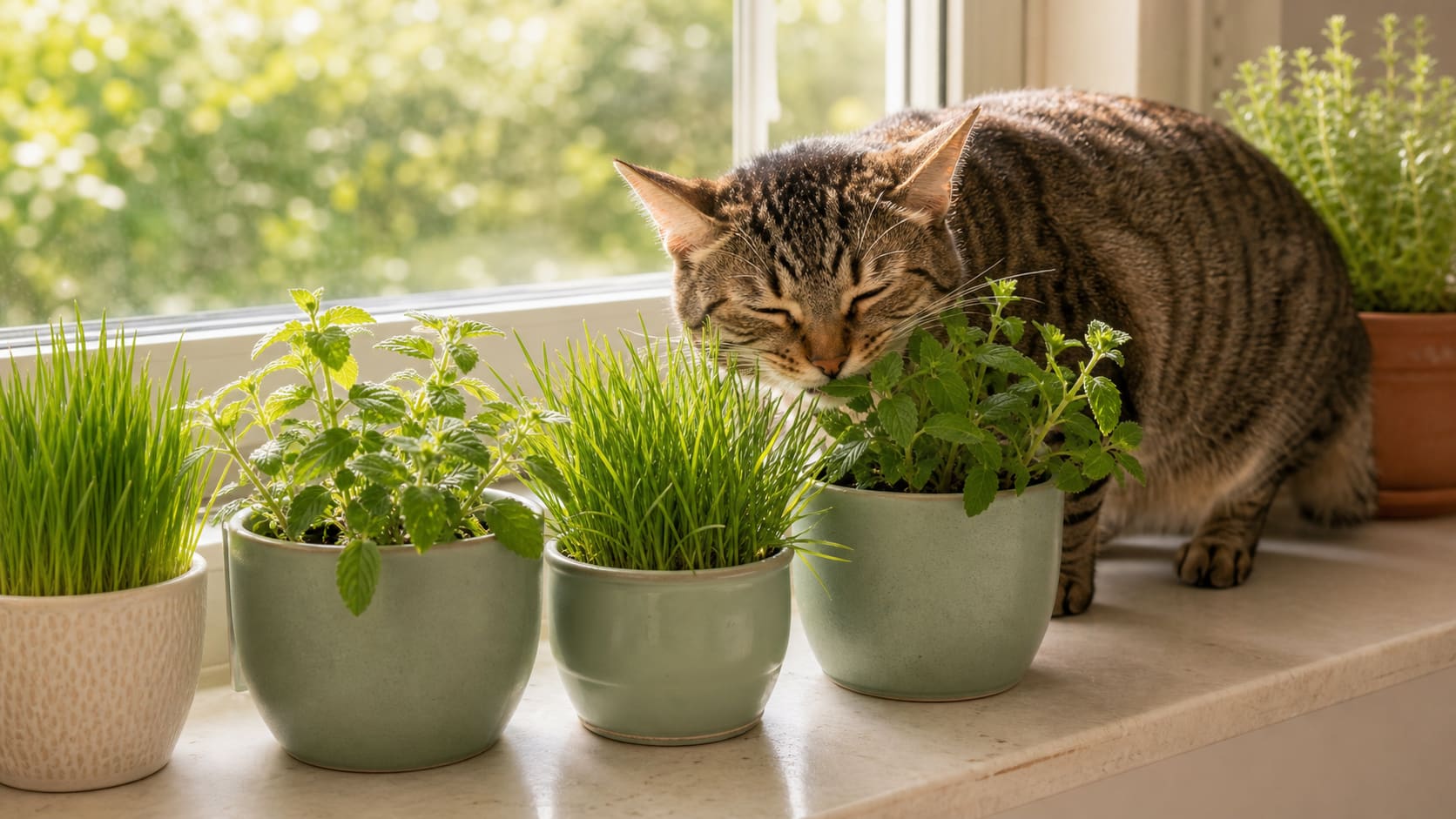
One of the kindest things you can give an indoor cat in summer is a patch of living green to call their own. A cat sensory garden — even just a few pots on a windowsill — brings the smells, textures, and gentle stimulation of the outdoors safely inside. It satisfies the urge to nibble and sniff, steers your cat away from chewing risky houseplants, and gives them a pleasant spot to lounge beside on a warm day. Best of all, it takes almost no space. Here is how to build one.
Why a Cat Garden Works
Cats are sensory animals, and scent and texture are huge parts of how they experience the world. A living plant offers something a toy never can: it grows, it smells, it moves in a breeze, and it invites a cat to nibble and rub. For an indoor cat whose world can get a little flat, that is genuine enrichment.
It also solves a problem. Cats chew greenery instinctively, and if the only greenery around is your houseplants, some of which may be toxic, that is a risk. Give them a safe, appealing plant of their own and they will usually leave the others alone.
What to Plant
Build your garden from these cat-safe favorites:
- Cat grass — oat, wheat, or barley grass. The cornerstone of any cat garden: safe to nibble, aids digestion, and helps with hairballs. A cat grass growing kit makes it foolproof, and you can sow a fresh pot every couple of weeks for a steady supply.
- Catnip — the classic. Many cats get a joyful buzz from sniffing and rolling in it. A catnip and silver vine blend covers cats that do not respond to catnip alone, since silver vine works on many that catnip doesn’t.
- Silver vine, valerian, and cat thyme — alternative “happy” plants for the roughly one in three cats indifferent to catnip.
- Cat-safe herbs — basil, rosemary, and thyme add scent variety and are safe to be around.
- Spider plant — a non-toxic leafy option many cats enjoy batting (though it has a mild fascination factor, so plant extra).
What to Never Plant
This is the half that matters most. Before any plant goes near your cat, check it against the ASPCA toxic plant list. Keep these well away:
- Lilies — deadly even in tiny amounts; never in a home with cats.
- Aloe, oleander, sago palm, foxglove, and many bulbs.
- Most “decorative” houseplants people assume are harmless — pothos, dieffenbachia, and philodendron are all toxic.
For the full rundown of summer plant and garden hazards, see summer dangers for cats.
How to Set It Up
You do not need a yard or a green thumb:
- Pick a sunny spot — a windowsill, a shelf, or a small balcony table.
- Use heavy, stable pots so a pouncing cat cannot tip them, and skip cocoa-based or chemically treated soil and fertilizers.
- Plant in waves. Sow fresh cat grass every couple of weeks so there is always a tender new pot, since cats prefer young shoots.
- Place it near a lounging spot. Beside a window perch is ideal — your cat gets the view, the breeze, and the garden all in one favorite corner.
- Let them engage on their terms. Some cats graze daily, others just like to sniff and nap nearby. Both are the garden doing its job.
A Safe Taste of the Outdoors
If your cat longs to be outside but free roaming is not safe, a sensory garden is one of the best substitutes there is — a slice of the natural world they can touch, smell, and taste without any risk. Pair it with safe outdoor options from letting your cat outside safely, and a window view from cat window and balcony safety, and even a fully indoor cat gets a rich, green summer.
We’re building CatPlay, a simple app for tracking your cat’s daily enrichment and habits, so you can see what makes their day.
Sources
This article cites 3 sources in the text. They are linked below.
- Toxic and Non-Toxic Plants (ASPCA Animal Poison Control)
- Environmental Enrichment for Cats (The Ohio State University)
- Plants and Cats (International Cat Care)
Common questions
What plants are safe for cats to be around?
Cat grass (oat, wheat, or barley grass), catnip, silver vine, valerian, cat thyme, and spider plants are all popular cat-safe choices. Many herbs like basil and rosemary are also safe. Always cross-check any new plant against the ASPCA's non-toxic list before bringing it into a home with cats.
Why do cats eat grass?
Cats nibble grass for several likely reasons: fiber to aid digestion, help passing hairballs, trace nutrients, and simple enjoyment of the texture. Growing safe cat grass gives them a healthy outlet and steers them away from chewing on houseplants that might be toxic.
Can I grow a cat garden without a yard?
Absolutely. A sunny windowsill or a small balcony is plenty. A few pots of cat grass, catnip, and cat-safe herbs create a rich sensory patch your cat can sniff, nibble, and lounge beside, no garden required.
The Summer Cat Care Checklist
A simple checklist for heat, hydration, grooming, and open-window safety on hot days.
No spam. Unsubscribe anytime. We respect your inbox.