Should You Let Your Cat Outside in Summer? Safe Outdoor Access
Summer makes indoor cats desperate to get out. Here's how to give your cat safe outdoor time, from harness training to catios and supervised access, without the risks of free roaming.
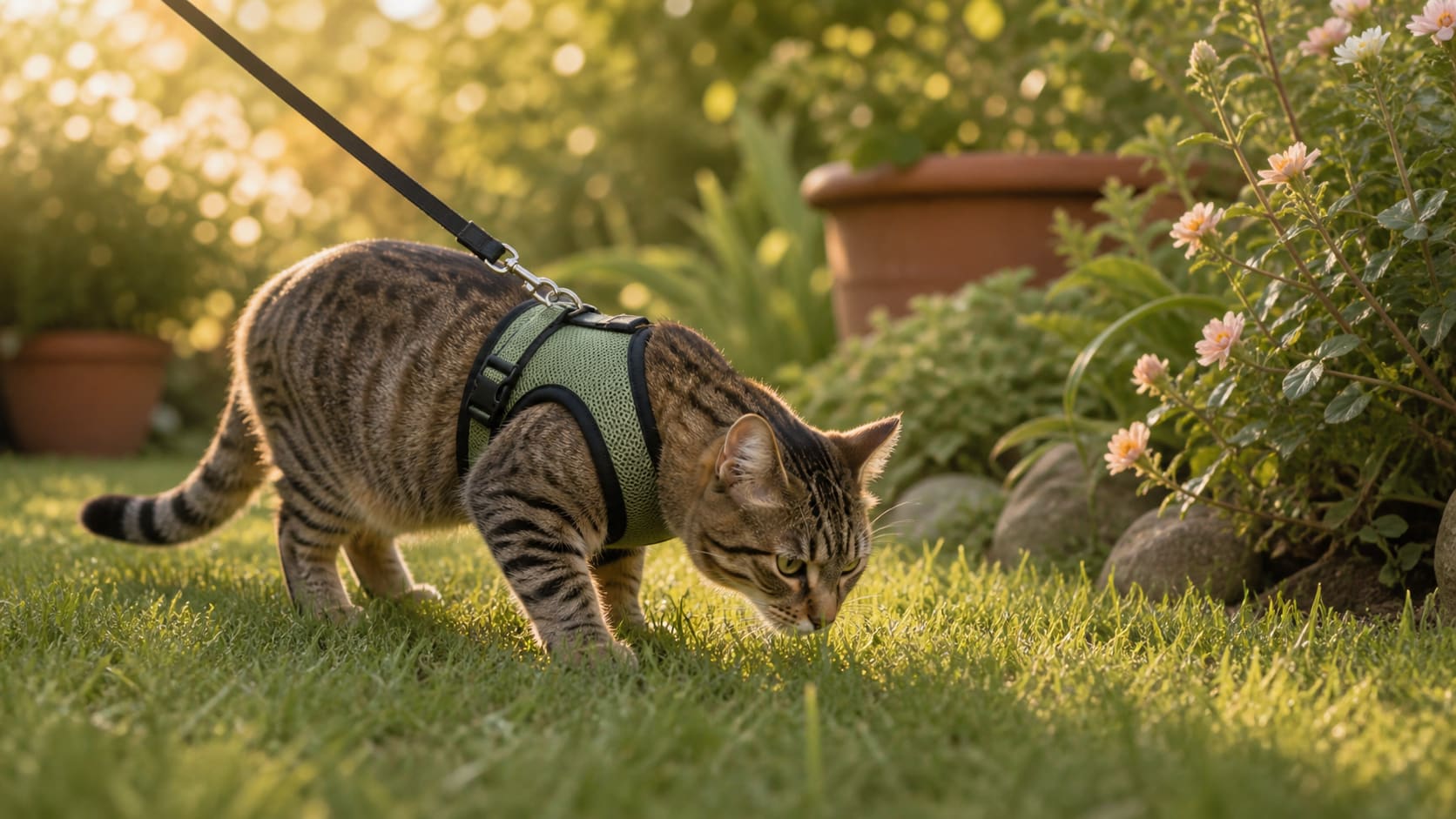
Come summer, even the most contented indoor cat starts staring longingly through the screen. The smells, the birds, the warm air — it is all incredibly tempting. The instinct to let them out is understandable, but free roaming carries serious risks, from traffic to parasites to simply not coming home. The better answer is controlled outdoor access, which gives your cat the enrichment of the outside world without the dangers. Here is how to do it well.
The Honest Case Against Free Roaming
Letting a cat roam unsupervised is the riskiest option, and it is worth being clear-eyed about why. Outdoor cats face traffic, fights and abscesses, fleas and ticks and worms, poisons, getting trapped in sheds or cars, theft, and disorientation that leads to never finding their way back. They also take a heavy toll on local wildlife.
None of this means your cat has to stay sealed inside all summer. It means the outdoors is best enjoyed on a leash, in an enclosure, or under supervision — access with a safety net.
Option 1: Harness and Leash Walks
For many cats, a harness opens up the whole garden safely. Done right, leash time becomes a highlight of their day.
Get the right gear. A flimsy harness a cat can back out of is worse than none, because a spooked cat that escapes a harness outdoors can bolt and vanish. An escape-proof cat harness and leash set with multiple adjustment points and a snug, vest-style fit is the safe choice.
Train in stages, indoors first. Let your cat wear the harness around the house with no leash, paired with treats, until they are completely relaxed in it — this can take days, and that is fine. Then attach the leash indoors. Only once both feel normal do you step outside, starting with a quiet, enclosed area.
Let the cat lead. A cat walk is nothing like a dog walk. Your cat sets the pace and direction, sniffing and pausing; you simply prevent them going somewhere unsafe. Never drag a cat on a leash.
Option 2: A Catio or Enclosed Space
A “catio” — an enclosed patio, balcony, or window box — gives a cat unsupervised fresh air with zero escape or predator risk. They range from a simple mesh-covered balcony to elaborate garden structures, and you can buy kits or build your own.
If you have a garden, cat-proof fencing or netting that curves inward at the top can turn the whole yard into a safe zone. Either way, an enclosure lets a cat lounge in the sun, watch the world, and breathe outdoor air on their own schedule.
Option 3: Supervised Garden Time
The simplest version is just being out there with them. Sit in the garden while your cat explores nearby, ready to step in if they head for the fence or a hazard. It will not contain a determined escape artist, so it suits calmer cats and works best in a quiet, enclosed yard.
Summer-Specific Rules for Outdoor Time
Whichever route you choose, the season adds a few rules:
- Go out in the cool hours — early morning or evening, never the hot midday sun.
- Mind the pavement. Sun-baked stone and asphalt can burn paw pads; if it is too hot for your hand, it is too hot for their feet.
- Keep water and shade available, and watch for signs of overheating.
- Stay current on parasite prevention — outdoor access means more exposure to fleas and ticks. See how to get rid of fleas on cats.
- Make sure they’re microchipped and, ideally, wearing a quick-release collar with ID.
Bringing the Outside In
If your cat cannot safely go out, you can bring a lot of the outdoors to them. A window view, a cat-safe sensory garden of edible greens, and secure window access deliver much of the same stimulation. And whatever you set up outside, pair it with safe windows at home — see cat window and balcony safety.
Done thoughtfully, summer can be the season your cat finally gets to feel grass under their paws — safely, on terms that bring them home every time.
We’re building CatPlay, a simple app for tracking your cat’s activity and outdoor time so you can see what enriches their day most.
Sources
This article cites 3 sources in the text. They are linked below.
- Indoor vs Outdoor Cats (ASPCA)
- Outdoor Access and Cat Welfare (International Cat Care)
- Feline Environmental Needs (The Ohio State University)
Common questions
Is it safe to let an indoor cat outside in summer?
Free, unsupervised roaming carries real risks: traffic, parasites, fights, theft, and getting lost. But controlled outdoor access — on a harness, in a catio, or in a securely enclosed garden — lets a cat enjoy fresh air and stimulation safely. The key word is controlled.
Can you train a cat to walk on a leash?
Yes, most cats can learn, though some take to it more readily than others. The trick is to start indoors, let the cat get comfortable in the harness before you ever attach a leash, and go at the cat's pace. Never drag or rush; outdoor walking is led by the cat, not you.
What time of day is best for outdoor time in summer?
Early morning and evening, when it's cooler and calmer. Avoid the hot midday sun, which risks overheating and burns sensitive paw pads on hot pavement. Cats are naturally crepuscular, so dawn and dusk also match when they most want to explore.
The Summer Cat Care Checklist
A simple checklist for heat, hydration, grooming, and open-window safety on hot days.
No spam. Unsubscribe anytime. We respect your inbox.