Self-Warming vs Heated Cat Bed: Which Should You Buy?
Self-warming vs heated cat beds: how each works, safety notes, running cost, and which is better for seniors, kittens or power outages.
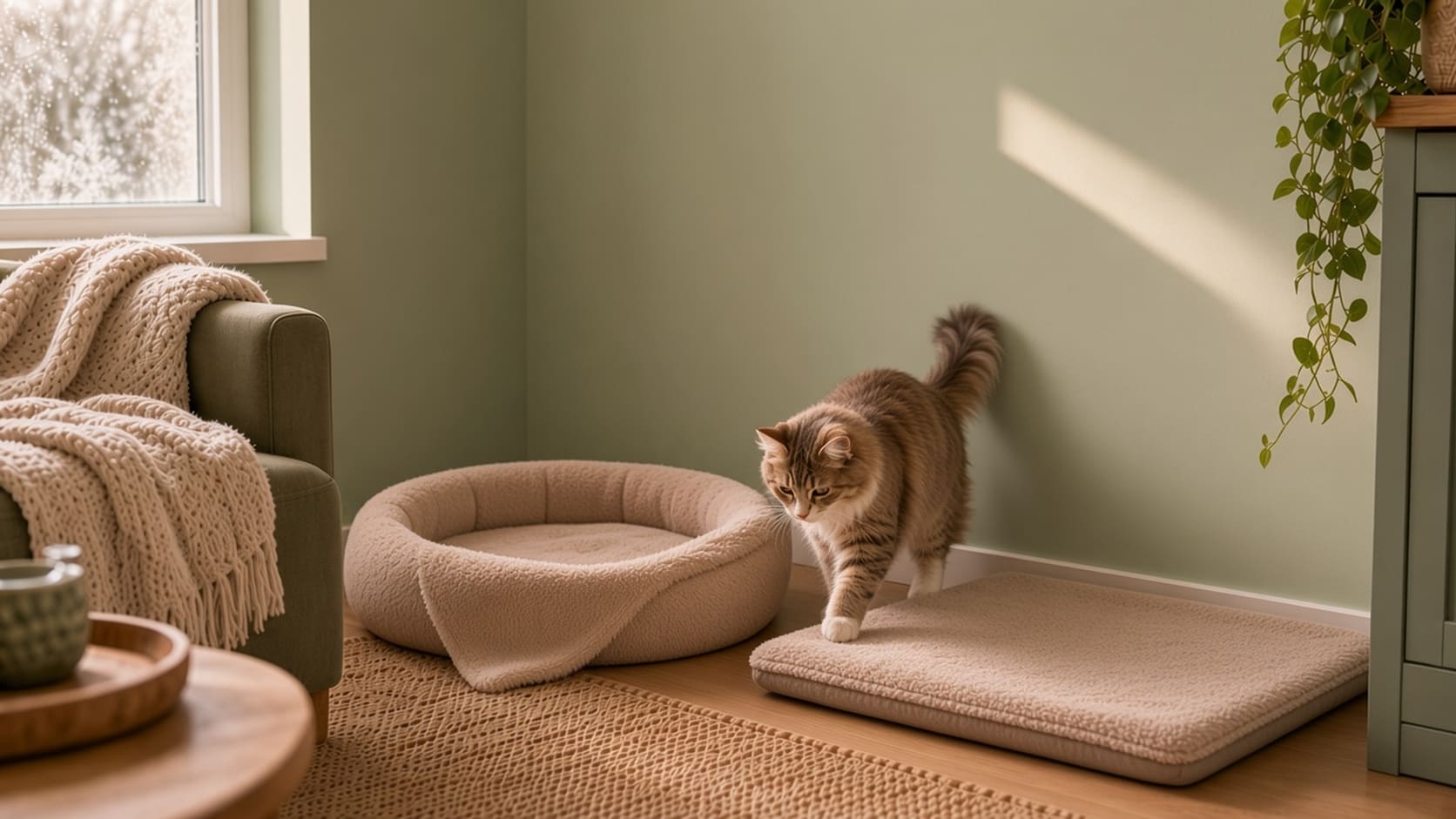
Quick answer: Buy a heated cat bed if you want the bed to add a little warmth in a cool room, especially for a senior, kitten or thin cat. Buy a self-warming pad if you want a no-cord layer that reflects the cat’s own body heat. If you have no power, the heated bed cannot help; the self-warming pad still can, and a microwavable disc is the usual backup.
Both products are sold as “warm beds,” and they work in completely different ways. This comparison uses K&H’s official explanations, because K&H makes widely sold versions of each and publishes the temperature and design details. For a longer senior-cat setup guide, see best heated cat beds for senior and arthritic cats. For house-wide winter tactics, see how to keep cats warm without heat.
We may earn a commission if you buy through links on this page, at no extra cost to you. We have not lab-tested these beds side by side. How they work and the temperature figures come from the manufacturer and veterinary sources linked below.
Key takeaways
- Self-warming = insulation + a reflective layer. No plug, no added heat.
- Heated = a low-watt thermostat. The K&H Thermo-Kitty uses 4 watts and, K&H says, warms to about 102°F in use.
- A self-warming pad cannot heat a cold room. A heated bed can take the edge off one sleeping spot.
- Cords and burn risk belong only to the heated bed. The AVMA still cautions about heated pet mats.
- For outages, the self-warming pad and a microwavable disc keep working; the plug-in bed does not.
Self-Warming vs Heated Cat Bed at a Glance
| K&H Self-Warming Cat Bed Pad | K&H Thermo-Kitty Heated Cat Bed | |
|---|---|---|
| How it works | Insulation and a reflective layer return the cat’s own heat | Removable 4-watt heater with a thermostat |
| Needs electricity? | No | Yes |
| Temperature (maker) | No target temperature; warmth lasts while the cat stays on it | About 10–15°F above room temperature when empty; about 102°F in use |
| Best setting | Draft-free, high-sided or covered bed | Indoor use, cord routed safely, unheated option nearby |
| Running cost | None | Very low (4 watts), but only while plugged in |
| Power outage | Still works | Does not heat |
| Main caution | Some pads crinkle; little help in a very cold room | AVMA burn caution; inspect the cord; no human heating pads |
| Washability | Reversible, machine-washable pad (follow the label) | Removable, washable cover; remove the heater first |
Prices change, and we do not print Amazon figures from this location. Check the live listing. K&H also sells other heated and self-warming shapes; the two products above are the ones we already use on the site with verified ASINs.
How a Self-Warming Pad Actually Works
A self-warming bed is closer to a good sleeping bag than to a radiator. There is no heating element. K&H’s explanation is straightforward: insulation holds the cat’s body heat, and a metalized reflective layer sends that heat back toward the cat. Warmth builds while the cat stays on the pad and fades after the cat leaves.
That is why placement matters more than the product photo. A pad on a cold, drafty floor under a window will lose heat as fast as the cat makes it. The same pad inside a high-sided bed, a cave, or a carrier, off the floor, has a chance to do its job. K&H also notes that some pads make a slight crinkle, which many cats like and a few noise-sensitive cats do not.
What a self-warming pad will not do:
- Heat the room.
- Warm up before the cat arrives.
- Help much if the cat only sits on it for a minute.
- Replace a veterinarian’s advice for a cat that is shivering, lethargic or unusually cold to the touch — those can be hypothermia signs (PetMD).
How a Heated Cat Bed Actually Works
A heated cat bed adds a small amount of electric heat in a controlled range. The K&H Thermo-Kitty is a useful example because K&H publishes the numbers: a thermostatically controlled 4-watt heater, a surface that stays about 10 to 15°F above room temperature when empty, and about 102°F — roughly a cat’s normal body temperature — when the cat is on it. K&H says the beds are not pressure sensitive; they give off a little heat while plugged in so the cat can find them, and the cat’s body then insulates the surface so it can rise to that target.
The 20-inch Thermo-Kitty we link is a cup-style bed with 6-inch foam walls and a removable, washable cover. The heater comes out for washing and for summer use. K&H says the product is safety certified (MET listed). Even so, the AVMA advises caution with heated pet mats because burns are possible. Leave an unheated bed in the same room, route the cord out of reach, and unplug a damaged unit.
Do not use a human heating pad or electric blanket. Those can overheat and are not designed for a cat that may nest, chew or fail to move away.
Get winter care notes
Our free indoor cat checklist, plus occasional emails when useful winter gear actually drops in price.
By subscribing you agree to receive emails from Paw & Sage. Double opt-in, unsubscribe anytime. See our privacy policy.
Who Should Buy Which
| If you… | Pick |
|---|---|
| Keep the house reasonably warm and just want a cozier nest | Self-warming pad |
| Do not want a cord, or need a pad for a carrier or existing bed | Self-warming pad |
| Run the thermostat low, or have a chilly spare room | Heated Thermo-Kitty |
| Have a senior, arthritic, thin or very young cat | Heated Thermo-Kitty, plus an unheated option |
| Worry about chewing cords or a messy cable path | Self-warming pad |
| Are planning for a power outage | Self-warming pad plus a SnuggleSafe disc |
| Have a cat that already lives on the windowsill | A heated window perch, not a floor bed |
PetMD’s ranges are the context for that table: many healthy adult cats are uncomfortable below about 45°F, and seniors, kittens and sick cats can feel it from 50 to 60°F. If your indoor temperature is already in a comfortable human range, a self-warming pad may be enough. If you keep a spare room cold, or the cat is older and bony, the heated bed is the more logical tool.
Neither? The Outage and Travel Option
If you need warmth with no wall plug and more than reflected body heat, a microwavable pet disc sits in the middle. The SnuggleSafe Microwave Heating Pad is an 8.7-inch disc the maker says can release gentle warmth for up to 10 hours after you heat it in a microwave, with a chew-resistant shell and a fleece cover. Use it in the cover, follow the official heating time, and never substitute a human hot pack. Heat it before a storm if you can.
Can You Use Both Together?
Yes, and many winter setups work better that way than as a forced choice. Put the heated cup where the cat already sleeps at night, and drop the self-warming pad in a second favorite spot — a sofa, a carrier, or a condo on a cat tree. The pad also travels; the plug-in bed usually does not.
Do not stack a heated pad under a self-warming pad unless the maker of both products says that is allowed. Extra layers can change how a thermostat reads the surface. If you want a softer heated bed, use the official cover and a thin familiar blanket on top, then feel the surface. It should stay warm, not hot.
Introduce either product the same way you would a new bed: place it in a quiet, draft-free spot, add a blanket that already smells like the cat, and let them find it. Picking a stiff senior up and setting them on a new heater is a good way to teach them to avoid it.
How We Compared
- How each technology works, and the 4-watt / 102°F figures, come from K&H’s official self-warming and Thermo-Kitty pages, checked in November 2026.
- The burn caution comes from the AVMA. Indoor temperature ranges come from PetMD’s veterinary-reviewed guidance.
- This is a research comparison, not a hands-on heat test. Our editorial policy explains how we research products.
If you can have only one, match it to the room and the cat: a self-warming pad for a warm, draft-free home and no cord; a thermostatic heated bed for a cooler room or a senior who needs a little help. Leave a way off the heat either way.
Get our free indoor cat enrichment checklist
Plus seasonal picks and deals worth knowing about. No spam, unsubscribe anytime.
By subscribing you agree to receive emails from Paw & Sage. Double opt-in, unsubscribe anytime. See our privacy policy.
Sources
This article cites 5 sources in the text. They are linked below.
- Do Self-Warming Cat Beds Work? (K&H Pet Products)
- Self-Warming vs Heated Cat Beds: Which to Choose (K&H Pet Products)
- Thermo-Kitty Bed Heated Cat Bed (K&H Pet Products)
- Cold Weather Animal Safety (American Veterinary Medical Association)
- How Cold Is Too Cold for Cats? (PetMD (Sandra C. Mitchell, DVM, DABVP))
Common questions
Do self-warming cat beds work?
They can. A self-warming bed has no heater. K&H says it uses insulation plus a reflective layer to send the cat's own body heat back. It works best in a draft-free, high-sided or covered bed, and it will not warm a very cold room or a pad the cat has left.
Is a heated cat bed warmer than a self-warming pad?
Yes, in a cool room. A thermostatic heated bed such as the K&H Thermo-Kitty adds a small amount of electric heat and, K&H says, warms to about 102°F when the cat is on it. A self-warming pad can only recycle the heat the cat already has.
Are heated cat beds safe?
A low-wattage, thermostatic bed made for pets is designed for this use. The AVMA still warns that heated pet mats can cause burns, so leave an unheated spot, inspect the cord, and never use a human heating pad.
Which is better for a senior or arthritic cat?
A heated bed is usually the better starting point if the house runs cool or the cat is thin, old or less mobile, because it supplies heat instead of only reflecting it. A self-warming pad is a good extra layer or a no-cord option in an already reasonably warm room. See our heated beds for senior cats guide for setup.
Which is better during a power outage?
A self-warming pad still works, because it has no plug. A heated bed does not. A microwavable pet heat disc, warmed before the power fails or at a neighbor's, is the usual backup.
Do self-warming beds use electricity?
No. There is no cord, no battery and no wattage rating. If a listing calls a pad 'self-warming' but also asks you to plug it in, it is a heated bed under a confusing name.