Holiday Plants and Cats: A Toxicity Chart (2026)
Holiday plants and cats: poinsettia, holly, mistletoe, amaryllis, lilies and tree water, with ASPCA guidance and safer decorating swaps.
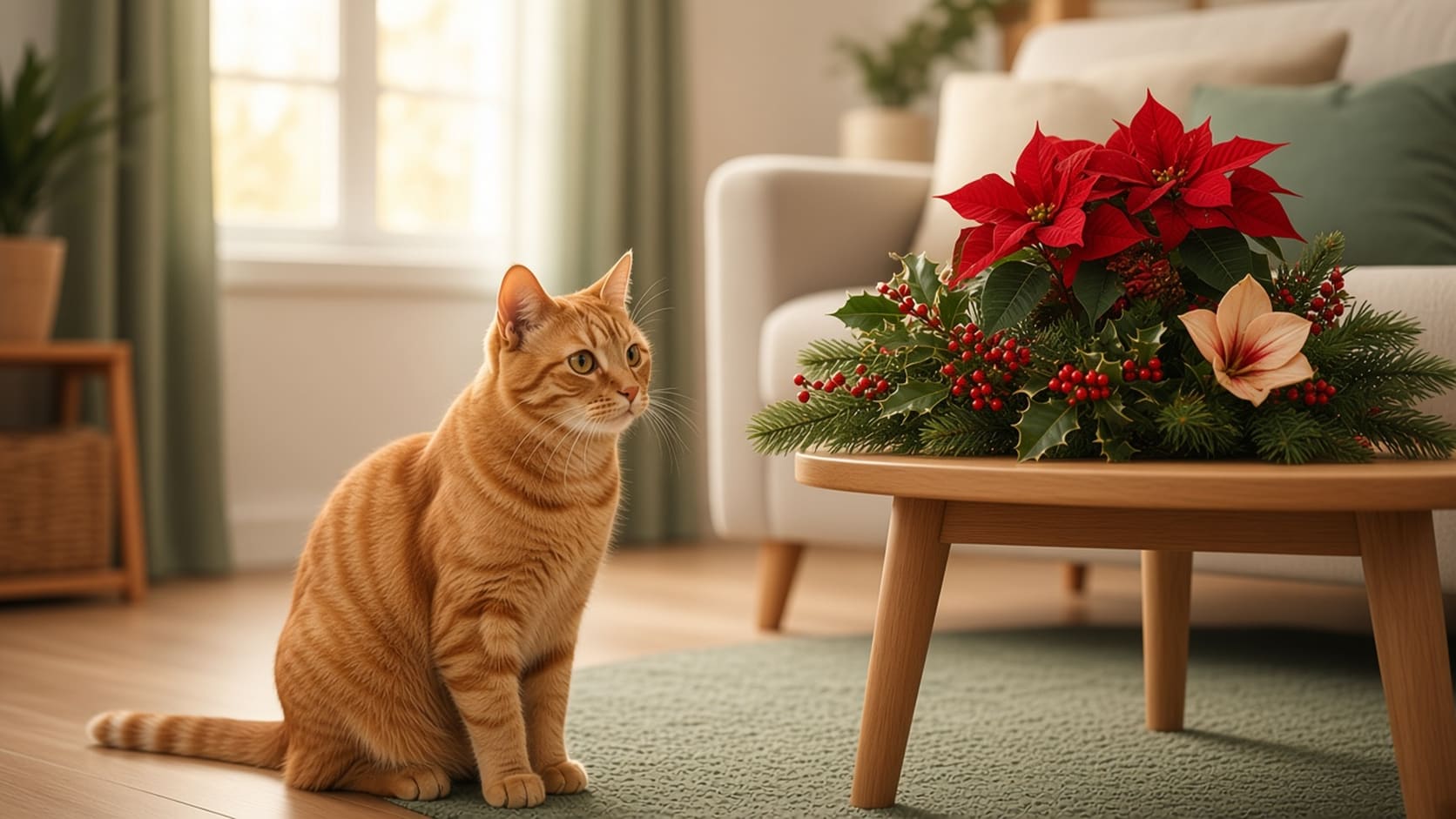
Quick answer: The holiday plant that should never be in a home with cats is a true lily. The ASPCA says lilies can cause kidney failure. Holly and mistletoe can cause stomach upset and heart problems. Poinsettias are milder (mouth and stomach irritation). Cover Christmas tree water, and call a vet or ASPCA Poison Control at (888) 426-4435 if your cat chews a risky plant.
A festive bouquet on the table looks harmless until a cat tastes a petal. The scare stories about poinsettias are usually overstated. The lily in the same vase is not. This guide follows the ASPCA’s holiday-safety tips and plant database, plus Cornell’s holiday-hazard notes. We have not tested these plants in a lab; toxicity claims come from those sources, not from invented numbers.
We may earn a commission if you buy through links on this page, at no extra cost to you.
Key takeaways
- Lilies are the emergency. Even a small exposure can be serious. Get veterinary help immediately.
- Holly and mistletoe can cause gastrointestinal and cardiovascular problems, according to the ASPCA.
- Poinsettias usually cause mild to moderate irritation, not kidney failure.
- Amaryllis is listed as toxic in the ASPCA plant database; keep bulbs and blooms out of reach.
- Cover the tree stand. Tree water can grow bacteria (and may hold additives) that make a cat sick.
- Decor is part of the plant problem. Tinsel, ribbons and ornament hooks belong in the same risk group. See is tinsel bad for cats.
Holiday Plant Toxicity Chart
| Plant or item | What the ASPCA (and Cornell, where noted) say | What to do |
|---|---|---|
| True lilies (Easter, tiger, Asiatic, stargazer and similar Lilium / Hemerocallis daylilies often sold in holiday bouquets) | Can cause kidney failure in cats | Do not bring them home. If exposure happens, it is an emergency |
| Holly | Gastrointestinal and cardiovascular problems | Keep wreaths and cuttings out of reach or skip them |
| Mistletoe | Gastrointestinal and cardiovascular problems | Same as holly; do not let leaves or berries fall on the floor |
| Poinsettia | Mild to moderate irritation of the mouth and stomach if chewed or swallowed | Not the worst plant in the room, but still not a snack; wipe sap off fur |
| Amaryllis | Listed as toxic in the ASPCA toxic-plant database | Keep bulbs, leaves and flowers off tables a cat can jump on |
| Christmas tree water | Can contain bacteria that make pets sick; some stands also hold fertilizer or preservatives | Cover the reservoir completely |
| Tinsel, ribbons, garlands | The ASPCA says tinsel can cause severe vomiting, obstruction, dehydration and possible surgery; VCA covers linear foreign bodies | Do not hang them. Details in is tinsel bad for cats |
This is not every toxic plant. If you are unsure about a bouquet, look the plant up in the ASPCA toxic and non-toxic plant list, or ask your vet before it comes inside.
Lilies: The One Holiday Plant to Ban
Holiday bouquets are where lilies sneak in. A centerpiece labeled “festive mixed flowers” can include a stargazer or Asiatic lily. The ASPCA is direct: lilies can cause kidney failure in cats. Pollen on fur, a bitten leaf or water from the vase can all matter. Do not try to “wait and see” if the cat seems fine.
If you think there was contact:
- Remove the plant and keep the cat from grooming more pollen off its coat (a damp cloth helps while you call for advice).
- Call your veterinarian or an emergency clinic. You can also call the ASPCA Animal Poison Control Center at (888) 426-4435; a consultation fee may apply.
- Bring the plant label or a photo if you can.
There is no safe “just a little lily” for cats. Buy a lily-free arrangement, or skip cut flowers during the holidays.
Poinsettia, Holly, Mistletoe and Amaryllis
Poinsettias have a worse reputation than the ASPCA’s actual wording. Chewing or swallowing can cause mild to moderate irritation of the mouth and stomach. That is still unpleasant, and sap can irritate skin, but it is not in the same category as lilies. If you keep a poinsettia, put it where the cat cannot jump, and call a vet if a lot was eaten or if vomiting starts.
Holly and mistletoe are the greenery in wreaths, kissing balls and mantel cuttings. The ASPCA groups them together: they can cause gastrointestinal upset and cardiovascular problems. Berries on the floor are the usual route. If you love the look, use a high hook, check the floor daily, or switch to a berry-free, plant-free wreath.
Amaryllis is a common holiday bulb. The ASPCA lists it as toxic. Cats sometimes chew the thick leaves or dig at the bulb in a pot. Treat the whole plant — bulb, leaves, flower — as off limits, the same way you would a houseplant you already know is unsafe.
The Tree Itself: Water, Needles and the Stand
A fir or spruce is not usually the star toxin in this list, but the stand is. The ASPCA warns that tree water can grow bacteria that make pets sick, and many people add packets of preservative. Cover the reservoir so a thirsty cat cannot drink from it. A fitted cover, a tunnel tree skirt that hides the stand without leaving a drinking gap, or a clear tree fence around the base all help.
Cornell’s holiday-hazard article also flags unstable trees, electric cords, ornaments, tinsel and ribbons. Stabilize the trunk, hide cords, and use shatterproof ornaments instead of glass. Our cat-proof Christmas tree guide walks through fences, skirts and climbing alternatives.
Pine needles can irritate a mouth or stomach if a cat chews a lot of them. Sweep daily. If the tree leans or the cat has already climbed it, a taller tree guard is more useful than another lecture.
Get the indoor cat checklist
A free setup checklist for busy and holiday weeks, plus occasional notes when useful cat gear actually drops in price.
By subscribing you agree to receive emails from Paw & Sage. Double opt-in, unsubscribe anytime. See our privacy policy.
A Safer Holiday Table
You do not have to decorate with living plants.
- Skip mixed bouquets unless a florist confirms there are no lilies, including pollen-heavy “oriental” stems.
- If you want color on a table, use unscented candles in tall, stable holders the cat cannot knock over — and never leave them burning unattended. The ASPCA also flags open flames.
- Give the cat a legal high spot in another room, such as a heated window perch or a sturdy cat tree, so the tree is not the only vertical object in the house.
- For guests, keep a quiet room plant-free and stocked with a bed, a box and water, as the ASPCA recommends when the house gets loud. A calming diffuser can be part of that room, not a substitute for a closed door.
If Your Cat Already Chewed a Plant
Stay calm, and do not invent a home remedy.
- Identify the plant if you can (photo or tag).
- For lilies, go to urgent care. For holly, mistletoe, amaryllis or a large amount of poinsettia, call the vet or Poison Control before you induce anything — do not give hydrogen peroxide or oils unless a veterinarian tells you to.
- Note whether your cat is vomiting, drooling, hiding, breathing oddly or not urinating. Those details help the clinic.
- After the emergency, look at the room: where did the plant sit, and what else (ribbon, tinsel, chocolate, bones) is still on that table? Thanksgiving leftovers have their own rules in can cats eat turkey.
How We Researched This
- Plant and tree-water claims come from the ASPCA Holiday Safety Tips page, checked in November 2026, and from the ASPCA toxic-plant entry for amaryllis.
- Tree, cord and decoration hazards also draw on Cornell’s “Beware of Holiday Hazards.”
- Tinsel and string risk is covered in more detail by VCA’s linear foreign body article and in our tinsel guide.
- This is not a veterinary diagnosis. If a plant was eaten, call a vet. Our editorial policy explains how we research guides like this.
A beautiful holiday table is not worth a kidney emergency. Leave the lilies at the shop, cover the tree water, and let the cat have a room that is boring, quiet and plant-free.
Get our free indoor cat enrichment checklist
Plus seasonal picks and deals worth knowing about. No spam, unsubscribe anytime.
By subscribing you agree to receive emails from Paw & Sage. Double opt-in, unsubscribe anytime. See our privacy policy.
Sources
This article cites 4 sources in the text. They are linked below.
- Holiday Safety Tips (ASPCA)
- Amaryllis (ASPCA Toxic and Non-Toxic Plants)
- Beware of Holiday Hazards (Cornell Feline Health Center)
- Linear Foreign Body in Cats (VCA Animal Hospitals)
Common questions
Are poinsettias poisonous to cats?
The ASPCA says poinsettias can cause mild to moderate irritation of the mouth and stomach if chewed or swallowed, not the severe poisoning people often expect. Lilies are the holiday plant that can cause kidney failure and should be treated as an emergency.
Which holiday plants are most dangerous for cats?
True lilies in holiday bouquets are the emergency: the ASPCA says they can cause kidney failure in cats. Holly and mistletoe can cause gastrointestinal upset and cardiovascular problems. Amaryllis is listed as toxic on the ASPCA plant database. Christmas tree water can grow bacteria that make a cat sick if they drink it.
What should I do if my cat eats a lily?
Treat it as an emergency even if the cat only licked pollen or chewed a leaf. Call your veterinarian or the ASPCA Animal Poison Control Center at (888) 426-4435 (a consultation fee may apply) and go in. Do not wait for vomiting to start.
Is Christmas tree water safe for cats?
No. The ASPCA warns that tree water can contain bacteria that make pets sick, and some people add fertilizer or preservatives. Cover the reservoir so your cat cannot drink from it, and wipe spills.
Are fake holiday plants safer than real ones?
A silk or plastic arrangement avoids lily and holly toxins, but it can still shed small parts. Skip anything with tinsel, ribbon or loose berries that can be swallowed. Safer still is a plant-free table and a well-secured tree.
Can cats be around a Christmas tree at all?
Yes, if you stabilize the tree, cover the water, skip tinsel and breakable ornaments, and give the cat a legal climbing spot elsewhere. See our guide to cat-proofing a Christmas tree for fences, tunnel skirts and shatterproof ornaments.