Can Cats Eat Turkey at Thanksgiving? (2026)
Can cats eat turkey at Thanksgiving? What the ASPCA allows, which trimmings to skip, and safer ways to include your cat in the meal.
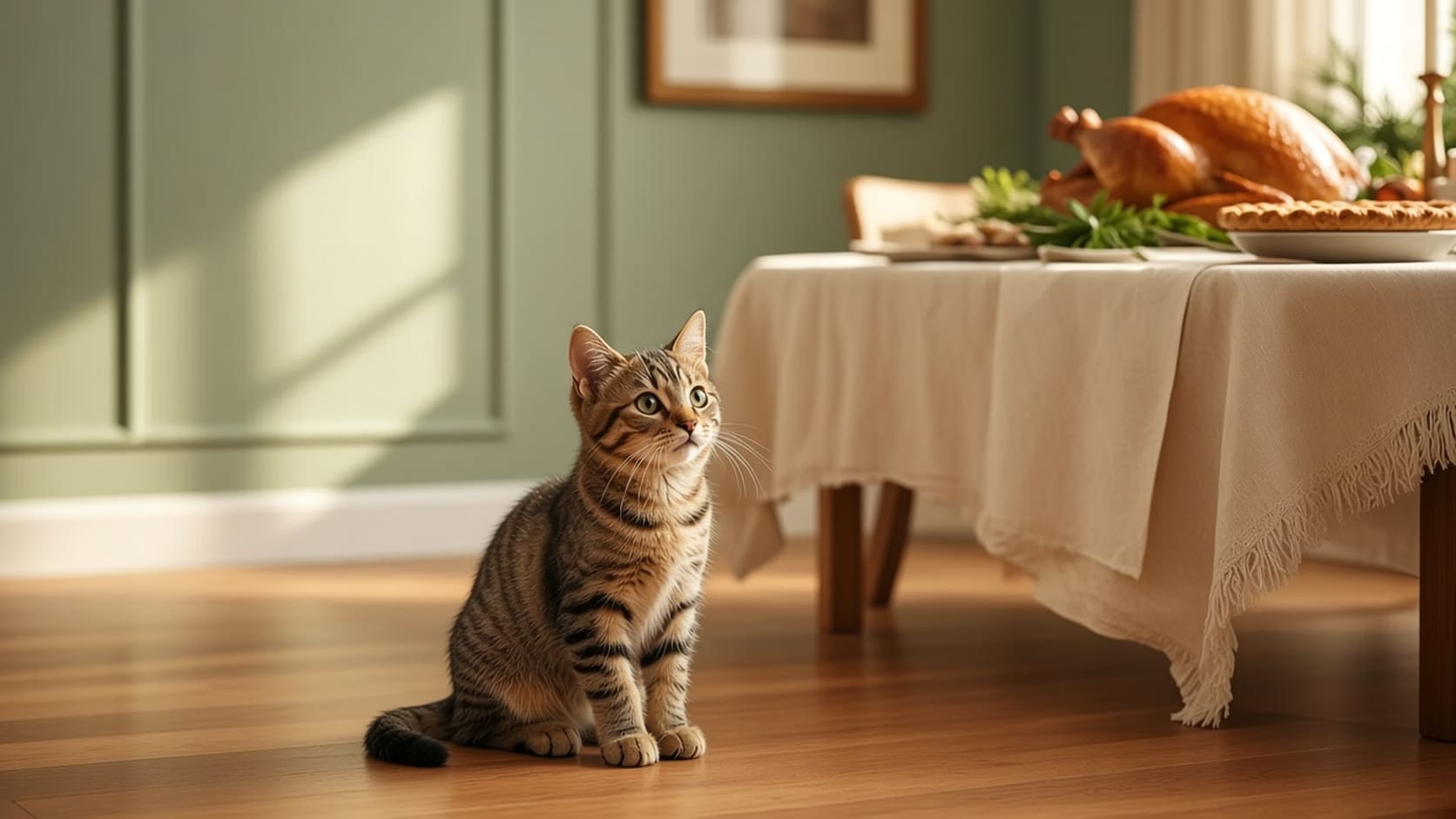
Quick answer: Yes, a small piece of plain, boneless, cooked turkey can be a treat — that is the ASPCA’s wording. It is still better to keep your cat on its usual diet. Do not offer bones, skin, stuffing, gravy, onions, garlic, chocolate, grapes, raisins, xylitol or alcohol. If a risky leftover disappears, call your vet or ASPCA Poison Control at (888) 426-4435.
Thanksgiving is a sensory overload for an indoor cat: new smells, more people, and a table full of food that was not cooked for a carnivore on a regular diet. The kindest plan is usually a normal meal in a quiet room, plus one tiny, plain bite if you want a shared moment. We have not run a feeding trial. The rules below follow the ASPCA’s holiday-safety tips and its people-foods list, checked in November 2026.
We may earn a commission if you buy through links on this page, at no extra cost to you. We do not invent serving sizes in ounces or “safe number of bites.”
Key takeaways
- Plain, boneless turkey in a small piece is the treat the ASPCA describes as fine.
- The usual diet is still better. A sudden change, even to “real meat,” can upset a sensitive stomach.
- Bones are dangerous. So are fatty, sweet and spicy trimmings, stuffing with onion or garlic, and dessert foods such as chocolate, grapes, raisins and xylitol.
- Alcohol and yeast dough are never cat food. Neither is the trash bag by the back door.
- Give the cat an exit: a quiet room, a litter box, water and a bed, as the ASPCA recommends when the house gets loud.
Thanksgiving Table: What Is and Is Not Okay
| Food or item | ASPCA-aligned guidance | Why it matters |
|---|---|---|
| Small piece of plain, boneless, cooked turkey | Fine as a treat; usual diet is still better | Unseasoned meat is the only “yes” on this list |
| Turkey or chicken bones | Dangerous; keep carcasses in a secured bin | Splinters can injure the mouth, throat or intestine |
| Skin, drippings, gravy | Skip | Fatty and usually seasoned; the ASPCA flags fatty, sweet and spicy foods |
| Stuffing, dressing, onion-garlic casseroles | Skip | Onions, garlic, chives and similar alliums are on the ASPCA people-foods list |
| Chocolate, desserts with xylitol, grapes, raisins | Toxic risk | These are classic holiday dessert hazards, not “a little won’t hurt” foods |
| Alcohol, bread dough | Never | The ASPCA lists alcohol among holiday dangers; rising dough is a people-food risk too |
| Spiced, brined or heavily salted meat | Skip | ”A small piece of turkey” means plain, not the seasoned roast off your plate |
If you cannot be sure a bite is plain, do not offer it. Ask guests not to slip food under the table. A kind visitor can undo a careful plan with one fatty bite, and you may not find out until the cat is sick later. If children are at the table, put the cat in its quiet room before the meal starts.
The ASPCA’s “small piece of boneless turkey” is a leftover of the cooked, plain roast, not raw meat from the prep board and not a heavily brined or spiced slice off someone else’s plate.
What “A Small Piece” Means in Practice
The ASPCA does not publish a gram count for Thanksgiving turkey, and we will not invent one. “A small piece” is a taste, not a plate. For most cats that is a cube of white meat, unseasoned, with no skin and no bone, offered after the cat has already eaten its regular meal so it is not gulping table food on an empty stomach.
Cats that have pancreatitis, a sensitive gut, a food allergy, or a prescription diet should not get table turkey unless a veterinarian already said a specific treat is fine. Kittens, seniors and cats with kidney or stomach disease are in that “ask first” group.
If you want a treat that is already made for cats, use that instead of negotiating over the carving board. A lickable tube such as INABA Churu or a single-ingredient freeze-dried chicken treat is easier to portion and does not come with gravy.
Bones, Trash and the Carcass
The most serious food injury on this holiday is often the bone, not the meat. Cooked turkey and chicken bones can splinter. The ASPCA calls them dangerous, full stop. As soon as dinner is carved, the carcass goes into a bin with a lid your cat cannot pry open, not into an open grocery bag on the floor.
The same bin rule applies to string, netting, plastic clips and the leftover skin. Cats investigate the “interesting smell” hours after guests leave, which is when many stolen-bone visits happen. If you know a bone was swallowed, call a vet. Do not wait for constipation or vomiting to “confirm” it.
Stuffing, Dessert and the Drinks Tray
Stuffing is a cultural food, not a cat food. Even a vegetarian stuffing is often cooked with onion, garlic, raisins or a sweet glaze. The ASPCA’s people-foods list includes onions, garlic, chives and similar alliums, plus grapes, raisins, chocolate and xylitol (a sweetener in some desserts, gums and baked goods). Alcohol is on the holiday-safety page as well. A licked cocktail or a piece of chocolate pie is a phone call, not a funny story.
If your cat already ate something from this list, call your veterinarian or the ASPCA Animal Poison Control Center at (888) 426-4435. A consultation fee may apply. Have a rough idea of what and how much, and whether the cat is vomiting, unsteady or unusually quiet.
Cornell’s holiday-hazard article is a useful second read for the rest of the house: the tree, cords, and decorations. Food is only one corner of a Thanksgiving room. Holiday plants and tinsel are the other two.
Get the indoor cat checklist
A free setup checklist for busy and holiday weeks, plus occasional notes when useful cat gear actually drops in price.
By subscribing you agree to receive emails from Paw & Sage. Double opt-in, unsubscribe anytime. See our privacy policy.
A Calmer Thanksgiving for the Cat
The ASPCA reminds owners that loud music, fireworks and noisemakers scare pets, and that a quiet interior room is the kind fix. Set that room up before the first guest rings the bell:
- The usual food and water, already down
- A clean litter box, away from the foot traffic
- A bed or heated pad for a senior cat if the house door will be opening a lot
- A closed door, with a note so guests do not “let the cat socialize”
- A short wand play session earlier in the day, so some energy is already gone
If your cats take holidays out on each other, a calming diffuser can be an extra layer in that room, not a substitute for the closed door. If you are also traveling the next morning, a camera or feeder does not replace a check-in; see weekend alone and Furbo vs Petcube.
If Your Cat Already Ate the Leftovers
Stay specific when you call for help: plain meat versus bone, a lick of gravy versus a handful of stuffing, one grape versus an unknown dessert. Do not induce vomiting or give oil unless a veterinarian told you to.
After the call, walk the kitchen. Cover the trash, move the platter, and check the floor for bones and ribbon. Tomorrow, go back to the usual diet unless the clinic said otherwise. A bland “people” leftover diet is not a treatment plan.
How We Researched This
- Turkey, bone, fat and plant-food rules come from the ASPCA Holiday Safety Tips and the ASPCA people-foods list, checked in November 2026.
- Cornell’s holiday-hazard article is cited for the broader house (tree, cords, decorations).
- Treat and wand products are verified listings already used on this site. This is not a feeding trial. See our editorial policy.
A small, plain bite of turkey can be a kind nod at a holiday. The rest of the table — bones, stuffing, dessert and drinks — is for the humans.
Get our free indoor cat enrichment checklist
Plus seasonal picks and deals worth knowing about. No spam, unsubscribe anytime.
By subscribing you agree to receive emails from Paw & Sage. Double opt-in, unsubscribe anytime. See our privacy policy.
Sources
This article cites 3 sources in the text. They are linked below.
- Holiday Safety Tips (ASPCA)
- People Foods to Avoid Feeding Your Pets (ASPCA)
- Beware of Holiday Hazards (Cornell Feline Health Center)
Common questions
Can cats eat turkey at Thanksgiving?
The ASPCA says a small piece of boneless turkey is a fine treat, but it is better to keep your cat on its usual diet and to avoid turkey seasoned with toxic ingredients. Skip bones, skin, stuffing, gravy, onions, garlic, chocolate, grapes, raisins, xylitol and alcohol.
Can cats eat turkey skin or gravy?
It is safer to skip both. The ASPCA warns against fatty, sweet and spicy holiday foods. Skin and gravy are rich and often seasoned. A sudden fatty meal can upset a cat's stomach. Offer a small piece of plain, cooked, boneless meat instead, or skip table food entirely.
Are turkey bones dangerous for cats?
Yes. The ASPCA says turkey and chicken bones are dangerous. Cooked bones can splinter and injure the mouth, throat or gut. Put carcasses in a closed bin your cat cannot open.
Can cats eat stuffing or casserole?
No. Stuffing and many casseroles are seasoned with onion, garlic, chives or other ingredients that are unsafe for cats, and they are often fatty. The ASPCA lists onions, garlic, chives and similar alliums among people foods to avoid. Keep the serving dishes off the edge of the table and out of the trash.
What should I do if my cat stole a leftover?
If it was a small piece of plain boneless turkey, watch for vomiting or diarrhea and call your vet if anything seems off. If it included bones, onion, garlic, chocolate, grapes, raisins, xylitol, alcohol or a large fatty portion, call your veterinarian or the ASPCA Animal Poison Control Center at (888) 426-4435 (a fee may apply) and say what was eaten.
How can I include my cat in Thanksgiving without sharing the roast?
Give a meal of the usual food before guests arrive, offer a legal treat such as a lickable tube or a single-ingredient meat treat, and set up a quiet room with a bed, a box and water. A short play session is a better 'event' than a plate of trimmings.