Best Heated Cat Beds for Indoor, Senior and Arthritic Cats (2026)
The best heated cat beds for indoor cats, seniors and arthritic cats: K&H heated beds and pads, safe low-watt temps, and when a self-warming pad is enough.
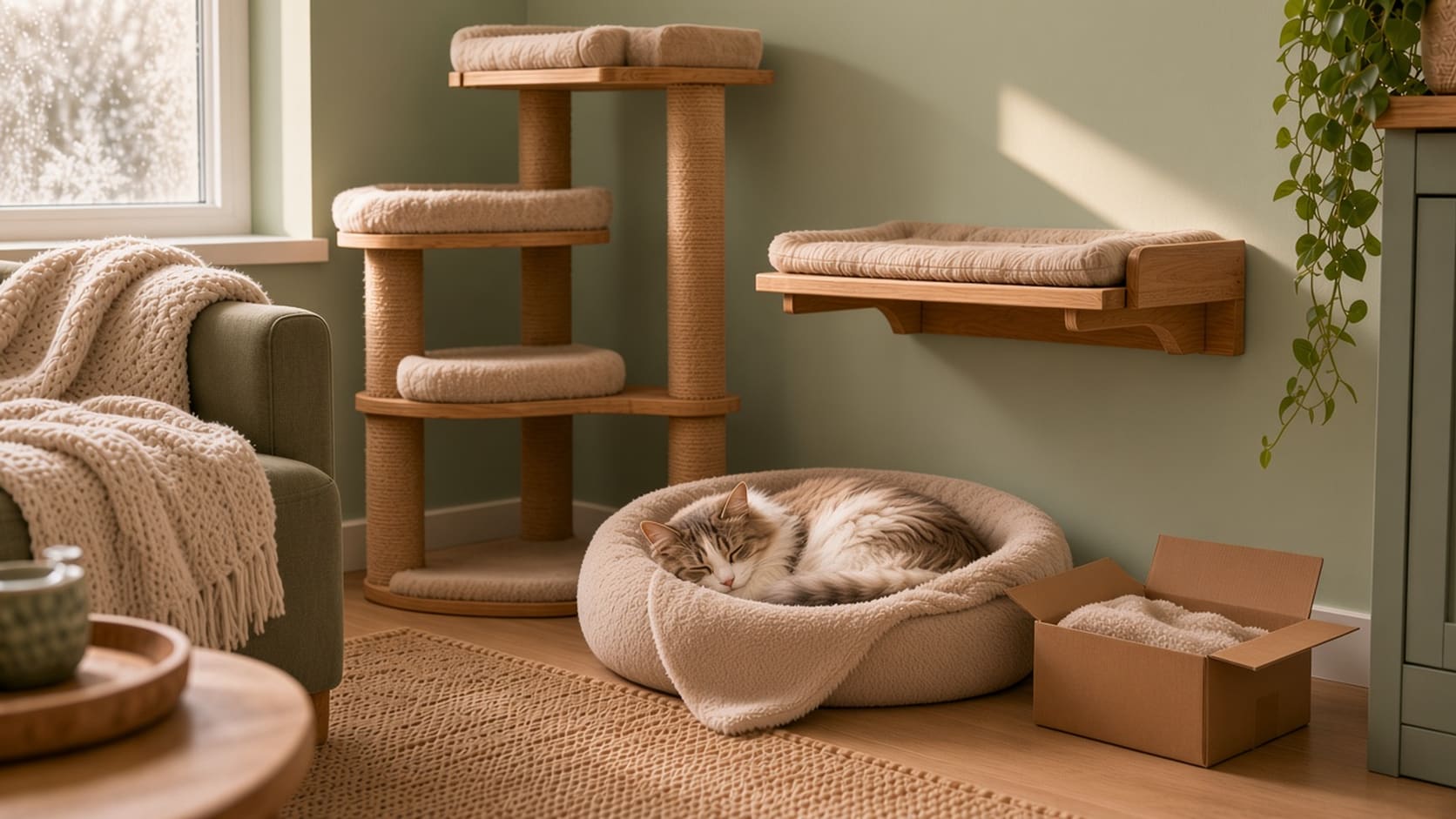
Quick answer: For a senior or arthritic cat, the safest kind of heated bed is a low-wattage, thermostatically controlled pad made for pets, not a human heating pad. The K&H Thermo-Kitty Heated Cat Bed is the straightforward pick: a 4-watt heater that, per K&H, warms to about 102°F when the cat is on it. Always leave a cooler, unheated spot, and use a self-warming pad if you want warmth with no cord.
This guide is about safe, low-watt beds for older indoor cats in winter, not about turning a cold house into a sauna. For no-heat and outage tactics, start with how to keep cats warm without heat. For a head-to-head on plug-in versus reflective pads, see self-warming vs heated cat bed.
We may earn a commission if you buy through links on this page, at no extra cost to you. We have not lab-tested these beds. Safety and temperature figures come from the makers and from veterinary organizations linked in the sources.
Key takeaways
- Use a pet bed with a thermostat, not a human heating pad.
- K&H’s Thermo-Kitty uses 4 watts and, the company says, warms to about 102°F in use and stays about 10 to 15°F above room temperature when empty.
- The AVMA still cautions that heated pet mats can burn, so leave an unheated option and check the cord.
- Seniors, kittens, thin and sick cats can feel cold sooner (PetMD).
- A self-warming pad is the no-plug alternative; a microwavable disc is the outage backup.
Why Senior and Arthritic Cats Feel the Cold Sooner
Cats run warmer than we do. PetMD puts normal feline body temperature around 100.4 to 102.5°F, which is why a sunbeam or a laptop feels like a prize. As cats age, they often lose muscle and fat, move less, and may have arthritis or a chronic illness. PetMD’s cold-weather guidance says seniors, kittens, thin-coated and sick cats can be uncomfortable below about 50 to 60°F, while many healthy adults only start to feel it below about 45°F. The AVMA adds that pets with diabetes, heart disease, kidney disease or hormonal disorders may have a harder time regulating temperature.
A heated bed does not treat arthritis. It can make a stiff cat more willing to rest in a well-padded, slightly warm cup instead of a cold floor. If your cat suddenly hides, seems painful, or stops jumping, that is a veterinary issue, not a bedding issue. Our guides on indoor cat depression and whether a bored cat is lonely or sick are the place to sort behavior from illness.
What “Safe Heat” Means in a Cat Bed
The features that matter are boring, and they are the ones to shop for on Black Friday as well as in January:
- Low wattage. K&H’s standard Thermo-Kitty uses a 4-watt heater. That is a tiny draw compared with a space heater, and it is part of how the bed stays in a narrow temperature band.
- A thermostat, not a pressure switch. K&H says its beds are not pressure sensitive. They give off a little heat while plugged in so the cat can find them, then warm to the cat’s body temperature when the cat’s body insulates the surface. Empty, the Thermo-Kitty is described as about 10 to 15°F above room temperature; in use, about 102°F.
- A covered, chew-resistant cord and a certified product. K&H says it safety-certifies the entire product (MET listed, tested to UL/CSA standards), not just a component. That is a better starting point than an unlisted mat with a bare cord.
- A removable, washable cover and a removable heater, so you can wash the bed and use it unheated in summer.
- An escape route. The cat must be able to leave the warmth. High sides are cozy; a lid that traps a cat next to a heater is not.
The AVMA’s cold-weather page still advises caution with heated pet mats because they can cause burns. That warning and K&H’s design can both be true: the safer products exist, and you still do not leave a damaged cord, a human heating pad, or a bed with no unheated alternative.
K&H also says you can test a Thermo-Kitty by placing a large pillow on it for about 20 minutes; it should feel warm, not hot, and you should not use an extension cord for that test. Follow the latest official instructions that come with the bed.
The Picks
K&H Thermo-Kitty Heated Cat Bed (Large, 20 in)
This is the default senior-cat recommendation. K&H describes a cup-style bed with 6-inch soft foam walls, a removable 4-watt heater, a removable washable cover, and two sizes: 16 inches (better for cats under 15 lb, per our earlier size note from the listing) and 20 inches for larger cats. We link the large 20-inch bed, which is the more useful size for most adult and senior cats. K&H lists a one-year limited warranty and says the product is safety certified.
Put it off the floor if you can — a chair, a low bench, or a platform on a cat tree — because tile and bare wood steal heat. Keep the cord routed along the wall.
K&H Self-Warming Cat Bed Pad (Small, 21 × 17 in)
If you do not want a cord, or you want a travel pad you can drop into a carrier, crate or existing bed, use a self-warming pad. It has no heater. K&H says insulating and reflective layers return the cat’s own body heat. It works best in a covered or high-sided bed out of drafts, and K&H notes a slight crinkle that some noise-sensitive cats dislike. It will not heat a cold room by itself.
K&H Heated Kitty Sill Window Perch (14 × 24 in)
Many seniors already claim the window, then leave because the glass is cold. This perch is a heated, orthopedic-foam sill pad rated to hold 40 lb, for a sill at least 24 inches long and 2 inches deep, installed with adhesive strips or the included screws. It is the right tool when the favorite nap spot is the window, not the floor. For setup and window safety, see best heated window perches and cat window and balcony safety.
SnuggleSafe Microwave Heating Pad
This is the outage and travel backup, not an everyday plug-in bed. The maker says the 8.7-inch disc can be heated in a microwave and then releases gentle warmth for up to 10 hours, with a chew-resistant shell and a fleece cover. Use it in its cover, and never substitute a human hot-water bottle or an unwrapped heat pack. Heat it while you still have power if a storm is coming.
Get winter care notes
Our free indoor cat checklist, plus occasional emails when useful winter gear actually drops in price.
By subscribing you agree to receive emails from Paw & Sage. Double opt-in, unsubscribe anytime. See our privacy policy.
K&H Heated Cat Beds: Which One?
K&H makes three of our picks, and they solve different problems:
| K&H model | Heat source | Best for |
|---|---|---|
| Thermo-Kitty Heated Cat Bed | Low-watt heater | Indoor cats and seniors who want a warm, bolstered bed |
| Heated Kitty Sill Window Perch | Low-watt heater | Window-watchers in winter; see heated window perches |
| Self-Warming Cat Bed Pad | No electricity (reflects body heat) | Cords not an option, or mild cold |
Not sure you need heat at all? Read self-warming vs heated cat bed and how to keep cats warm without heat.
How to Use a Heated Bed Without Creating a New Problem
- Leave a cooler bed in the same room. A cat that gets too warm must be able to move.
- Get it off a cold floor if you can, and out of a draft from a door or window.
- Route the cord tightly along the wall, out of a chewing kitten’s reach and out of a walkway. Never run it under a carpet that can trap heat.
- Do not use a human heating pad or electric blanket. Those are built for a person who can remove them.
- Inspect the cover, plug and cord. Unplug at the first sign of damage.
- Introduce it gradually. Some cats ignore a new bed for a week. A familiar blanket on top helps more than picking the cat up and placing them in it.
If your cat has reduced sensation, is recovering from surgery, or cannot move away easily, ask your veterinarian before using any heated product.
How We Picked
- Temperature, wattage and design details come from K&H’s official Thermo-Kitty, self-warming and safety pages, checked in November 2026.
- Comfort ranges come from PetMD’s veterinary-reviewed cold-weather guidance. The burn caution comes from the AVMA.
- This is a research guide, not a hands-on test of arthritis relief. We do not invent ratings or medical claims. Our editorial policy explains how we research products.
A warm, well-padded bed will not fix a painful joint, but it can make winter rest easier for a stiff cat. Pick a low-watt, thermostatic bed, leave a cooler option, and treat any sudden change in mobility as a reason to call the vet, not to buy a second heater.
Get our free indoor cat enrichment checklist
Plus seasonal picks and deals worth knowing about. No spam, unsubscribe anytime.
By subscribing you agree to receive emails from Paw & Sage. Double opt-in, unsubscribe anytime. See our privacy policy.
Sources
This article cites 5 sources in the text. They are linked below.
- Thermo-Kitty Bed Heated Cat Bed (K&H Pet Products)
- Indoor Cat Comfort: Caring for Elderly Cats - Safe Use of Heated Beds (K&H Pet Products)
- Do Self-Warming Cat Beds Work? (K&H Pet Products)
- Cold Weather Animal Safety (American Veterinary Medical Association)
- How Cold Is Too Cold for Cats? (PetMD (Sandra C. Mitchell, DVM, DABVP))
Common questions
Are heated cat beds safe for senior or arthritic cats?
A low-wattage bed made for pets, with a thermostat and a covered cord, is designed for this job. K&H says its Thermo-Kitty uses a thermostatically controlled 4-watt heater that warms to about 102°F once the cat is on it, and that the whole product is safety certified. The AVMA still advises caution with heated pet mats because they can cause burns, so leave an unheated bed nearby and check the cord.
What temperature does a heated cat bed reach?
For the K&H Thermo-Kitty Bed, K&H says the surface stays about 10 to 15°F above room temperature when empty, then warms to about 102°F — a typical cat body temperature — when the cat lies on it. It should feel warm, not hot. If a bed has no thermostat, do not use it.
Do senior cats need a heated bed?
Not every senior does, but older, thin, arthritic or sick cats can feel cold sooner. PetMD notes that seniors and cats with chronic illness may be uncomfortable below about 50 to 60°F, and the AVMA flags pets with certain medical conditions as less able to regulate temperature. A heated bed is one tool, not a substitute for a reasonably warm house.
Is a self-warming pad enough instead of a plug-in bed?
It can be, in a draft-free room, for a cat that already produces enough body heat. A self-warming pad has no heater; it reflects the cat's own warmth. It will not do much in a very cold room or during a long absence from the pad. For a deeper comparison, see our self-warming vs heated cat bed guide.
Where should I put a heated cat bed?
Put it off cold floors, out of drafts, and away from water bowls and radiators, with the cord routed so it cannot be chewed or tripped over. Leave a cooler unheated option in the same room so the cat can move away. A window seat is a special case; use a perch made for that job.
Can I leave a heated cat bed on all the time?
K&H says its beds emit a little heat whenever they are plugged in so the cat can find them, and the thermostat prevents the surface from running away to a high temperature. Still follow the maker's instructions, inspect the cord, and give the cat a way off the heat. Unplug the bed if the cover, cord or heater is damaged.
What is the best heated cat bed?
For most indoor cats, a low-watt, thermostatically controlled bed like the K&H Thermo-Kitty Heated Cat Bed is the safest place to start. If you do not want a cord, a self-warming pad that reflects body heat is the no-electricity option.
Which K&H heated cat bed should I buy?
The K&H Thermo-Kitty Heated Cat Bed for a covered, bolstered heated bed; the K&H Heated Kitty Sill if your cat sleeps at the window; and the K&H Self-Warming Cat Bed Pad if you want no electricity at all. Our K&H section compares them.