Bored, Lonely, or Sick? How to Tell What's Wrong With Your Cat
Boredom, loneliness, and illness can look almost identical in cats. Here is how to tell the difference, what to do for each, and when a behavior change means a vet visit.
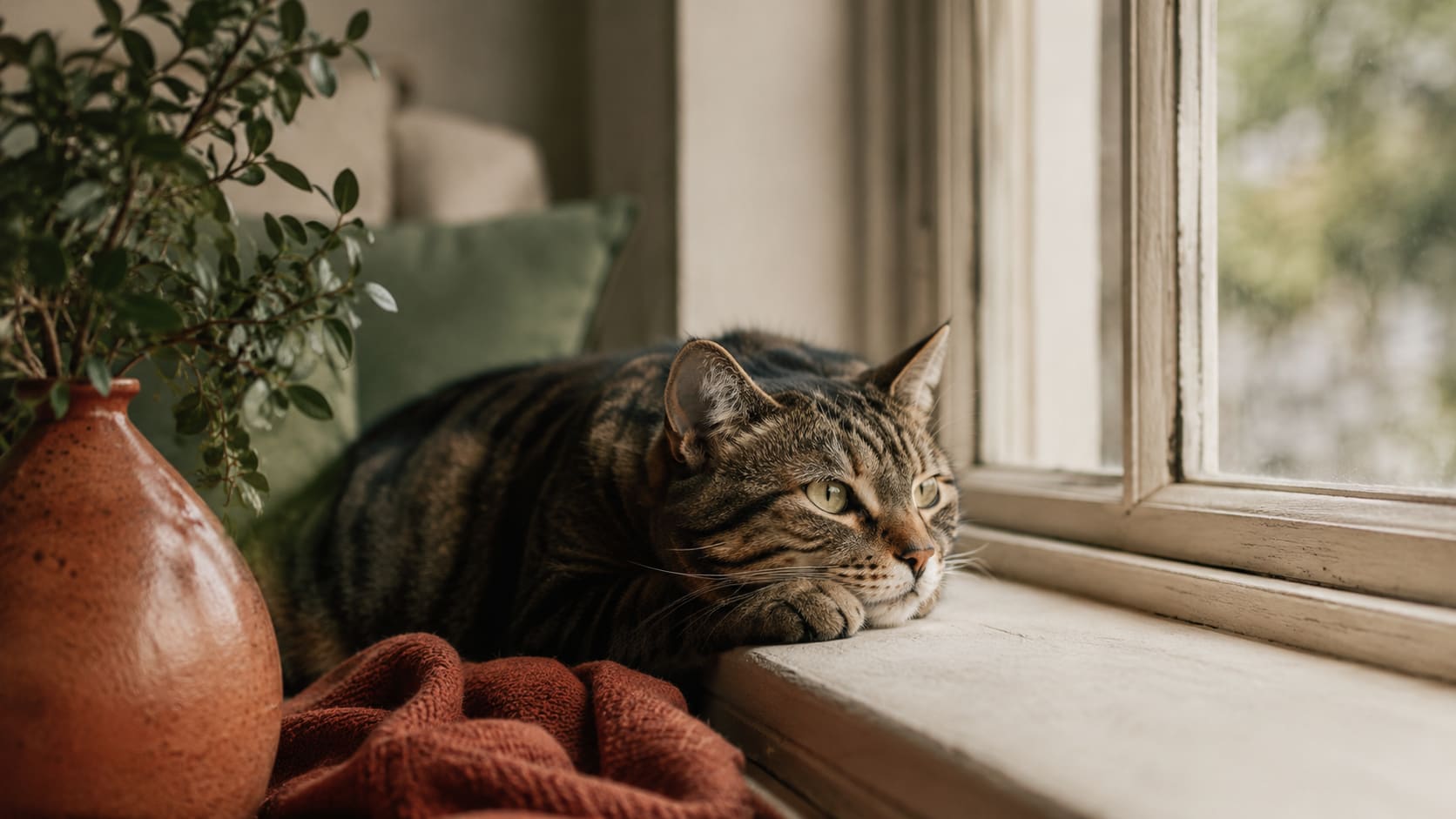
Your cat is acting off. Maybe sleeping more than usual, eating strangely, hiding, or suddenly glued to your side. You want to help, but you are stuck on the first question: is this boredom, loneliness, or something medical?
It is a genuinely hard call, because all three can look nearly identical from the outside. The same flat, withdrawn cat could be under-stimulated, missing company, or quietly unwell. Telling them apart is what decides whether the answer is a new toy, a routine change, or a vet visit.
Here is how to read the differences.
Start Here: Rule Out Illness First
This part is non-negotiable. Cats are experts at hiding pain, and many illnesses first show up as a vague behavior change rather than an obvious symptom.
Treat it as potentially medical, and call your vet, if you see any of these:
- Changes in appetite or thirst
- Changes in litter box habits, or going outside the box
- Weight loss or gain
- Hiding more than usual, or a sudden personality change
- Lethargy, or crying that sounds like discomfort
When a behavior change is sudden, assume it could be medical until a vet says otherwise.
Only once health is reasonably ruled out should you work through the behavioral causes below.
What Boredom Looks Like
Boredom is the most common and the most fixable. The tell is context: it gets worse on flat, inactive days and better the moment you add stimulation.
A bored cat often overeats or obsesses over food, gets destructive, picks fights with your ankles, or “creates” excitement by knocking things off shelves. Crucially, these cats respond fast to enrichment. Add a couple of outlets and you see improvement within days.
What helps: Start with foraging and play. Moving part of a meal into a puzzle like the PetSafe SlimCat gives the brain a job. For the full checklist of symptoms, see the signs your cat is bored guide.
What Loneliness Looks Like
Loneliness tracks with you. The pattern revolves around your comings and goings rather than the household in general.
A lonely cat may greet you with overwhelming intensity, follow you room to room, become distressed when you leave, and only truly settle once you are back. It is most common in single cats in homes where everyone is out all day.
What helps: Give your cat reasons to engage while you are gone, and a way to check in. A pet camera with a treat dispenser lets you see whether your cat is genuinely distressed or just napping, and lets you trigger a moment of contact mid-day. Our guide to keeping your cat entertained while you’re at work covers the full alone-time setup.
What Stress or Anxiety Looks Like
Stress usually has a trigger you can trace: a move, a new pet or baby, a change in routine, building work, or a new cat visible outside.
Stressed cats tend to hide, overgroom (sometimes to bald patches), become twitchy, or develop litter box issues. Unlike boredom, more toys alone will not fix it. These cats need predictability and a sense of safety.
What helps: Reduce the trigger where you can, keep routines steady, and consider pheromone support. A Feliway Classic Diffuser releases a calming signal that helps some cats feel more secure during a stressful stretch.
The Quick Way to Tell Them Apart
When you are unsure, run through three questions:
- How fast did it start? Sudden change leans medical. Gradual leans behavioral.
- What is the trigger? Tied to your absence points to loneliness. Tied to an environmental change points to stress. Worse on boring, low-activity days points to boredom.
- Does it respond to enrichment? Boredom lifts quickly with play and foraging. Loneliness and stress improve more slowly and need their specific fix. Nothing improving at all sends you back to the vet.
When in Doubt, Go Back to Step One
If you have added enrichment, eased stressors, and your cat still seems off, do not keep guessing. Return to the vet. A behavior that resists every behavioral fix is itself a signal worth taking seriously.
Most cats, once health is cleared, land in boredom or stress, and both respond well to a richer routine. Build that with our indoor cat enrichment ideas, and for more on reading feline signals, see why your cat stares at you.
Trying to spot the pattern behind your cat’s behavior? We’re building CatPlay, a simple app for logging your cat’s daily activity and mood so changes are easier to catch early, and easier to show your vet.
Sources
This article cites 3 sources in the text. They are linked below.
- Behavior Problems in Cats (Cornell Feline Health Center)
- Feline Environmental Needs and Enrichment (MSPCA-Angell)
- What Your Cat Needs to Feel Secure (Cat Friendly Homes)
Common questions
Is my cat bored or depressed?
Boredom usually improves quickly once you add play, foraging, and novelty. A low mood that does not lift with enrichment, especially alongside changes in eating, sleeping, or hiding, should be checked by a vet, since it can have a medical cause.
How do I know if my cat is lonely or just independent?
Loneliness tends to track with your absence: excessive greeting, distress when you leave, constant following, and settling only when you return. An independent cat that eats, plays, and rests normally on its own is usually fine.
When should I take a bored cat to the vet?
Any time a change is sudden, or comes with shifts in appetite, thirst, litter box use, weight, grooming, or activity. Rule out illness first, then address boredom or stress.
The Cat Behavior Decoder
A free PDF with the body language cues and behavior patterns worth noticing first.
No spam. Unsubscribe anytime. We respect your inbox.