How to Keep Cats Warm in Winter (Even Without Heat)
How to keep cats warm in winter indoors, at night, in a cold house or during a power outage: safe temperatures, no-electricity beds and warning signs.
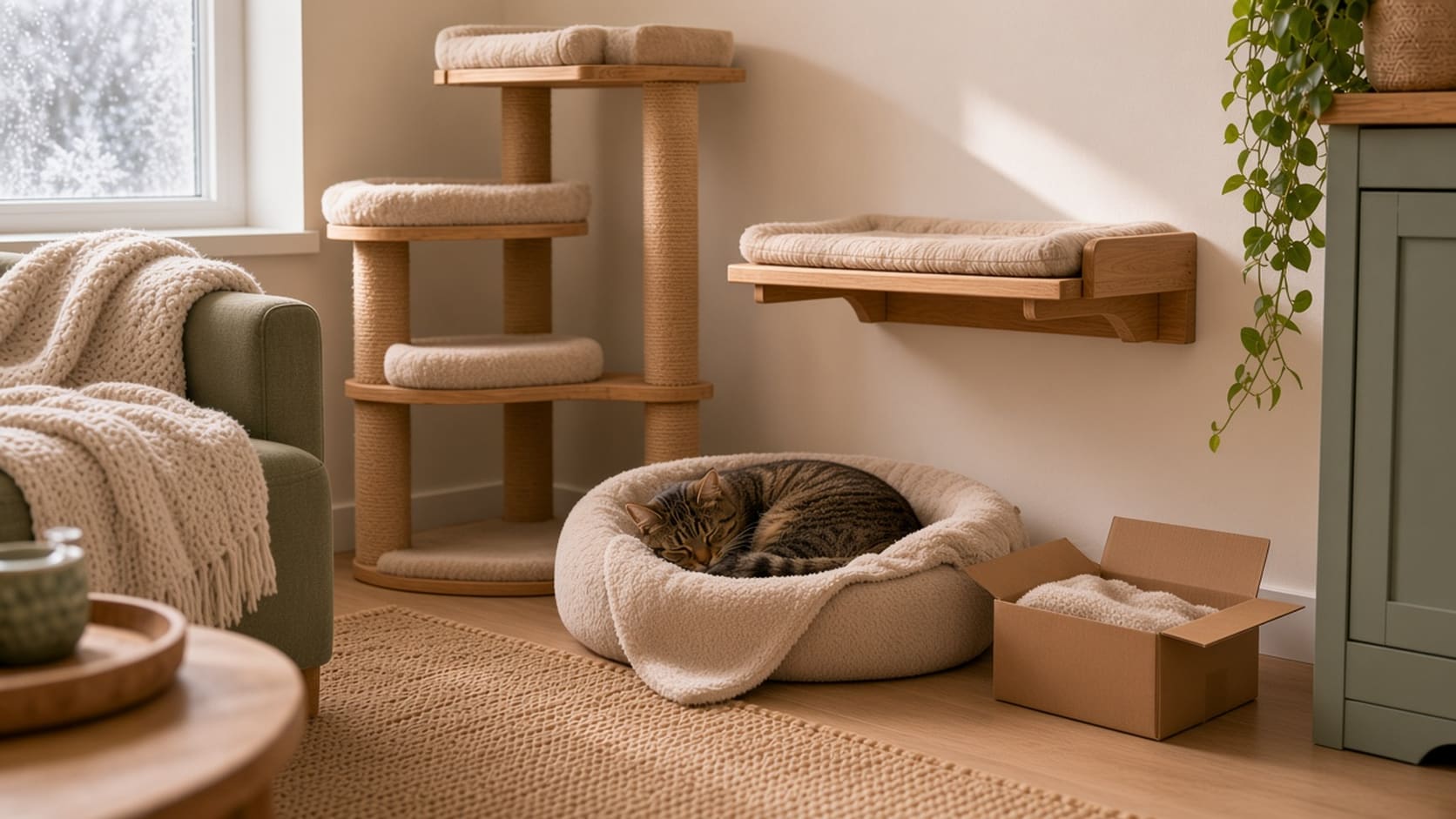
Quick answer: To keep a cat warm in winter, even without heat, give them an enclosed or high-sided bed off the cold floor and out of drafts. Line it with a fleece blanket or a self-warming pad that reflects their body heat. Add a sunny window seat for the day, and keep one unheated spot so they can regulate themselves.
Cats run warmer than we do. PetMD puts normal feline body temperature at about 100.4–102.5°F, which is why they hunt down sunbeams, laptops and warm laundry. A chilly apartment, a drafty old house, a thermostat turned down to save money or a winter power cut are all manageable. You just have to give your cat warm places to sleep.
This guide is the winter twin of our popular how to keep cats cool without AC. Same idea, opposite season: low-cost fixes first, then a few products for the gaps.
We may earn a commission from product links on this page, at no extra cost to you. We haven’t lab-tested these products. Picks are based on manufacturer specs and the veterinary guidance linked in the sources.
Key takeaways
- Most cats get uncomfortable below about 45°F. Seniors, kittens and thin or sick cats can feel it from 50–60°F (PetMD).
- Fight cold from below and from drafts first. A raised, covered bed does more than a heater across the room.
- No-electricity warmth: self-warming pads, fleece, cat caves, sunny windows and a microwavable heat disc.
- Always leave a cooler option. Cats should be able to move away from any heat source.
- Shivering, weakness or lethargy is not “just cold”. Those are hypothermia signs: call your vet.
How Cold Is Too Cold for a Cat Indoors?
There’s no single magic number, because cold tolerance depends on age, coat, body fat and health. PetMD’s veterinary guidance gives useful ranges:
| Indoor temperature | What it means for most cats |
|---|---|
| 50–60°F | Cats with weight loss, arthritis or chronic illness may be quite uncomfortable |
| 45–50°F | Small, thin-coated, hairless, senior and young cats feel it |
| 32–45°F | Most healthy adults are uncomfortable if it lasts |
| Below 32°F | Risk of frostbite and hypothermia for all cats with prolonged exposure |
Source: PetMD, “How Cold Is Too Cold for Cats?” (reviewed by a veterinarian).
The AVMA adds that cats with diabetes, heart disease, kidney disease or hormonal disorders may have a harder time regulating body temperature. The same goes for very young and very old pets. If you share your home with one of those cats, aim for the top of that table, not the bottom.
Fix the Floor and the Drafts First
Before you buy anything, check two things: what your cat is lying on, and where the cold air comes from.
- Get the bed off the floor. Tile, concrete and floors over unheated basements pull heat out of a sleeping cat. A bed on a chair, sofa, shelf or cat tree platform is warmer than the same bed on the floor.
- Move beds away from windows and exterior doors at night. Glass and door gaps are where cold air pours in. An interior wall or a bedroom corner works best.
- Block drafts cheaply. Roll a towel against the bottom of a drafty door, close curtains after sunset, and close off rooms you’re not heating.
- Use the sun during the day. Open south- or west-facing blinds on sunny afternoons and put a perch or a folded blanket in that patch. A window perch turns that sun into a daily heated bed and some cat TV.
Give Your Cat a Covered “Den”
Cats conserve heat by curling up in a small, enclosed space, and a covered bed helps them trap it. PetMD notes that a covered bed helps cold cats warm up quickly when no warm room is available.
- A cat cave, a hooded bed or even a cardboard box on its side lined with fleece works.
- Lay a fleece blanket inside and another loosely over the top for very cold nights.
- Put one den where your cat already likes to sleep, and a second somewhere quiet.
Give your cat choices. The AVMA recommends offering several comfortable sleeping spots so a pet can move to a warmer or cooler one as needed. That matters even more once you add any heat source.
Warm Bedding Without Electricity
These options add warmth without a plug, which makes them useful for cold houses, budget heating and power outages.
Self-warming pads and beds
A self-warming bed has no heater. According to K&H, its insulating and reflective layers capture the cat’s own body heat and send it back to them. It works best inside a covered or high-sided bed, out of drafts.
Microwavable heat discs
A microwavable pet heat pad gives real added warmth for hours, with no cord to chew.
Always use the cover, follow the heating time on the label, and put the disc under a blanket at one end of the bed so your cat can move off it. Use the same rule for any homemade option like a hot water bottle: wrap it, make sure it feels warm (not hot) on your inner wrist, and never put it under a cat who can’t move away easily.
When Low-Watt Heat Makes Sense
For seniors, arthritic cats, very thin cats and cold homes that stay below about 60°F, a low-wattage heated bed designed for pets can be worth it.
Safety rules for anything with a plug:
- Use pet-specific, low-wattage products. Human heating pads and electric blankets aren’t designed for a cat who may sleep on them for hours.
- Cover or route cords where your cat can’t chew them, and check them often.
- Keep an unheated spot nearby. The AVMA cautions that heated pet mats can still cause burns. A cat who can move away regulates themselves.
- Space heaters need extra care. The AVMA warns they can burn pets or get knocked over and start a fire. Choose a model with a tip-over shut-off, keep it well away from beds and curtains, and never leave it running in a room with an unsupervised cat.
How to Keep Your Cat Warm at Night
Nights are when houses cool fastest, especially if you lower the thermostat.
- Put the den in the warmest interior room, often your bedroom. Many cats choose to sleep near you anyway, so leave the door open.
- Pre-warm the bed. Put a heat disc under the blanket an hour before bed, then move it to one end.
- Play, then feed, before bed. A short evening play session followed by a meal helps your cat settle and sleep curled up. Our evening routine for hyper cats has the details.
- Keep water fresh and unfrozen. Heating dries indoor air, and some cats drink less in winter. See how to get your cat to drink more water for easy fixes.
Get our winter cat-care checklist
Seasonal tips for indoor cats, plus our free enrichment checklist. No spam, unsubscribe anytime.
By subscribing you agree to receive emails from Paw & Sage. Double opt-in, unsubscribe anytime. See our privacy policy.
Power Outage? A Simple Winter Plan
The AVMA advises including pets in your emergency plan, with at least 5 days of food, water and medicine. Ready.gov also recommends a pet emergency kit. For cold-weather outages, add:
- One “warm room.” Pick a small interior room, close the door and gather everyone there, cats included. Body heat in a small space adds up.
- Insulated dens. Put cat caves or boxes lined with fleece and a self-warming pad on a bed or sofa, not the floor.
- Heat discs, charged in advance. Warm microwavable discs while you still have power. They release heat for hours.
- The carrier, ready to go. If your home gets too cold and you need to leave, take your cat with you. PetMD warns that leaving pets behind in a cold-weather emergency can lead to hypothermia and death. Check ahead which shelters or hotels accept pets.
- Carbon monoxide safety. Never use a grill, camp stove or generator indoors. The AVMA recommends carbon monoxide detectors, and pets are affected too.
Warning Signs Your Cat Is Too Cold
PetMD notes that cats often hide discomfort and may not shiver or cry until they’re quite cold. Watch for:
- Early signs: curling into a tight ball, tucking the nose under the tail, seeking vents, laps and laundry, cool ears and paws.
- Hypothermia signs: shivering, lethargy, weakness, reduced appetite, slow movement or collapse. Hypothermia means a body temperature below about 100°F.
If you see hypothermia signs, warm your cat gradually with blankets and a covered bed, and call your vet right away. Don’t put a cold cat directly on a hot pad.
Winter Warmth Options Compared
| Option | Needs power? | Warmth level | Best for | Watch out for |
|---|---|---|---|---|
| Raised, covered bed + fleece | No | Mild | Every cat | Floor-level placement and drafts |
| Self-warming pad | No | Mild (reflects body heat) | Cold rooms, outages | Crinkle noise for sensitive cats |
| Microwavable heat disc | Only to recharge | Moderate, for hours | Nights, outages, seniors | Always use the cover; give an escape spot |
| Low-watt heated bed | Yes | Steady | Seniors, arthritic or thin cats | Cords; keep an unheated option |
| Heated window perch | Yes | Steady | Window-loving cats | Needs a deep enough sill |
| Sunny window spot | No | Daytime only | Every cat | Cold glass after dark |
Indoor Cats in Winter: Don’t Forget Their Minds
Short, dark days often mean less play and more sleep. Some extra napping in winter is normal, but a cat who seems flat, hides more or eats less deserves a closer look. Our guide to whether indoor cats get depressed covers the “winter blues” and when to see a vet. For quick indoor activity ideas, browse our cat enrichment ideas.
Warm cats are happy, sleepy cats. Give them a den off the floor, a blanket that holds their heat, and a choice of spots, and most homes are warm enough even with the thermostat turned down.
Get our free indoor cat enrichment checklist
Plus seasonal picks and deals worth knowing about. No spam, unsubscribe anytime.
By subscribing you agree to receive emails from Paw & Sage. Double opt-in, unsubscribe anytime. See our privacy policy.
Sources
This article cites 5 sources in the text. They are linked below.
- How Cold Is Too Cold for Cats? (PetMD (Sandra C. Mitchell, DVM, DABVP))
- Cold Weather Animal Safety (American Veterinary Medical Association)
- Hypothermia in Cats (PetMD)
- Prepare Your Pets for Disasters (Ready.gov (FEMA))
- Do Self-Warming Cat Beds Work? (K&H Pet Products)
Common questions
How do I keep my cat warm in winter without heat?
Give your cat a covered or high-sided bed off the floor, add a self-warming pad that reflects body heat, close off drafts, and offer a sunny window spot by day. During an outage, a microwavable pet heat disc wrapped in its cover adds hours of gentle warmth without wires.
What temperature is too cold for an indoor cat?
Veterinary guidance from PetMD says most cats start to feel uncomfortable below about 45°F, and seniors, kittens, thin or sick cats can be uncomfortable below 50–60°F. Freezing temperatures are dangerous for all cats.
How can I tell if my cat is cold?
Cold cats curl into a tight ball, tuck their nose under their tail, burrow under blankets, sit on vents or feel cool to the touch. Shivering, lethargy, weakness or a cat that stops moving are signs of hypothermia and need a vet.
How do I keep my cat warm at night?
Put a covered bed or cat cave in an interior room away from windows and exterior doors, lined with a fleece blanket or a self-warming pad. Let your cat choose between a warm and a cooler spot, and keep the bedroom door open if your cat likes to sleep near you.
Are heated cat beds safe?
Low-wattage beds made for pets, with a thermostat and a covered cord, are designed for this job. The AVMA still advises caution with heated pet mats because they can cause burns, so always leave an unheated spot nearby and check the cord regularly.
Do self-warming cat beds work?
They can help. A self-warming bed has no heater; it uses insulating and reflective layers to return your cat's own body heat. It works best in a covered or high-sided bed out of drafts, and some pads crinkle, which a few noise-sensitive cats dislike.