Why Does My Cat Stare at the Wall? Normal vs. Worth a Vet Visit
Why does my cat stare at the wall or at nothing? Usually harmless: sharp senses, UV vision, hunting. In cats over 10, long blank staring can signal cognitive dysfunction.
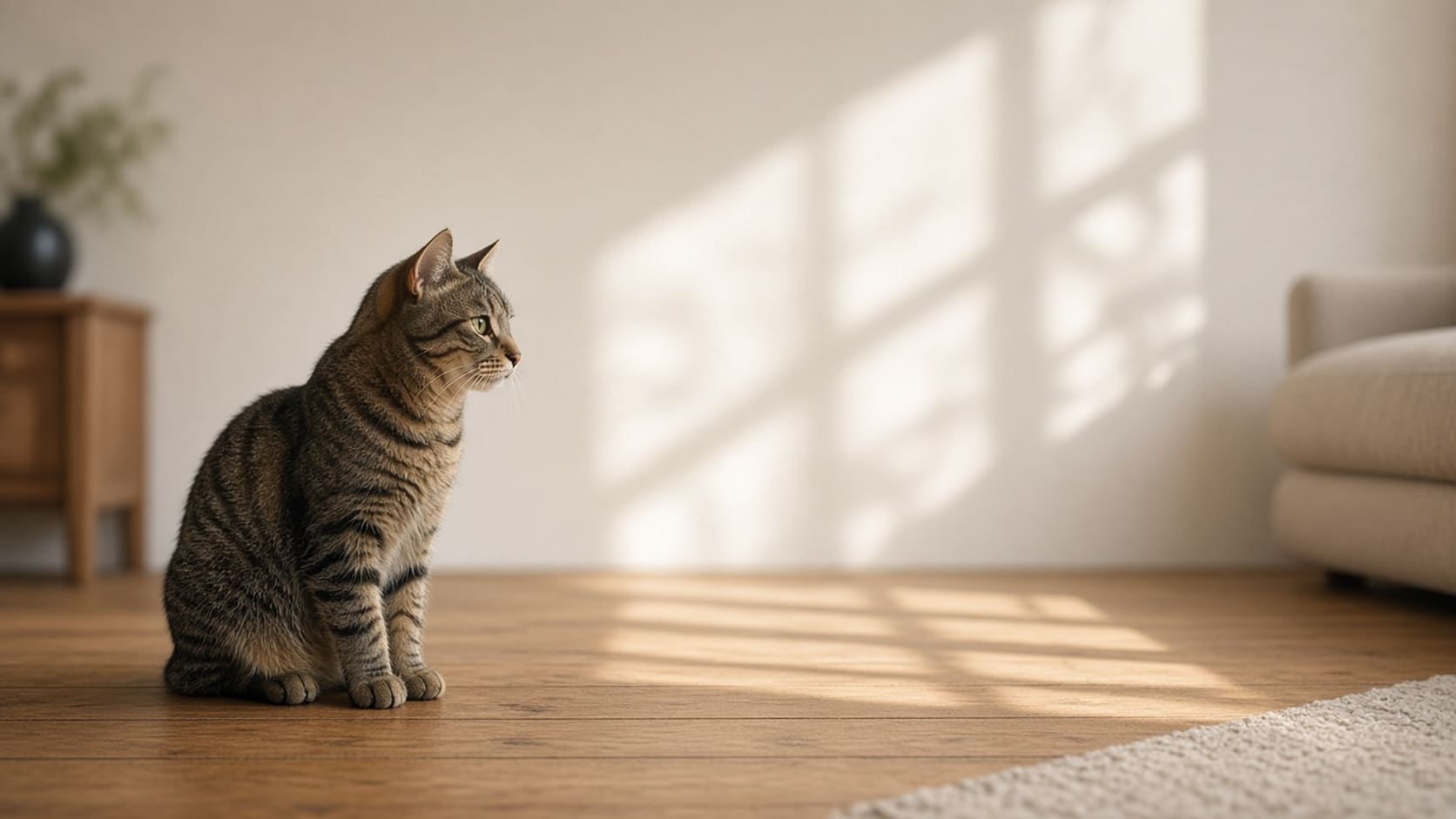
Quick answer: Most of the time it’s harmless. VCA Animal Hospitals says cats have heightened senses and may be seeing, hearing or feeling something you can’t, such as an insect, a sound in the wall, or ultraviolet light. But in cats 10 years or older, Cornell Feline Health Center lists long periods of staring blankly into space or at walls among the signs of cognitive dysfunction, so a new habit in an older cat is worth a vet visit.
The harmless reasons
- Hearing. VCA says cats can hear from about 80 Hz up to 85,000 Hz, far beyond the human range of about 20 to 20,000 Hz. A mouse, insect or pipe noise behind the wall is easy for them to track.
- Vision. VCA notes cats can see ultraviolet light and fine detail, like a tiny spider or ant you would miss.
- Hunting. VCA describes cats watching “prey” before getting into the pounce pose; staring is the first step.
- No reason at all. VCA says your cat may just be acting mysterious.
When staring is a sign to call the vet
Cornell says the behavioral signs of cognitive dysfunction tend to become noticeable in cats 10 years or older. Signs include:
- Long periods of staring blankly into space or at walls
- Spatial disorientation; less interest in play; sleeping more or at different times
- Indifference to food and water
- Urinating or defecating outside the litter box
- Loud vocalizing, often in the middle of the night
Cornell also notes that other conditions, including hyperthyroidism and hypertension, can cause night vocalizing and confusion, which is why a vet exam comes first. If staring comes with twitching skin, sudden frantic running or attacking the tail, mention it too: VCA lists these among behaviors seen with feline hyperesthesia and compulsive disorders.
What you can do at home
Give that hunting focus somewhere to go. Short play sessions that mimic stalk, chase and pounce satisfy the same instincts; see how much playtime a cat needs and our best interactive cat toys. For senior cats, Cornell suggests keeping litter boxes easy to reach with low sides.
Related: why does my cat stare at me?
Paw & Sage is not a veterinary practice. This guide summarizes the cited veterinary sources; ask your veterinarian about any sudden change in behavior.
Get our free indoor cat enrichment checklist
Plus seasonal picks and deals worth knowing about. No spam, unsubscribe anytime.
By subscribing you agree to receive emails from Paw & Sage. Double opt-in, unsubscribe anytime. See our privacy policy.
Sources
This article cites 3 sources in the text. They are linked below.
- Why Do Cats Stare at Nothing? (VCA Animal Hospitals)
- Cognitive Dysfunction (Cornell Feline Health Center)
- Cat Behavior Problems: Compulsive Disorders in Cats (VCA Animal Hospitals)
Common questions
Why does my cat stare at the wall?
Usually because they hear, see or sense something you can't, according to VCA Animal Hospitals. Cats hear from about 80 Hz to 85,000 Hz and can see ultraviolet light.
Is it bad if my cat stares at nothing?
Most of the time it's harmless (VCA). In cats 10 or older, long blank staring at walls is a possible sign of cognitive dysfunction (Cornell), so book a vet check if it's new.
What are the signs of dementia in cats?
Cornell lists disorientation, less interest in play, altered sleep, staring blankly at walls, indifference to food and water, litter box lapses and loud night vocalizing.