Cat Peeing Outside the Litter Box? Causes and Fixes That Work
Why is my cat peeing outside the litter box? The vet-backed checklist: medical causes first, then box, litter, location and stress, from Cornell, the ASPCA and AAFP.
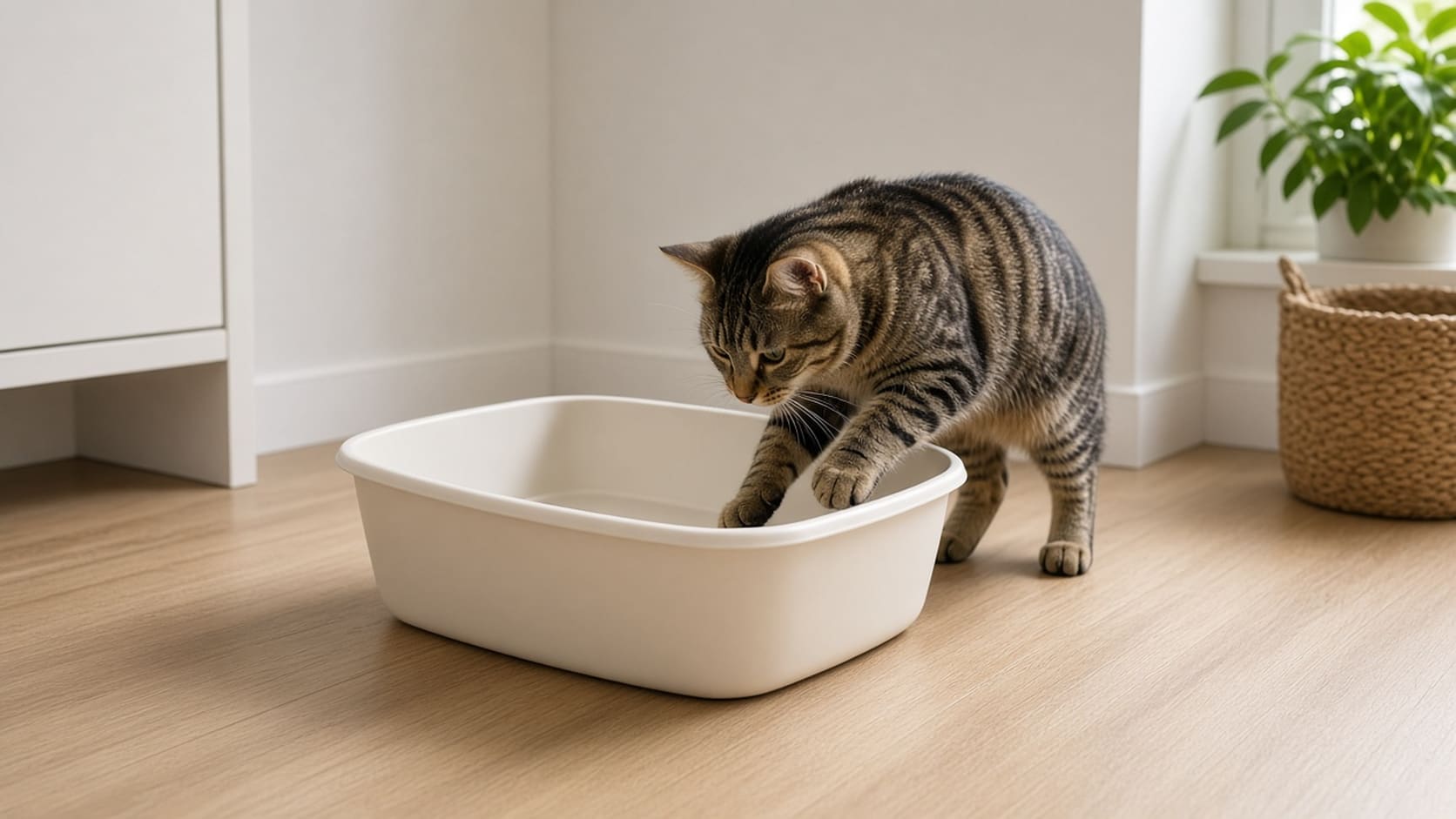
Quick answer: Rule out a medical problem first, because painful urination is one of the most common reasons cats avoid the box. Then work through the box itself: cleanliness, litter type, size, location and stress. Cornell Feline Health Center says house soiling is the most common behavior problem cat owners report, and that the fix depends on the cause: a medical problem, an aversion to the box, or a preference for another spot.
When it is an emergency: a cat that keeps straining in the litter box and passes little or no urine needs a veterinarian right now. VCA Animal Hospitals calls a urethral obstruction “an absolute emergency.” Cornell Feline Health Center lists male cats among those at increased risk of lower urinary tract disease.
Step 1: Book a vet check
Cornell explains that any medical condition that interferes with normal urination can cause litter box problems. Inflammation of the urinary tract, for example, makes urinating painful and more frequent, so the cat may start to link the box with pain. Kidney disease, thyroid disease and diabetes can increase urine volume. The ASPCA adds that a cat that keeps entering the box but produces only small amounts of urine may have a urinary tract infection.
The owner guide based on the AAFP and ISFM house-soiling guidelines lists feline idiopathic cystitis (FIC) as a frequent cause and notes it can be aggravated by stress. Your vet can check urine and rule these out.
Step 2: Look at the box through your cat’s eyes
Cornell’s red flags for litter box aversion: your cat cries in the box, won’t bury its waste, perches on the edge without touching the litter, or goes right next to the box. Check these:
- Cleanliness. Some cats refuse a box with any waste in it. The ASPCA says to scoop at least once a day.
- Litter. Most cats prefer unscented litter (Cornell). The AAFP/ISFM-based guide says most prefer soft, unscented clumping litter and many dislike scented or dusty litter and box liners.
- Depth. The ASPCA says cats usually prefer one to two inches of litter.
- Size. Boxes should be 1.5 times the length of your cat, nose to base of tail; many commercial boxes are too small (AAFP/ISFM-based guide).
- Covers. Cornell notes that covers hold odors in from the cat’s point of view. The ASPCA lists hoods and liners among common reasons cats avoid boxes.
If your cat pees over the edge while standing, a box with higher sides can help; see litter boxes for cats that pee high. For litter types cats tend to accept, see our best cat litter guide.
Step 3: Check location and the other pets
The AAFP/ISFM-based guide says cats prefer quiet, private places, away from busy areas and anywhere they can be cornered. Cornell asks whether another animal ambushes your cat in or near the box. Give the box more than one way out and keep boxes in different locations. The usual rule is one box per cat, plus one. More on placement in where to put a litter box and how many litter boxes per cat.
Step 4: Clean the accidents properly
Cornell says odors must be neutralized, not just deodorized, and warns against ammonia or vinegar cleaners because they smell like urine. The ASPCA recommends an enzymatic cleaner designed for pet odors.
Step 5: Don’t punish
Cornell says cats probably lack the cognitive ability for “revenge” and do not see urine as unpleasant the way we do. Punishment adds stress, and stress makes FIC and avoidance worse. If a cat is spraying (backing up to a vertical surface with the tail upright, as the ASPCA describes), that is marking, a different problem. Cornell notes that a synthetic pheromone (Feliway) can discourage spraying on treated areas; we compare the options in Feliway vs Comfort Zone.
Related litter box guides
- Cat pooping outside the litter box
- Cat peeing on the bed
- How to transition a cat to a new litter
- The complete litter box guide
Paw & Sage is not a veterinary practice. This guide summarizes the cited veterinary sources and does not replace an exam by your veterinarian.
Get our free indoor cat enrichment checklist
Plus seasonal picks and deals worth knowing about. No spam, unsubscribe anytime.
By subscribing you agree to receive emails from Paw & Sage. Double opt-in, unsubscribe anytime. See our privacy policy.
Sources
This article cites 7 sources in the text. They are linked below.
- Feline Behavior Problems: House Soiling (Cornell Feline Health Center)
- Feline house soiling: a guide for cat owners (based on the AAFP and ISFM guidelines) (Journal of Feline Medicine and Surgery (via PubMed Central))
- Litter Box Problems (ASPCA)
- Emergencies in Cats (VCA Animal Hospitals)
- Cystitis and Lower Urinary Tract Disease in Cats (VCA Animal Hospitals)
- AAFP and ISFM Guidelines for Diagnosing and Solving House-Soiling Behavior in Cats (American Association of Feline Practitioners (AAFP))
- Feline Lower Urinary Tract Disease (Cornell Feline Health Center)
Common questions
Why is my cat suddenly peeing outside the litter box?
Start with a vet visit. Cornell Feline Health Center lists medical problems, aversion to the box and a preference for another location as the main causes, and urinary inflammation can make urinating painful.
Is my cat peeing outside the box out of spite?
No. Cornell says cats probably lack the cognitive ability for revenge, and punishment tends to make the problem worse.
What cleaner should I use on cat urine?
An enzymatic cleaner designed for pet odors (ASPCA). Avoid ammonia or vinegar, which Cornell says smell like urine.
When is peeing outside the box an emergency?
If your cat strains and passes little or no urine. VCA Animal Hospitals calls a urethral obstruction an absolute emergency.