Cat Meowing at Night? Why It Happens and How to Stop It
Why is my cat meowing at night? Attention-seeking, heat, play, or medical causes like hyperthyroidism, hypertension and cognitive decline in older cats. VCA and Cornell fixes.
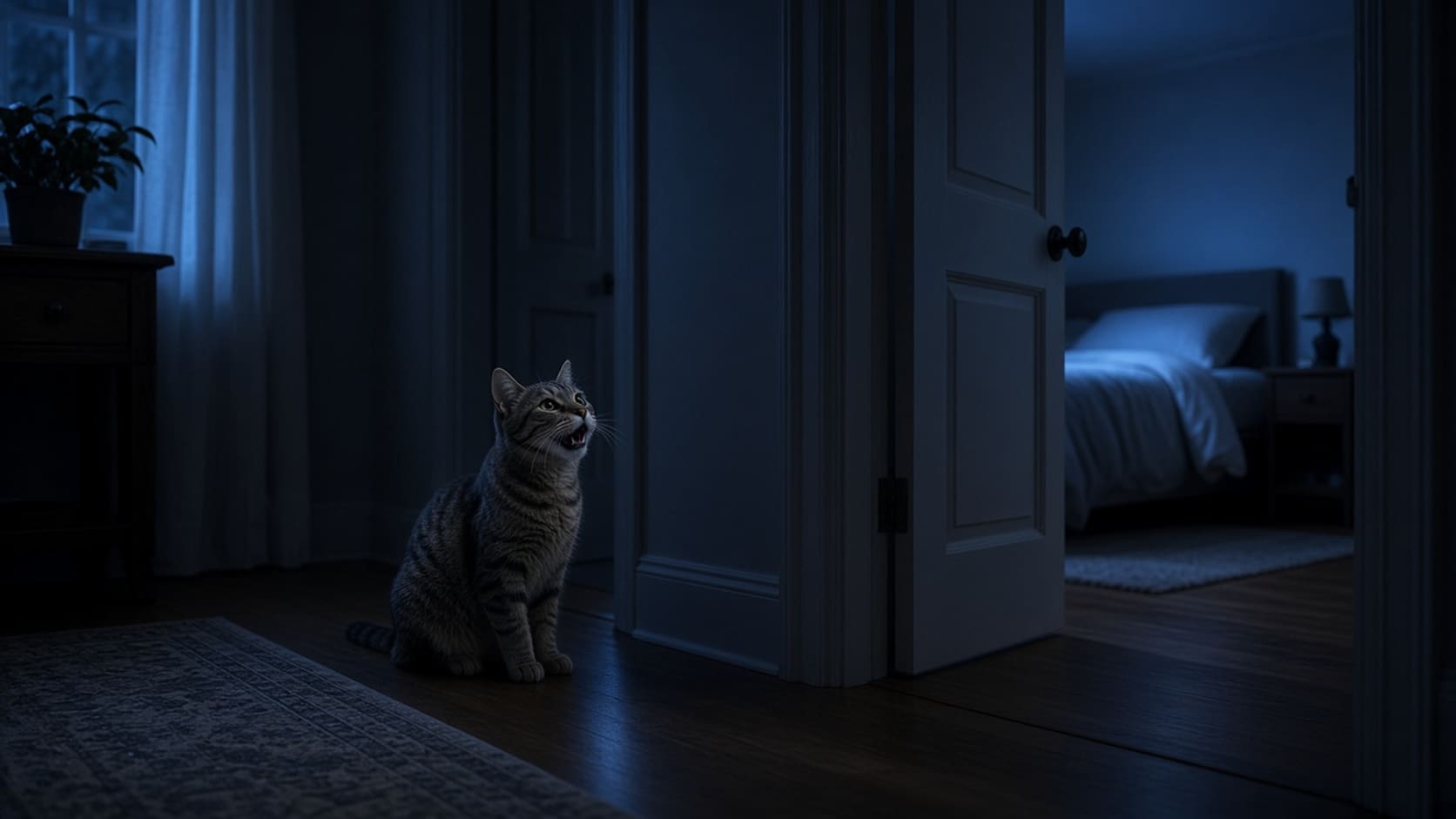
Quick answer: VCA Animal Hospitals lists attention-seeking, sexual behavior (heat), play, medical problems, discomfort and aggression as the most common reasons cats vocalize. For middle-aged and older cats, VCA recommends a vet exam to rule out pain, endocrine disease and hypertension. For healthy cats, the fix is a busier day and not rewarding the meowing.
Rule out medical causes first
- Older cats: VCA says older cats with declining senses or cognitive function may wake more at night and vocalize more. Cornell Feline Health Center lists loud vocalizing, often in the middle of the night, among signs of cognitive dysfunction in cats 10 and older.
- Hyperthyroidism and hypertension: Cornell says night-time vocalizing is relatively common in cats with these conditions, and that hypertension can cause vision loss, leading to anxiety and confusion.
- Pain or discomfort: VCA includes these among the common causes.
Not spayed or neutered?
VCA notes some vocalization is linked to estrus and mating in adult cats that are not neutered. Talk to your vet about spaying or neutering.
The plan for a healthy cat
- Fill the day. VCA says a stimulating daytime routine with regular offerings of food, social play and exploratory toys may help shift your cat’s schedule so it sleeps through the night.
- Play before bed. AAHA says cats are most active at dawn and dusk, and a play session before bed can help tire your cat out; see how much playtime a cat needs.
- Feed on a schedule. If your cat yells for breakfast at 4 AM, a timed feeder means food arrives on schedule rather than when you get up. See Petlibro vs PetSafe automatic feeders.
- Don’t reward it. VCA says never reward vocalization with food, attention or play, because it reinforces the behavior. Reward quiet instead. Expect it to get louder briefly before it stops (VCA calls this an “extinction burst”).
- Never use physical punishment (VCA).
Related: why your cat wakes you up at 3 AM and the cat behavior guide.
Paw & Sage is not a veterinary practice. This guide summarizes the cited veterinary sources; ask your veterinarian about any sudden change in behavior.
Get our free indoor cat enrichment checklist
Plus seasonal picks and deals worth knowing about. No spam, unsubscribe anytime.
By subscribing you agree to receive emails from Paw & Sage. Double opt-in, unsubscribe anytime. See our privacy policy.
Sources
This article cites 3 sources in the text. They are linked below.
- Cat Behavior Problems: Vocalization (VCA Animal Hospitals)
- Cognitive Dysfunction (Cornell Feline Health Center)
- How Often Should You Play with Your Cat? (American Animal Hospital Association (AAHA))
Common questions
Why does my cat meow at night?
VCA lists attention-seeking, heat, play, medical problems, discomfort and aggression as the most common reasons. Older cats may also vocalize at night because of cognitive decline (Cornell).
Should I ignore my cat meowing at night?
For a healthy cat, don't reward it with food, attention or play (VCA), and give more play and food during the day. Rule out medical causes first, especially in older cats.
Why is my senior cat yowling at night?
Cornell says night vocalizing is relatively common in cats with hyperthyroidism or hypertension and is a sign of cognitive dysfunction in cats 10 and older. Book a vet exam.