Why Is My Cat Sitting in the Litter Box? When to Call a Vet
Cat sitting in the litter box? First check for straining with little or no urine, an emergency per VCA. Other causes: frequent urination, stress, another pet, age.
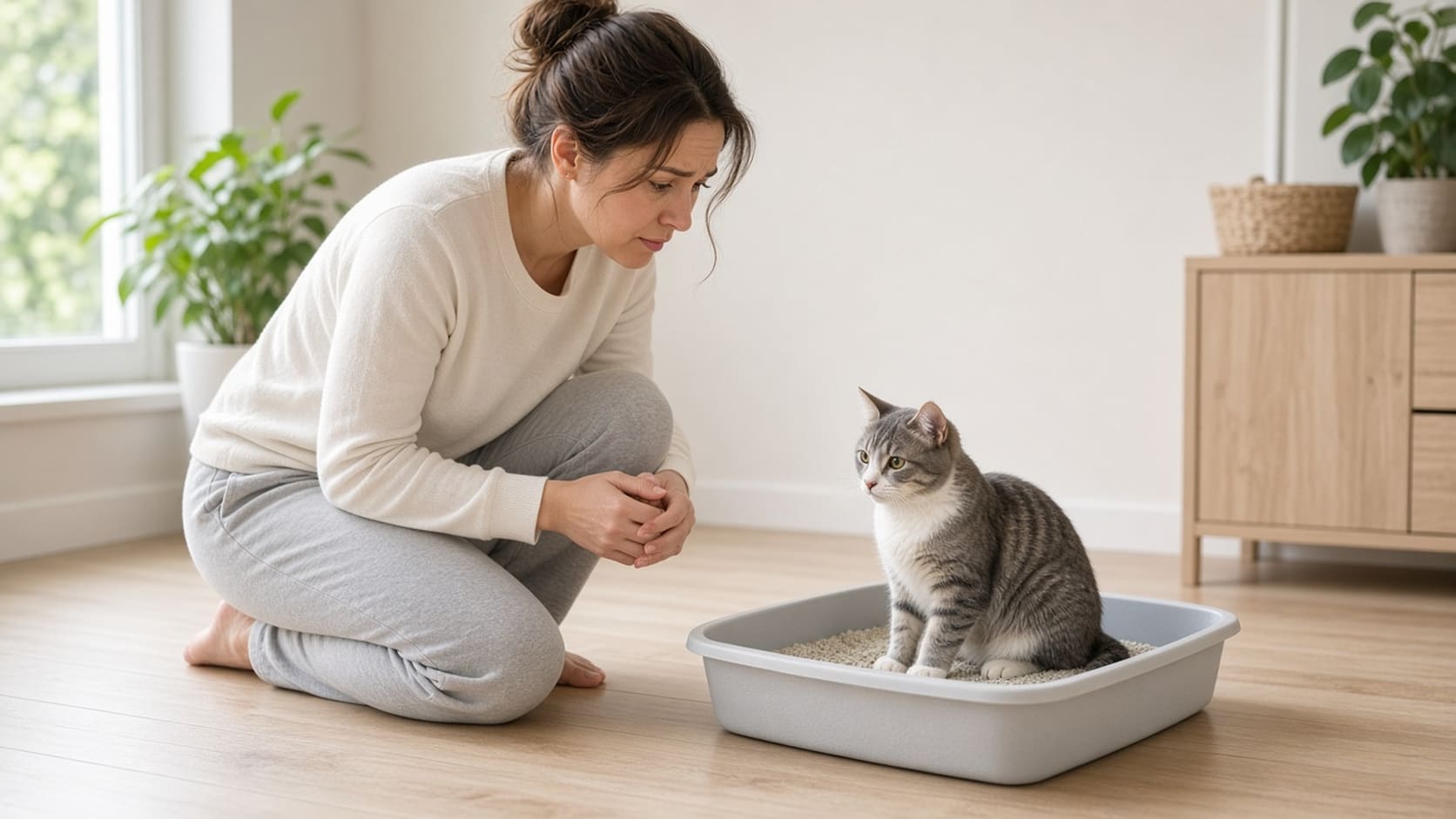
Quick answer: Watch closely for a minute. If your cat is straining and producing little or no urine, especially a male cat, this is an emergency: VCA Animal Hospitals calls a urethral obstruction “an absolute emergency.” Go to a vet now. If your cat is simply resting in the box and urinating normally, look at stress, other pets and age.
When it is an emergency: a cat that keeps straining in the litter box and passes little or no urine needs a veterinarian right now. VCA Animal Hospitals calls a urethral obstruction “an absolute emergency.” Cornell Feline Health Center lists male cats among those at increased risk of lower urinary tract disease.
Is it straining or sitting?
- Straining: squatting repeatedly, little or no urine (check the litter for clumps), crying, licking the genital area. The ASPCA says cats with cystitis try to urinate frequently and may look as if they are straining with little success, and may have blood in the urine. VCA says repeated straining with little or no urine needs immediate care.
- Frequent short visits: the ASPCA notes a cat that keeps entering the box and produces small amounts of urine may have a urinary tract infection, and that kidney stones or a blockage can make a cat visit the box frequently and cry when trying to eliminate.
- Resting or lying in a clean box: not something the cited sources list as a diagnosis on its own. Vets look at what else is going on.
Possible reasons for resting in the box
- Stress or a new home. A box can be a small, enclosed space in an unfamiliar room. Give a covered bed or hiding box nearby as an alternative.
- Another pet. Cornell asks whether another animal ambushes your cat near the box. A cat guarding or hiding may sit in it. Add boxes in different locations, and make sure there is more than one way out.
- Age. Cornell’s cognitive dysfunction page lists spatial disorientation and litter box lapses among signs in cats 10 years and older.
If resting in the box is new and you can’t explain it, call your vet. It is easier to rule out a medical cause early.
Make the box comfortable for its real job
Clean daily, keep one to two inches of unscented litter (ASPCA), and use a box big enough for your cat (1.5 times its length per the AAFP/ISFM-based owner guide). See our best cat litter guide and cat peeing outside the litter box.
Paw & Sage is not a veterinary practice. This guide summarizes the cited veterinary sources and does not replace an exam by your veterinarian.
Get our free indoor cat enrichment checklist
Plus seasonal picks and deals worth knowing about. No spam, unsubscribe anytime.
By subscribing you agree to receive emails from Paw & Sage. Double opt-in, unsubscribe anytime. See our privacy policy.
Sources
This article cites 7 sources in the text. They are linked below.
- Emergencies in Cats (VCA Animal Hospitals)
- Cystitis and Lower Urinary Tract Disease in Cats (VCA Animal Hospitals)
- Litter Box Problems (ASPCA)
- Feline Behavior Problems: House Soiling (Cornell Feline Health Center)
- Cognitive Dysfunction (Cornell Feline Health Center)
- Feline house soiling: a guide for cat owners (based on the AAFP and ISFM guidelines) (Journal of Feline Medicine and Surgery (via PubMed Central))
- Feline Lower Urinary Tract Disease (Cornell Feline Health Center)
Common questions
Why is my cat sitting in the litter box but not peeing?
Treat it as an emergency if your cat is straining with little or no urine. VCA Animal Hospitals says a urethral obstruction is an absolute emergency. Go to a vet now.
Why does my cat lie in the litter box?
If your cat is urinating normally, possible reasons include stress, a new environment, another pet, or age-related changes. Call your vet if it is new and unexplained.
Are male cats more at risk of urinary problems?
Yes. Cornell Feline Health Center lists male cats among those at increased risk of lower urinary tract disease, and calls a urethral obstruction an absolute emergency.