Cat Pooping Outside the Litter Box: Why It Happens and Fixes
Why is my cat pooping outside the litter box? Medical causes, box size and cleanliness, litter, location and stress, with fixes from Cornell, the ASPCA and AAFP guidance.
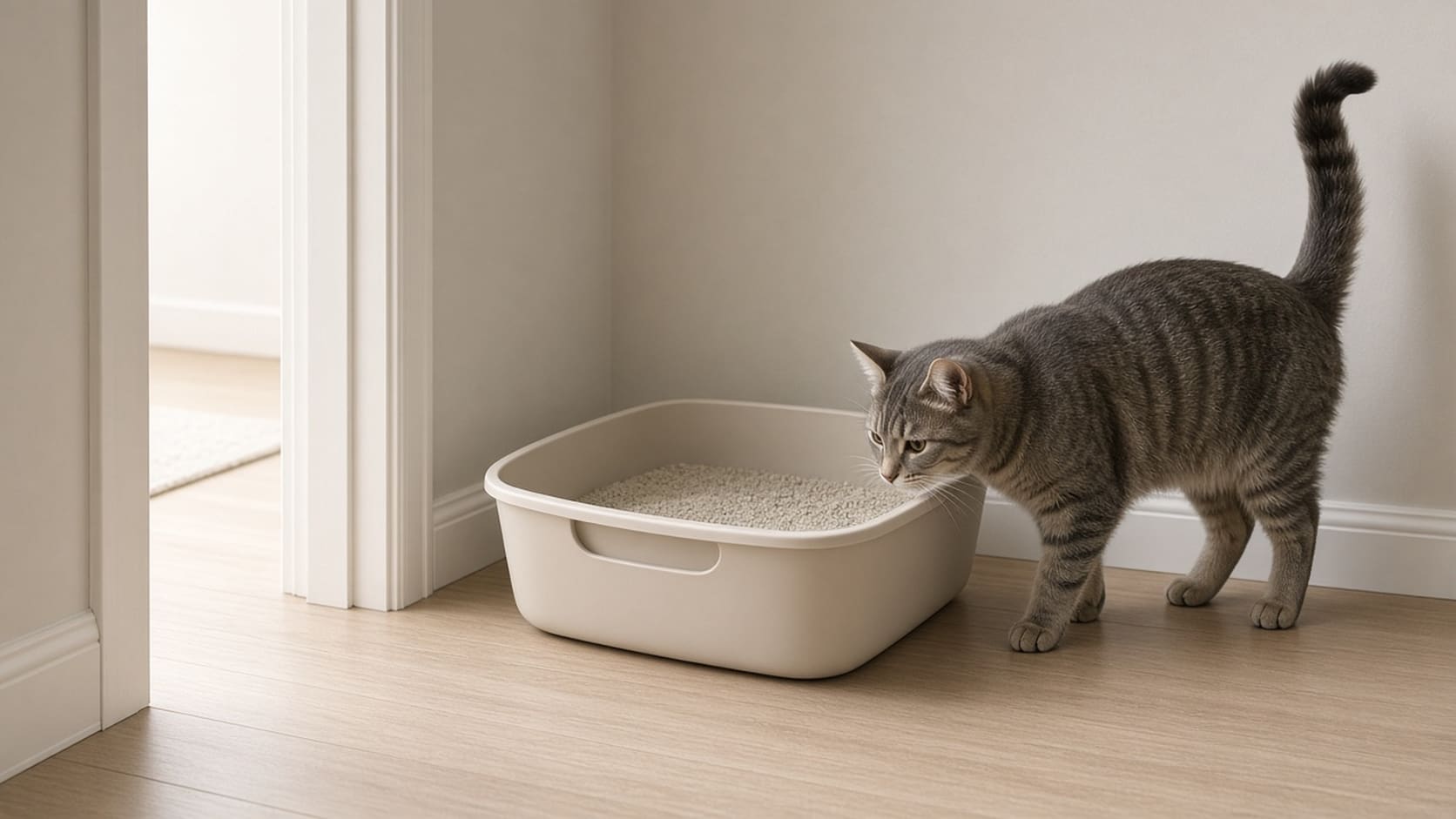
Quick answer: Treat it like any house-soiling problem: vet check first, then the box. Cornell Feline Health Center lists digestive problems among the medical issues behind litter box trouble, and arthritis can make it hard to get into the box in time. After that, look at box size, cleanliness, litter and location.
Medical causes to rule out
Cornell explains that any medical condition that interferes with normal defecation can cause litter box problems, and that digestive tract problems and conditions affecting mobility or cognitive function are possible culprits. Its cognitive dysfunction page notes arthritis may stop a cat getting into the box in time, and that cats with cognitive decline (usually 10 years or older) may eliminate outside the box.
Call your vet if you see diarrhea, constipation, straining, blood, or a cat that seems painful getting in and out.
Box problems that hit poop first
Some cats pee in the box but poop elsewhere. Common reasons from the cited guidance:
- The box is too small. The AAFP/ISFM-based owner guide says boxes should be 1.5 times the cat’s length (nose to base of tail) and many commercial boxes are too small.
- It isn’t clean enough. Some cats refuse a box with any waste in it (Cornell). Scoop at least daily (ASPCA). A second box gives your cat a clean option; see how many litter boxes per cat.
- High sides for an older cat. Kittens and older cats need low sides (Cornell). The ASPCA notes older cats or cats with physical limitations may struggle with top-entry or high-sided boxes.
- Litter they dislike. Most cats prefer unscented litter (Cornell); many dislike scented or dusty litter (AAFP/ISFM-based guide). Change brands gradually; see how to transition a cat to a new litter.
Location and stress
Cats prefer quiet, private spots where they cannot be cornered (AAFP/ISFM-based guide). Keep food and water away from the box. If another pet blocks or ambushes your cat, add a box in a different area. See where to put a litter box.
Clean-up
Use an enzymatic cleaner (ASPCA), and avoid ammonia or vinegar products (Cornell). The ASPCA suggests making soiled spots less attractive, for example with aluminum foil or an upside-down carpet runner, while you fix the box.
Shopping for a bigger box or better litter?
Our best litter box furniture guide covers larger enclosed options (remove the lid if your cat objects), and the best cat litter guide covers unscented clumping litters.
Paw & Sage is not a veterinary practice. This guide summarizes the cited veterinary sources and does not replace an exam by your veterinarian.
Get our free indoor cat enrichment checklist
Plus seasonal picks and deals worth knowing about. No spam, unsubscribe anytime.
By subscribing you agree to receive emails from Paw & Sage. Double opt-in, unsubscribe anytime. See our privacy policy.
Sources
This article cites 5 sources in the text. They are linked below.
- Feline Behavior Problems: House Soiling (Cornell Feline Health Center)
- Feline house soiling: a guide for cat owners (based on the AAFP and ISFM guidelines) (Journal of Feline Medicine and Surgery (via PubMed Central))
- Litter Box Problems (ASPCA)
- Cognitive Dysfunction (Cornell Feline Health Center)
- AAFP and ISFM Guidelines for Diagnosing and Solving House-Soiling Behavior in Cats (American Association of Feline Practitioners (AAFP))
Common questions
Why does my cat pee in the box but poop outside it?
Common reasons are a box that is too small or not clean enough, a litter the cat dislikes, or pain when squatting. Rule out digestive and mobility problems with your vet first.
Can arthritis cause a cat to poop outside the litter box?
Yes. Cornell Feline Health Center notes arthritis can stop a cat from getting into the litter box in time. Low-sided boxes help.
How big should a litter box be?
About 1.5 times your cat's length from nose to base of tail, according to the owner guide based on the AAFP and ISFM guidelines.