Where to Put a Litter Box: Best and Worst Spots in Your Home
Where should a litter box go? Quiet, private, easy to reach and away from food, with more than one exit. Best and worst spots per the ASPCA, VCA, Cornell and AAFP guidance.
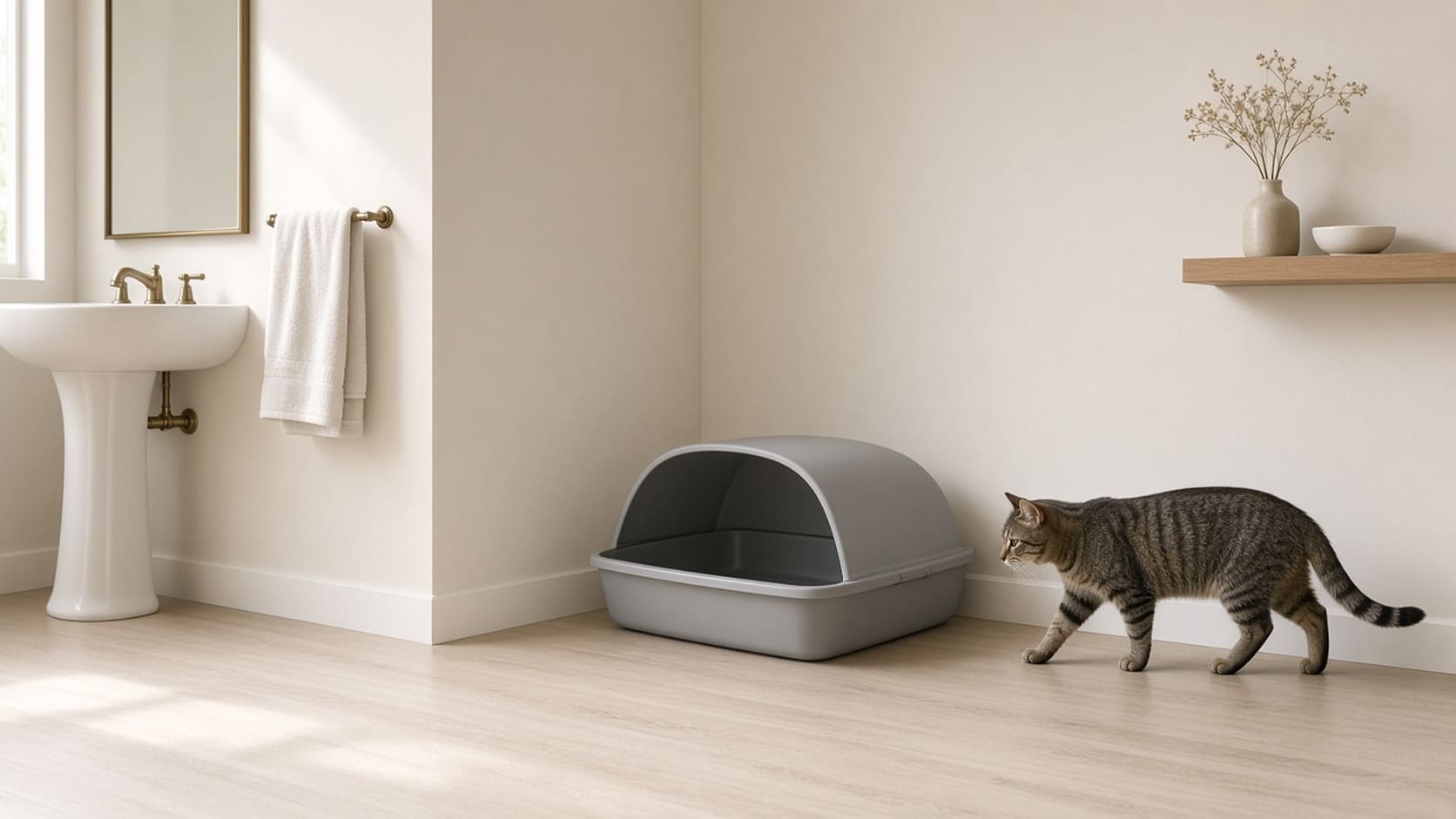
Quick answer: Put the box somewhere quiet, private and easy to reach, away from food and water, and where your cat can’t be cornered. Avoid loud appliances, busy hallways and spots next to the dog’s bowls.
Good spots
- A quiet room your cat can always get into (guest bath, spare room, quiet corner of a bedroom). VCA says a quiet but accessible location.
- One on each floor of a multi-level home (VCA; AAFP/ISFM-based owner guide).
- Somewhere with a view and two ways out. Cornell advises positioning the box so it isn’t surrounded on three sides.
Spots to avoid
- Next to food and water: the AAFP/ISFM-based guide says to keep them apart, and VCA says not directly next to the kitten’s beds, water or food.
- Next to the washer, dryer or furnace: the ASPCA lists the washer and dryer among busy, loud or intimidating places, and the AAFP/ISFM-based guide mentions cats startled by loud appliances.
- High-traffic areas and anywhere a cat can be trapped, like a closet another cat can block (AAFP/ISFM-based guide; ASPCA).
- Behind closed doors your cat can’t open.
Small apartments
You still need a quiet, accessible spot. A bathroom corner or a piece of litter box furniture in the living room can work if your cat accepts it. Leave the lid off if your cat hesitates; Cornell notes covers hold odors in. Our Tuft & Paw Cove vs Cubby comparison covers two designer options.
How to move a box without accidents
Cornell’s method: move it a few inches a day toward the new spot. If your cat stops using it, move it back to the last spot it used reliably and start again more slowly. If your cat already prefers a new spot, try putting a box there first.
More: how many litter boxes per cat.
Paw & Sage is not a veterinary practice. This guide summarizes the cited veterinary sources and does not replace an exam by your veterinarian.
Get our free indoor cat enrichment checklist
Plus seasonal picks and deals worth knowing about. No spam, unsubscribe anytime.
By subscribing you agree to receive emails from Paw & Sage. Double opt-in, unsubscribe anytime. See our privacy policy.
Sources
This article cites 4 sources in the text. They are linked below.
- Feline house soiling: a guide for cat owners (based on the AAFP and ISFM guidelines) (Journal of Feline Medicine and Surgery (via PubMed Central))
- Litter Box Problems (ASPCA)
- How To Litter Train Your Kitten (VCA Animal Hospitals)
- Feline Behavior Problems: House Soiling (Cornell Feline Health Center)
Common questions
Where is the best place for a litter box?
A quiet, private, easily accessible spot away from food and water, where your cat cannot be cornered and has more than one way out.
Can I put the litter box next to the washing machine?
Better not. The ASPCA lists the washer and dryer among busy, loud or intimidating spots to avoid.
How do I move a litter box to a new spot?
Move it a few inches a day, according to Cornell Feline Health Center. If your cat stops using it, move it back and go slower.