How to Get Rid of Litter Box Smell (Without Scents Cats Hate)
How to get rid of litter box smell: scoop daily, wash and replace litter on schedule, pick unscented clumping litter, and avoid air fresheners and scented cleaners cats dislike.
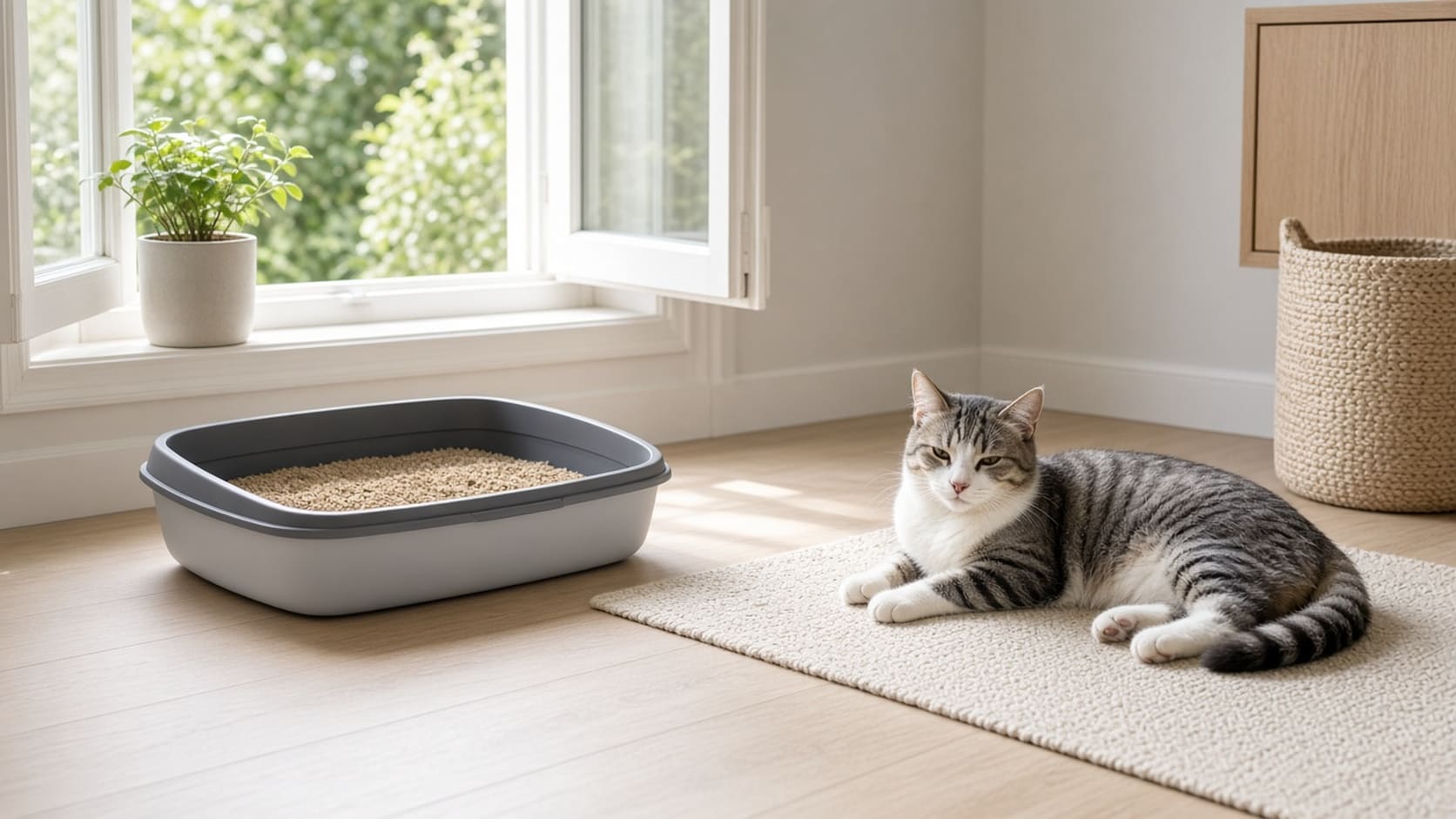
Quick answer: Odor control is mostly cleaning frequency: scoop at least daily, wash the box and replace the litter on schedule, and use an unscented clumping litter. Don’t mask it with perfumes, sprays or essential oils, which cats may avoid and some of which are toxic to cats.
What actually removes the smell
- Scoop at least once a day (ASPCA; AAFP/ISFM-based owner guide).
- Wash the box and replace all litter weekly (ASPCA), or wash every 1–4 weeks with soap and hot water (AAFP/ISFM-based guide).
- Use enough boxes. One per cat plus one (Cornell). An overloaded box smells faster.
- Clean accidents with an enzymatic cleaner (ASPCA). Cornell says odors must be neutralized, not just deodorized.
See our step-by-step how to clean a litter box.
The litter makes a big difference
Clumping litter lets you remove urine fully when you scoop. Most cats prefer unscented litter (Cornell), and many dislike aromatic or dusty litters and deodorizers (AAFP/ISFM-based guide). Compare odor-control picks in our best cat litter guide and the World’s Best Cat Litter review.
Scents to skip
- Scented cleaners: the ASPCA warns cats may develop an aversion.
- Litter deodorizers: many cats dislike them (AAFP/ISFM-based guide).
- Essential oil diffusers or sprays near the box: VCA Animal Hospitals lists several essential oils as poisonous to cats; see our tea tree oil and peppermint oil guides.
- Covers to trap the smell: Cornell notes covers hold odors in for the cat.
When the smell itself is a clue
A sudden change in how urine smells, or much larger clumps, can be a medical sign. Cornell says kidney disease, thyroid disease and diabetes can increase urine volume. Mention it to your vet.
Automatic boxes
A self-cleaning box can help with odor because waste is removed quickly, and the ASPCA says many cats accept them readily. They still need regular emptying and cleaning. See best automatic litter box for multiple cats.
Paw & Sage is not a veterinary practice. This guide summarizes the cited veterinary sources and does not replace an exam by your veterinarian.
Get our free indoor cat enrichment checklist
Plus seasonal picks and deals worth knowing about. No spam, unsubscribe anytime.
By subscribing you agree to receive emails from Paw & Sage. Double opt-in, unsubscribe anytime. See our privacy policy.
Sources
This article cites 4 sources in the text. They are linked below.
- Litter Box Problems (ASPCA)
- Feline house soiling: a guide for cat owners (based on the AAFP and ISFM guidelines) (Journal of Feline Medicine and Surgery (via PubMed Central))
- Feline Behavior Problems: House Soiling (Cornell Feline Health Center)
- Essential Oil and Liquid Potpourri Poisoning in Cats (VCA Animal Hospitals)
Common questions
How do I stop my litter box from smelling?
Scoop at least daily, wash the box and replace all litter on schedule (weekly per the ASPCA), use enough boxes, and choose an unscented clumping litter.
Are litter box air fresheners safe for cats?
Many cats dislike scented products near the box (ASPCA, AAFP/ISFM-based guide), and VCA lists several essential oils as poisonous to cats. Keep fragrance away from the box.
Does a covered litter box reduce smell?
For people, yes, but Cornell notes covers hold odors in from the cat's point of view, which can lead to avoidance.