How to Clean a Litter Box: Daily, Weekly and Deep Clean
How to clean a litter box the way vets recommend: daily scooping, a weekly wash with unscented soap or baking soda, and which cleaners to avoid (ammonia, vinegar, scents).
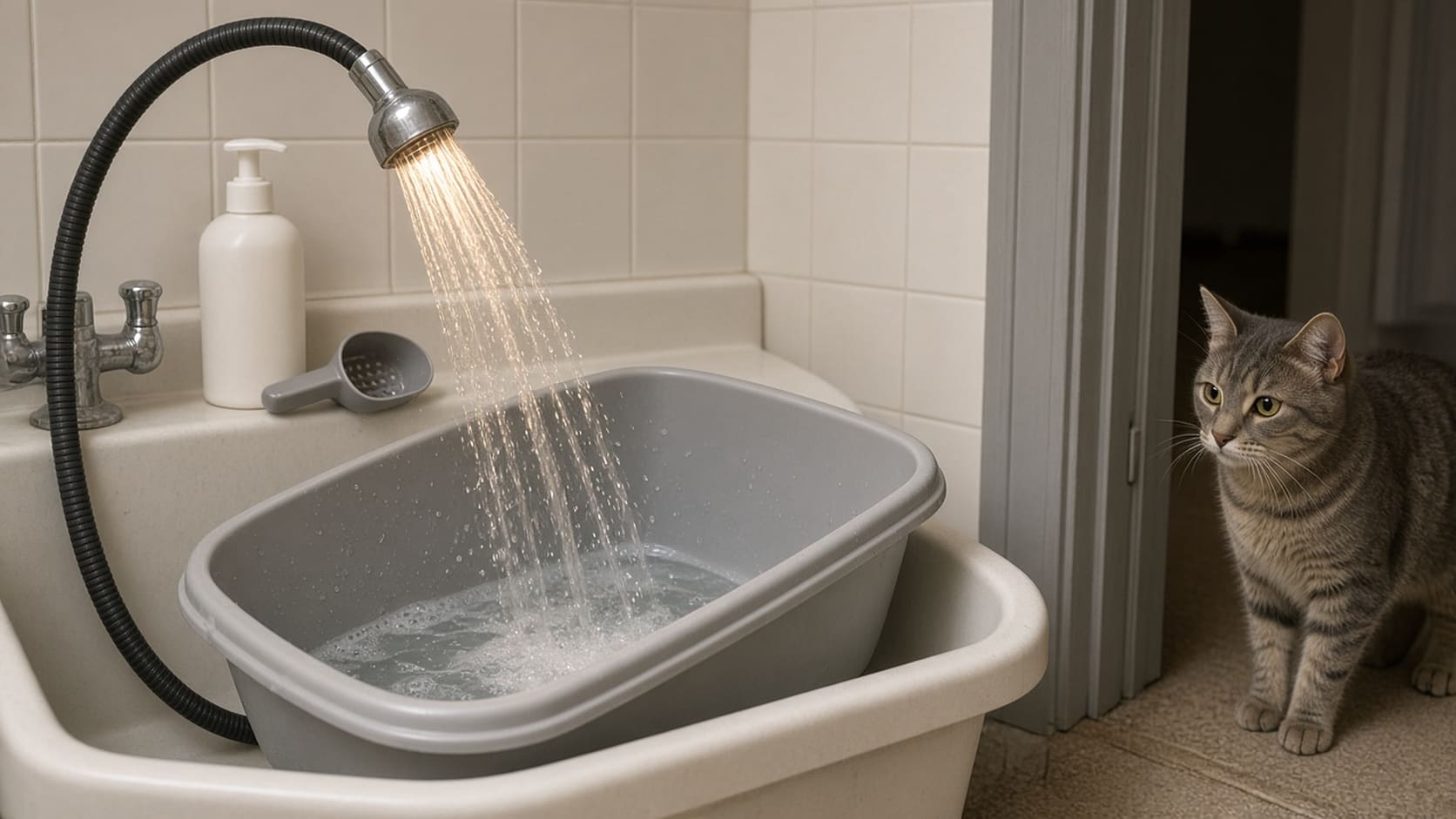
Quick answer: Scoop solids and clumps at least once a day. Once a week (ASPCA) or every 1–4 weeks (AAFP/ISFM-based owner guide), empty the box, wash it with warm water and unscented soap or baking soda, dry it, and refill with fresh litter. Skip ammonia, vinegar and scented cleaners.
Daily: scoop
- Scoop all feces and urine clumps. The ASPCA and AAFP/ISFM-based guide both say at least once a day.
- Top up litter to keep the depth cats prefer: one to two inches (ASPCA).
- Bag and bin the waste. The CDC recommends daily cleaning because the toxoplasmosis parasite becomes infectious 1 to 5 days after shedding. Wash your hands afterward.
Weekly (or every few weeks): wash
- Empty all litter.
- Wash the box with warm water and unscented soap, baking soda or no soap (ASPCA), or soap and hot water only (AAFP/ISFM-based guide).
- Rinse well and dry completely.
- Refill with fresh litter.
What not to use
- Scented cleaners: the ASPCA warns your cat could develop an aversion to the scent.
- Ammonia and vinegar: Cornell says they smell like urine and can be irritating.
- Strong chemicals: the AAFP/ISFM-based guide says to avoid them.
Check the box itself
If a freshly washed box still smells, replace it. While you’re at it, check size: boxes should be 1.5 times your cat’s length (AAFP/ISFM-based guide).
Accidents outside the box
Use an enzymatic cleaner made for pet odors (ASPCA). Cornell says odors must be neutralized, not just deodorized, or the cat may return to the spot. If accidents keep happening, see cat peeing outside the litter box.
Make it easier
Clumping, unscented litter makes daily scooping faster and is what most cats prefer (Cornell; AAFP/ISFM-based guide). See the best cat litter guide. Automatic boxes have their own routine: how to clean a Litter-Robot 4.
Paw & Sage is not a veterinary practice. This guide summarizes the cited veterinary sources and does not replace an exam by your veterinarian.
Get our free indoor cat enrichment checklist
Plus seasonal picks and deals worth knowing about. No spam, unsubscribe anytime.
By subscribing you agree to receive emails from Paw & Sage. Double opt-in, unsubscribe anytime. See our privacy policy.
Sources
This article cites 4 sources in the text. They are linked below.
- Litter Box Problems (ASPCA)
- Feline house soiling: a guide for cat owners (based on the AAFP and ISFM guidelines) (Journal of Feline Medicine and Surgery (via PubMed Central))
- Feline Behavior Problems: House Soiling (Cornell Feline Health Center)
- Preventing Toxoplasmosis (U.S. Centers for Disease Control and Prevention (CDC))
Common questions
What is the best way to clean a litter box?
Scoop daily, then periodically empty it and wash with warm water and unscented soap or baking soda (ASPCA), rinse, dry and refill.
Can I clean a litter box with vinegar or bleach?
Avoid vinegar and ammonia, which Cornell says smell like urine. The AAFP/ISFM-based guide says to avoid strong chemicals and use soap and hot water only.
How often should I wash the litter box?
Once a week according to the ASPCA, or every 1–4 weeks according to the AAFP/ISFM-based owner guide.