How to Transition a Cat to a New Litter Without Accidents
How to switch cat litter: mix gradually (Cornell), or offer a side-by-side choice (ASPCA). Step-by-step plan, signs your cat dislikes it, and which litters cats prefer.
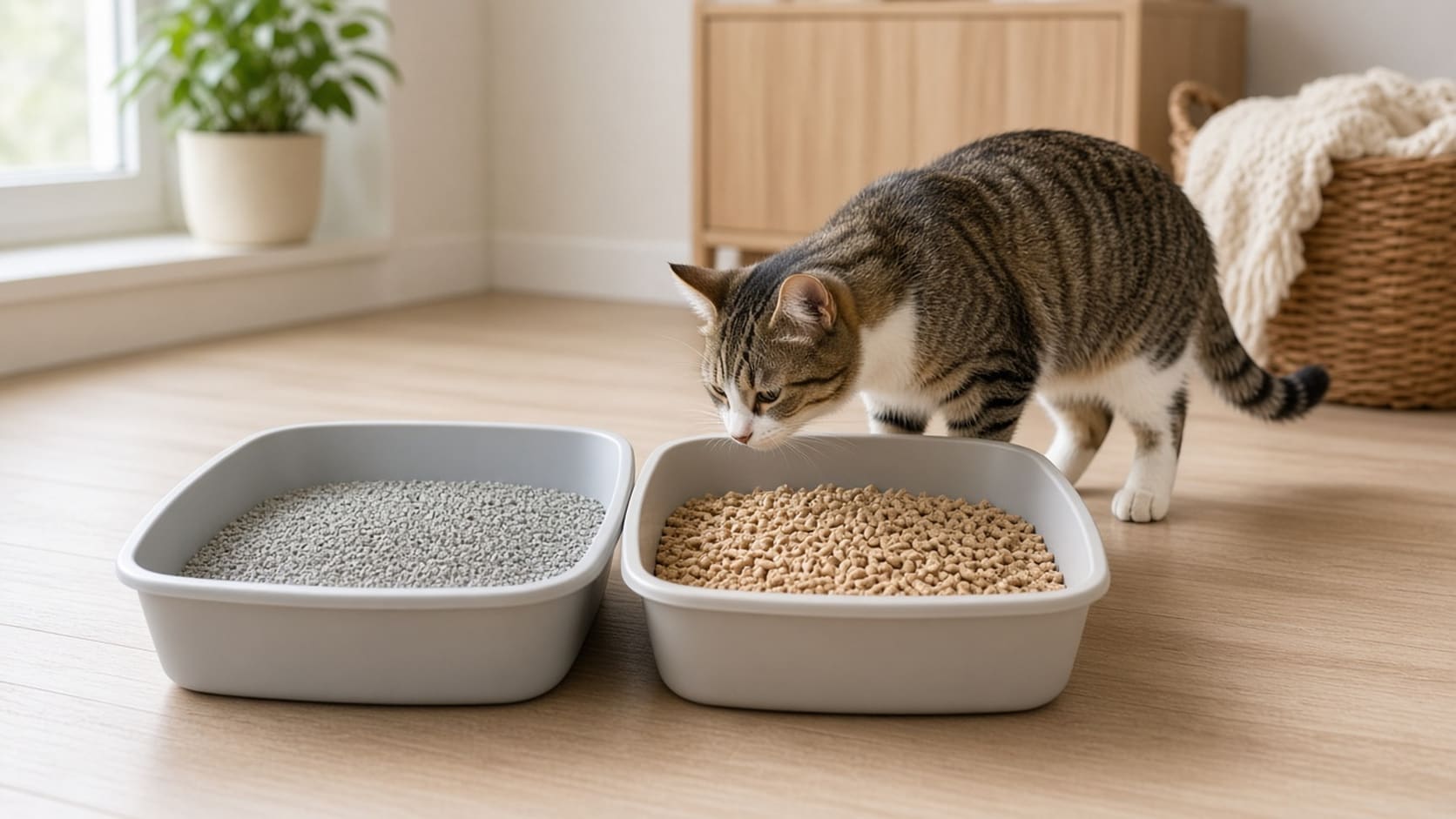
Quick answer: Switch gradually. Cornell Feline Health Center says to add small amounts of the new litter to the old. Alternatively, the ASPCA suggests offering a side-by-side choice of litters so your cat can pick. Either way, keep the old box available until your cat is reliably using the new litter.
Method 1: Gradual mix
- Start with your current litter, then mix in a small portion of the new one.
- Each time you do a full change, increase the share of new litter.
- Stop and step back if your cat hesitates, perches on the edge, stops covering, or goes beside the box. Cornell lists those as signs of litter box aversion.
Method 2: Side-by-side choice
Set up a second box with the new litter next to the original. The ASPCA recommends this kind of choice test, and VCA suggests a “buffet” of box and litter styles for kittens. Once your cat picks the new box consistently, you can retire the old one. (Long term, the AAFP/ISFM-based guide suggests keeping boxes apart, because cats may treat boxes next to each other as one big box.)
Picking a litter your cat is likely to accept
- Unscented: most cats prefer it (Cornell).
- Soft, clumping texture: most cats prefer soft unscented clumping litter, and many dislike aromatic or dusty litters (AAFP/ISFM-based guide). VCA says most cats prefer clumping-style litter.
Compare options in our best cat litter guide, tofu vs clay and PrettyLitter vs Tidy Cats.
Switching to an automatic box at the same time?
Our suggestion: don’t change box and litter in the same week. Change one thing, wait until your cat is comfortable, then change the next. For robot boxes, use a compatible litter; see best litter for automatic litter boxes.
If accidents start, go back to the old litter and see cat peeing outside the litter box.
Paw & Sage is not a veterinary practice. This guide summarizes the cited veterinary sources and does not replace an exam by your veterinarian.
Get our free indoor cat enrichment checklist
Plus seasonal picks and deals worth knowing about. No spam, unsubscribe anytime.
By subscribing you agree to receive emails from Paw & Sage. Double opt-in, unsubscribe anytime. See our privacy policy.
Sources
This article cites 4 sources in the text. They are linked below.
- Feline Behavior Problems: House Soiling (Cornell Feline Health Center)
- Litter Box Problems (ASPCA)
- Feline house soiling: a guide for cat owners (based on the AAFP and ISFM guidelines) (Journal of Feline Medicine and Surgery (via PubMed Central))
- How To Litter Train Your Kitten (VCA Animal Hospitals)
Common questions
How do I switch my cat to a new litter?
Gradually, by mixing small amounts of the new litter into the old (Cornell Feline Health Center), or by offering the new litter in a second box side by side so your cat can choose (ASPCA).
What litter do most cats prefer?
Most cats prefer unscented litter (Cornell), and the AAFP/ISFM-based owner guide says most prefer soft, unscented clumping litter.
What are signs my cat does not like the new litter?
Crying in the box, not burying waste, perching on the edge, or going right next to the box, according to Cornell.