Why Does My Cat Kick Litter Everywhere? (And How to Stop It)
Why does my cat kick litter out of the box? Box size, sides, depth and litter type all play a part. Practical fixes based on Cornell, ASPCA and AAFP guidance.
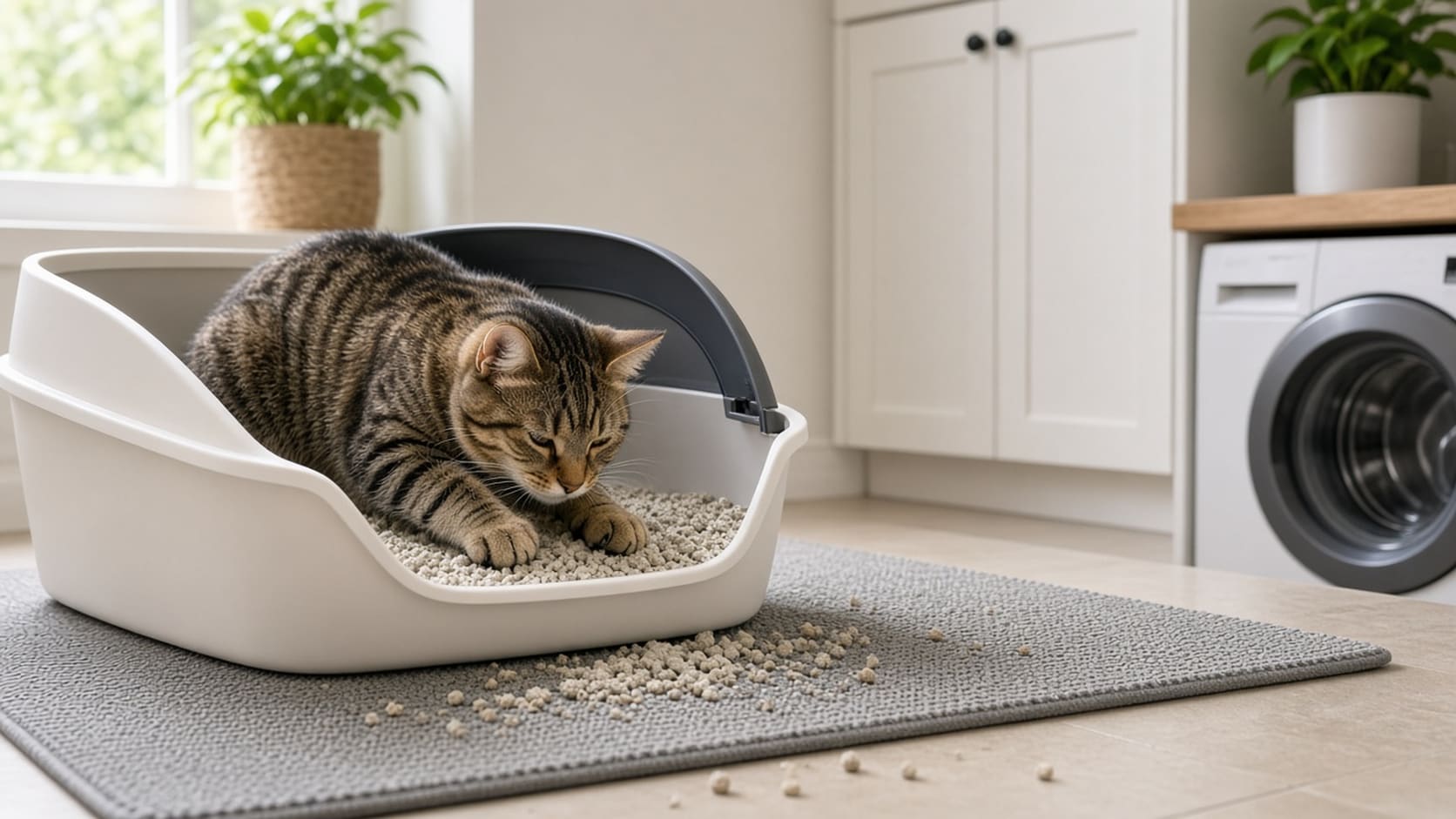
Quick answer: Digging and covering is normal cat behavior, so a bit of scatter is a good sign. Litter ends up on the floor when the box is too small, the sides are too low for a vigorous digger, or the litter is too deep. Fix the box first, before blaming your cat.
Kicking is normal; not covering can be a warning
Cornell Feline Health Center lists refusing to bury waste among the signs a cat dislikes something about its box. So a cat that digs and covers is using the box the way it should. You want to contain the mess, not stop the digging.
The four fixes that actually help
- A bigger box. The AAFP/ISFM-based owner guide says boxes should be 1.5 times the length of the cat from nose to base of tail and that many commercial boxes are too small. In a cramped box, every scratch sends litter over the rim.
- Higher sides (if your cat can manage them). VCA Animal Hospitals notes that a backsplash or high-sided box keeps deposits in for cats that eliminate standing up; the same design keeps flung litter in. Kittens, seniors and cats with mobility problems need low sides (Cornell, VCA). See litter boxes for cats that pee high.
- Less litter. The ASPCA says cats usually prefer one to two inches of litter; overfilled boxes spill.
- A litter mat at the exit. Catches what sticks to paws.
Should I use a covered box to stop scatter?
Covers do cut scatter, but Cornell notes that from the cat’s point of view covers hold odors in, and the ASPCA lists hoods among common reasons cats avoid boxes. If you try one, watch closely and go back to an open box at the first sign of avoidance. Enclosed litter box furniture works for some cats; the same caution applies.
Is it the litter?
Many cats dislike dusty or scented litter (AAFP/ISFM-based guide), so a heavier, low-dust, unscented litter is worth trying. If you switch, do it gradually (Cornell); see how to transition a cat to a new litter.
Paw & Sage is not a veterinary practice. This guide summarizes the cited veterinary sources and does not replace an exam by your veterinarian.
Get our free indoor cat enrichment checklist
Plus seasonal picks and deals worth knowing about. No spam, unsubscribe anytime.
By subscribing you agree to receive emails from Paw & Sage. Double opt-in, unsubscribe anytime. See our privacy policy.
Sources
This article cites 4 sources in the text. They are linked below.
- Feline house soiling: a guide for cat owners (based on the AAFP and ISFM guidelines) (Journal of Feline Medicine and Surgery (via PubMed Central))
- Feline Behavior Problems: House Soiling (Cornell Feline Health Center)
- Litter Box Problems (ASPCA)
- Housetraining for Kittens and Cats (VCA Animal Hospitals)
Common questions
Why does my cat kick litter out of the box?
Digging and covering is normal. Litter flies out when the box is too small, the sides are too low, or there is too much litter.
Is a covered litter box better for litter kicking?
It reduces scatter, but Cornell notes covers hold odors in and the ASPCA lists hoods as a common reason cats avoid boxes. Watch your cat closely if you try one.
How deep should cat litter be?
The ASPCA says cats usually prefer one to two inches of litter.