Can Cats Eat Watermelon? Seedless Fruit as a Summer Treat
Can cats eat watermelon? VCA lists seedless watermelon among foods safe for cats. How to serve it (no seeds, no rind), how much, and fruits to avoid like grapes.
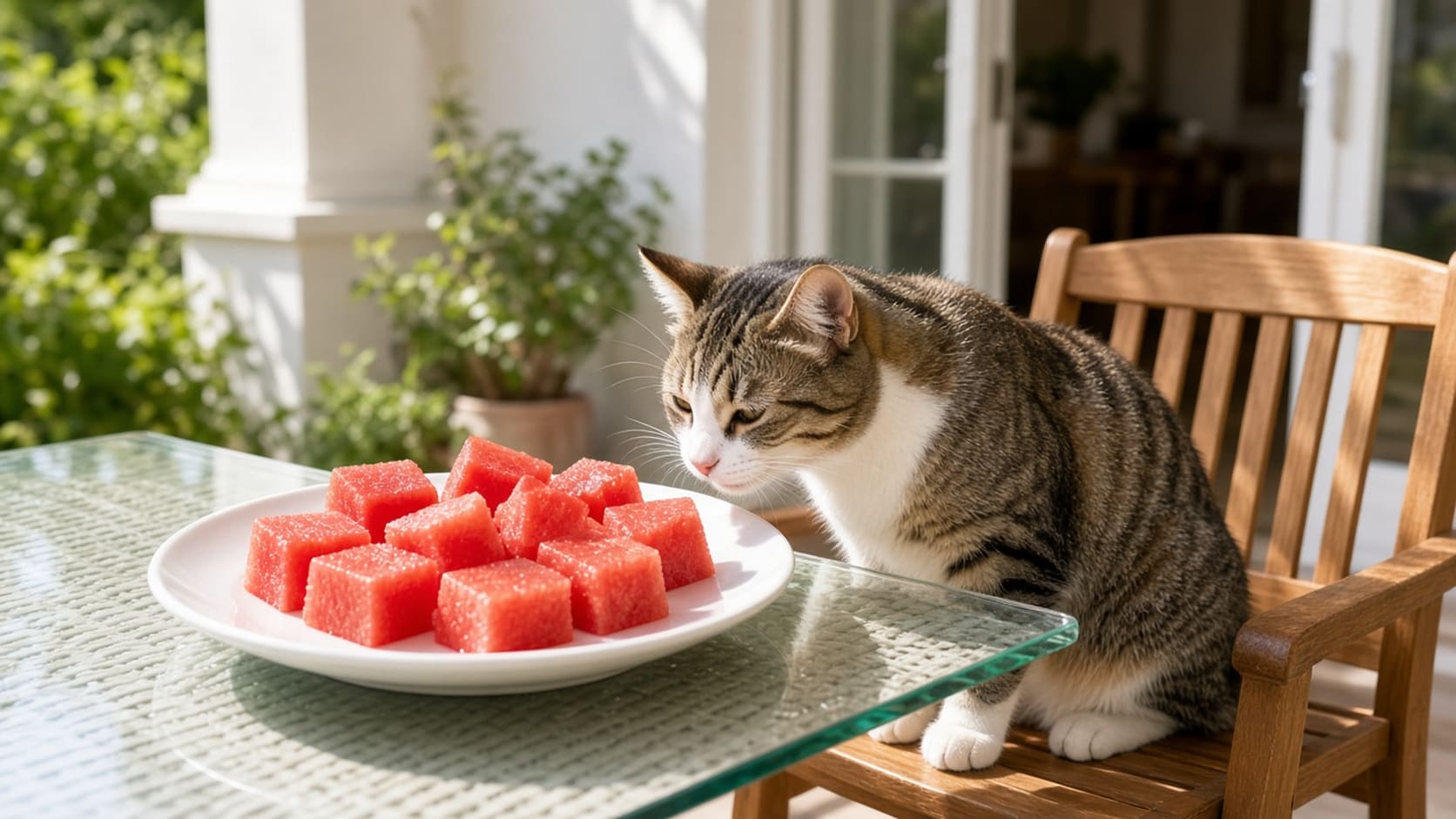
Quick answer: Yes, a little. VCA Animal Hospitals lists seedless watermelon among foods that are safe and often enjoyed by cats, offered without seasonings, and recommends choosing low-calorie treats.
How to serve it
- Seedless only. VCA specifically lists seedless watermelon. Remove any seeds you find.
- Flesh only, no rind. WSAVA advises making sure any treat is an appropriate size and shape to reduce the risk of choking. A cat-sized cube of soft flesh is ideal.
- Plain. No salt, sugar or fruit salads with other fruits mixed in.
- Small portions. VCA says treats should be no more than 10% of daily calories.
Plenty of cats ignore fruit entirely, and that is fine. Cornell Feline Health Center notes cats are obligate carnivores that rely on nutrients found in animal products, so watermelon is a curiosity, not a nutritional need.
Fruits that are not okay
VCA lists grapes and raisins among foods to avoid, and WSAVA adds currants and sultanas. If you are making a fruit bowl, keep it out of your cat’s reach.
Summer hydration
If you’re offering watermelon because it’s hot, it doesn’t replace water. See our summer dangers guide and the signs of heatstroke in cats.
How much is “a little”?
Human food counts toward your cat’s treat budget. VCA Animal Hospitals says treats and snacks should make up no more than 10% of daily calories, Cornell Feline Health Center gives a rule of thumb of 10 to 15%, and WSAVA says under 10%. WSAVA’s own table puts that at roughly 18 to 28 calories a day for a healthy adult cat weighing 2.5 to 7 kg (about 5.5 to 15 lb). Your veterinarian can tell you what your cat needs.
When to call the vet
Call your veterinarian if your cat vomits repeatedly, has diarrhea that does not settle, seems lethargic or stops eating, or if the food contained anything toxic such as onion, garlic, chocolate, grapes or xylitol. For a suspected poisoning, call the ASPCA Animal Poison Control Center at (888) 426-4435 (a consultation fee may apply) or Pet Poison Helpline at (855) 764-7661 (an incident fee applies).
More cat food safety
See the full traffic-light list of foods, plants and essential oils in our cat safety hub.
Paw & Sage is not a veterinary practice, and this page does not replace advice from your veterinarian or a poison control center. Facts reflect the cited sources as checked in November 2026.
Get our free indoor cat enrichment checklist
Plus seasonal picks and deals worth knowing about. No spam, unsubscribe anytime.
By subscribing you agree to receive emails from Paw & Sage. Double opt-in, unsubscribe anytime. See our privacy policy.
Sources
This article cites 4 sources in the text. They are linked below.
- Using Food and Treats for Training Cats (VCA Animal Hospitals)
- Feeding Treats to Your Cat (World Small Animal Veterinary Association (WSAVA))
- Cat Treats (VCA Animal Hospitals)
- Feeding Your Cat (Cornell Feline Health Center)
Common questions
Can cats eat watermelon?
Yes, a little. VCA lists seedless watermelon among foods safe and often enjoyed by cats when offered plain.
Can cats eat watermelon rind or seeds?
Stick to seedless flesh. VCA specifies seedless watermelon, and WSAVA advises appropriately sized treats to reduce choking risk.
What fruits are toxic to cats?
VCA lists grapes and raisins among foods to avoid, and WSAVA adds currants and sultanas.
How much watermelon can my cat have?
A small cube or two. Treats should make up no more than about 10% of daily calories according to VCA.