Are Calatheas Toxic to Cats? Prayer Plants and the ASPCA List
Are calatheas toxic to cats? The ASPCA lists calathea and prayer plants as non-toxic to cats. A safe tropical swap for monstera and pothos, with care notes.
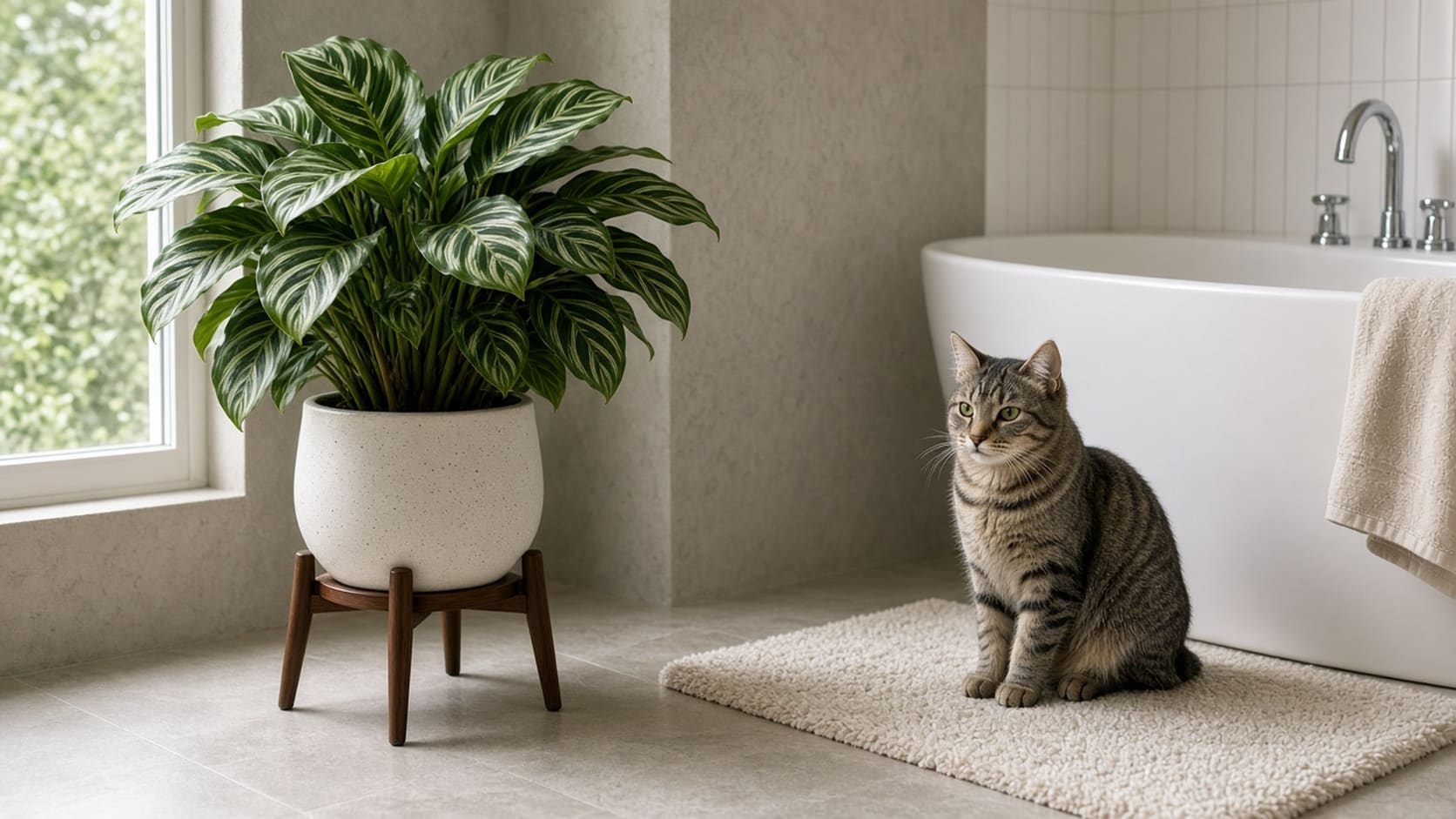
Quick answer: No. The ASPCA lists Calathea species as non-toxic to cats, dogs and horses, and its prayer plant entry (Calathea insignis, also called peacock plant, rattlesnake plant and zebra plant) says the same.
What the ASPCA plant database says
- Scientific name: Calathea spp.
- Family: Marantaceae
- Other common names: prayer plant, peacock plant, rattlesnake plant, zebra plant
- ASPCA verdict: Non-toxic to cats
The verdict above comes straight from the ASPCA Animal Poison Control Center’s entry. ASPCA Poison Control is the reference most US veterinarians use for plant questions.
A safe tropical swap
If you love big patterned leaves but have a cat, calathea is one of the best swaps on the ASPCA list for toxic tropicals like monstera, pothos and peace lily, which all contain irritating calcium oxalates.
Non-toxic is not chew-proof
Cats still chew calathea leaves, and a cat that eats a lot of any plant can vomit. Watch for plant-chewing that becomes a habit; it can be a boredom signal, and indoor enrichment usually helps more than deterrents.
Watch the plant care products
Calatheas are fussy about water and humidity, so they often come with leaf shine sprays, fertilizer and pest treatments. Those are separate from the plant verdict. Keep them stored away and ask your vet before using any product on a plant your cat touches.
When to call the vet anyway
Non-toxic means the plant is not expected to poison your cat, not that it is food. Call your veterinarian if your cat vomits repeatedly, seems lethargic, stops eating, or if you are not sure the plant really was calathea (look-alikes and nicknames cause a lot of confusion). If you think your cat ate something toxic, call the ASPCA Animal Poison Control Center at (888) 426-4435 (a consultation fee may apply).
More cat-safe plants
Other plants the ASPCA lists as non-toxic to cats: spider plant, money tree, moth orchid (Phalaenopsis), basil, rosemary. For the full traffic-light list of plants, foods and essential oils, see our cat safety hub.
Paw & Sage is not a veterinary practice, and this page does not replace advice from your veterinarian or a poison control center. Verdicts reflect the ASPCA database as checked in November 2026.
Get our free indoor cat enrichment checklist
Plus seasonal picks and deals worth knowing about. No spam, unsubscribe anytime.
By subscribing you agree to receive emails from Paw & Sage. Double opt-in, unsubscribe anytime. See our privacy policy.
Sources
This article cites 2 sources in the text. They are linked below.
- Calathea (ASPCA Animal Poison Control Center)
- Toxic and Non-Toxic Plant List: Cats (ASPCA Animal Poison Control Center)
Common questions
Are calatheas toxic to cats?
No. The ASPCA lists Calathea species as non-toxic to cats, dogs and horses.
Are prayer plants safe for cats?
Yes. The ASPCA lists the prayer plant (Calathea insignis, also called peacock, rattlesnake or zebra plant) as non-toxic to cats.
What is a cat-safe alternative to monstera?
Calathea is a good option: it is listed as non-toxic by the ASPCA, while monstera is listed as toxic because of insoluble calcium oxalates.