Is Monstera Toxic to Cats? Swiss Cheese Plant and Philodendrons
Is monstera toxic to cats? Yes: the ASPCA lists Monstera deliciosa (Swiss cheese plant) and philodendrons as toxic to cats. Symptoms, what to do and safe swaps.
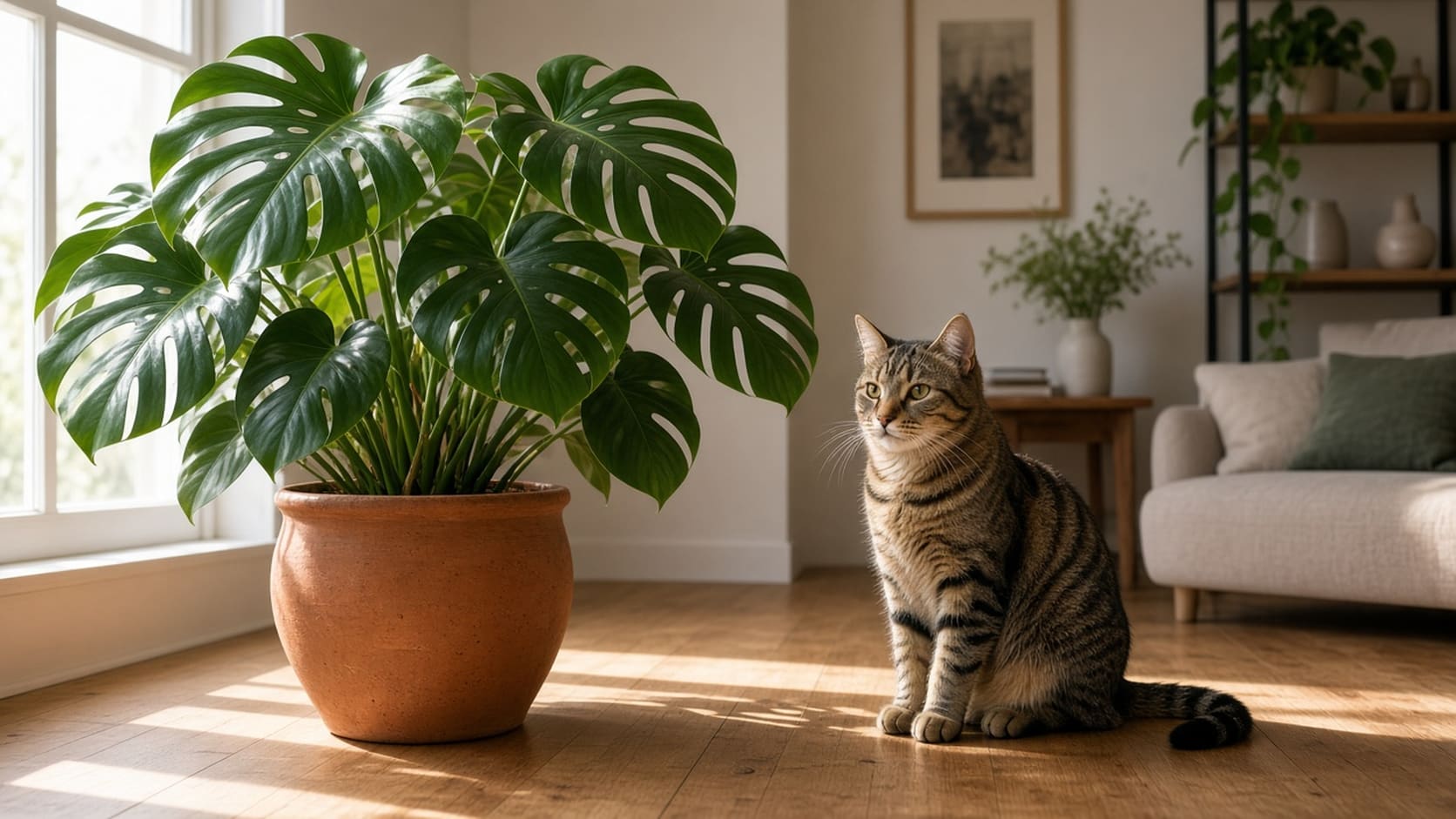
Quick answer: Yes. The ASPCA lists Monstera deliciosa (Swiss cheese plant, also called cutleaf philodendron) as toxic to cats and dogs. Like pothos and philodendrons, it contains insoluble calcium oxalates.
What the ASPCA plant database says
- Scientific name: Monstera deliciosa
- Family: Araceae
- Other common names: Swiss cheese plant, cutleaf philodendron, hurricane plant, ceriman, Mexican breadfruit
- ASPCA verdict: Toxic to cats
- Toxic principle: insoluble calcium oxalates
- Clinical signs listed: oral irritation, intense burning and irritation of the mouth, tongue and lips, excessive drooling, vomiting, difficulty swallowing
The verdict above comes straight from the ASPCA Animal Poison Control Center’s entry. ASPCA Poison Control is the reference most US veterinarians use for plant questions.
Philodendrons too
The ASPCA lists the split-leaf philodendron (Philodendron bipennifolium) and a long list of other philodendrons, including heartleaf and horsehead philodendron, as toxic to cats for the same reason: insoluble calcium oxalates, with the same mouth-focused signs. If your plant is labelled “philodendron,” assume it is not cat-safe.
Why big tropical leaves are a cat magnet
Large, low-hanging leaves at sofa height are easy to reach, and some cats chew them out of boredom. Keep monstera in a room your cat does not use, and make sure fallen or trimmed leaves go straight into the bin, not onto the floor.
If you want the tropical look without the risk, the ASPCA lists calathea and prayer plants and the money tree as non-toxic to cats.
Symptoms to watch for
According to the ASPCA, signs after a cat chews monstera can include:
- Oral irritation
- Intense burning and irritation of the mouth, tongue and lips
- Excessive drooling
- Vomiting
- Difficulty swallowing
How sick a cat gets depends on how much it ate, its size and its overall health, which is why poison control asks for those details.
What to do if your cat ate monstera
- Move your cat away from the plant and remove any plant pieces you can easily reach without being bitten.
- Call right away: your veterinarian, the ASPCA Animal Poison Control Center at (888) 426-4435 (a consultation fee may apply), or Pet Poison Helpline at (855) 764-7661 (an incident fee applies; the helpline says it is available 24/7).
- Have the details ready: the plant’s name (photo or label), roughly how much was eaten and when, and your cat’s weight and health conditions.
- Don’t try home remedies or make your cat vomit unless a veterinarian tells you to.
- Bring the plant or a photo if you are told to go to a clinic.
Cat-safe swaps from the ASPCA list
If you want a plant your cat can live with, the ASPCA lists these as non-toxic to cats: spider plant, money tree, moth orchid (Phalaenopsis), calathea, basil, rosemary. See the full traffic-light list in our cat safety hub.
Paw & Sage is not a veterinary practice, and this page does not replace advice from your veterinarian or a poison control center. Verdicts reflect the ASPCA database as checked in November 2026.
Get our free indoor cat enrichment checklist
Plus seasonal picks and deals worth knowing about. No spam, unsubscribe anytime.
By subscribing you agree to receive emails from Paw & Sage. Double opt-in, unsubscribe anytime. See our privacy policy.
Sources
This article cites 3 sources in the text. They are linked below.
- Monstera (ASPCA Animal Poison Control Center)
- Split Leaf Philodendron (ASPCA Animal Poison Control Center)
- Toxic and Non-Toxic Plant List: Cats (ASPCA Animal Poison Control Center)
Common questions
Is monstera toxic to cats?
Yes. The ASPCA lists Monstera deliciosa (Swiss cheese plant) as toxic to cats and dogs because it contains insoluble calcium oxalates.
Are philodendrons toxic to cats?
Yes. The ASPCA lists split-leaf philodendron and many other philodendrons as toxic to cats, with the same calcium oxalate signs: mouth irritation, drooling, vomiting and difficulty swallowing.
What should I do if my cat chewed a monstera leaf?
Call your veterinarian or the ASPCA Animal Poison Control Center at (888) 426-4435 (a consultation fee may apply) and describe how much was eaten.