Can Cats Eat Onions or Garlic? Why Alliums Are Toxic to Cats
Can cats eat onions or garlic? No: the ASPCA and Pet Poison Helpline say Alliums damage red blood cells and cats are more sensitive. Hidden sources and what to do.
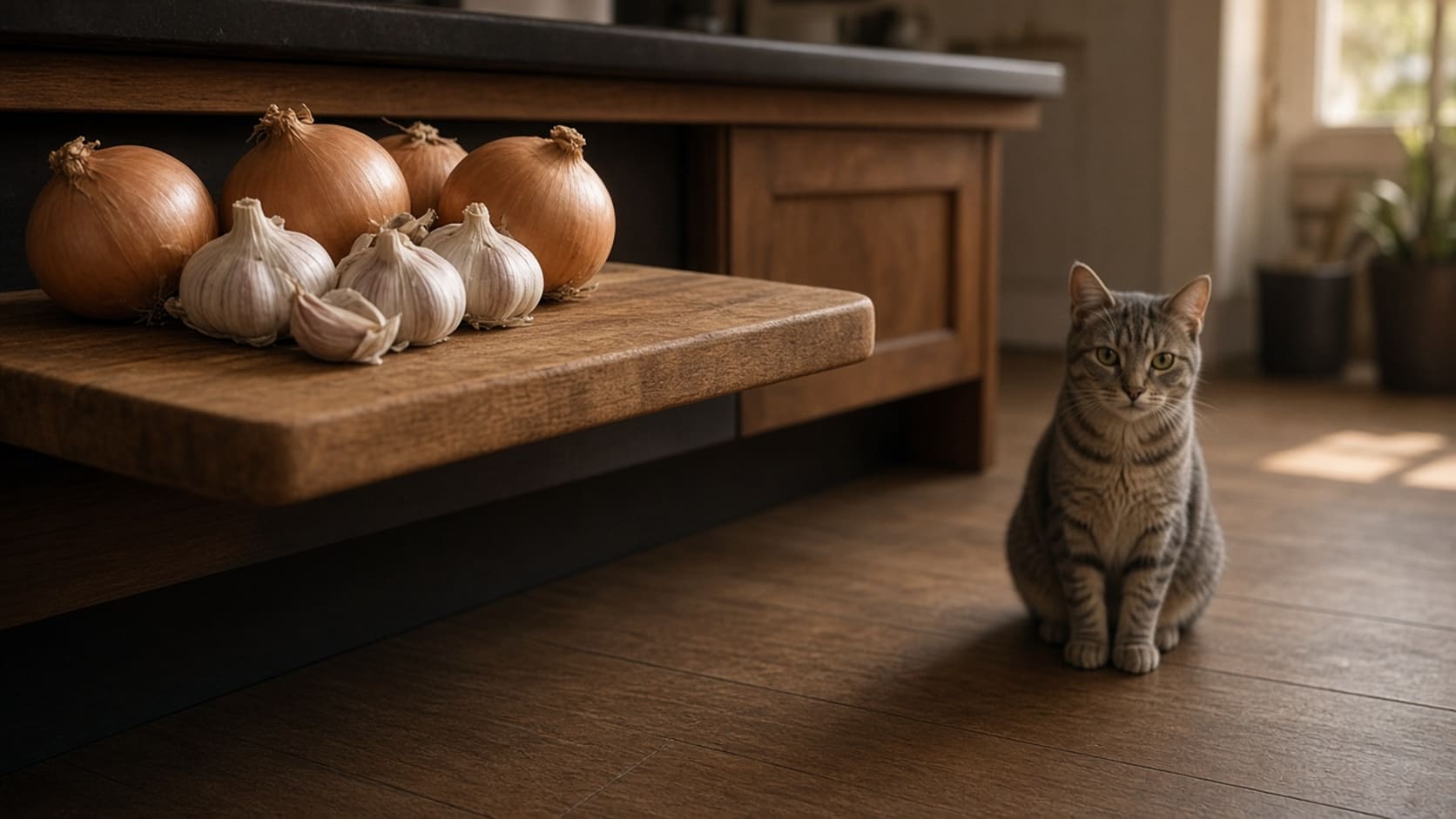
Quick answer: No. Pet Poison Helpline says onion, garlic, chives and leeks (the Allium family) are poisonous to cats, and that cats are more sensitive than many other animals. The ASPCA says Alliums can cause gastrointestinal irritation and red blood cell damage that can lead to anemia.
How Alliums harm cats
Pet Poison Helpline explains that poisonous doses of Alliums damage red blood cells, leading to anemia, and cause GI distress with nausea, vomiting and diarrhea. The ASPCA notes that although cats are more susceptible, dogs are also at risk depending on the amount ingested.
Where Alliums hide
It is rarely a raw onion. More often it is something cooked with onion or garlic:
- Gravies, sauces, soups and stocks
- Seasoned meats, sausages, takeout and leftovers
- Garlic bread, herbed cheeses and dips
- Holiday dishes such as stuffing (can cats eat turkey?)
The family also includes shallots and green onions (Pet Poison Helpline) and chives, which the ASPCA lists as toxic to cats on its plant list. VCA and WSAVA both list onions and garlic among foods cats should avoid.
What about garlic as a “natural” flea remedy?
Don’t. Garlic is an Allium and is poisonous to cats according to Pet Poison Helpline. Ask your veterinarian for a flea product made and labeled for cats.
What to do if your cat ate it
- Call right away: your veterinarian, the ASPCA Animal Poison Control Center at (888) 426-4435 (a consultation fee may apply), or Pet Poison Helpline at (855) 764-7661 (an incident fee applies; the helpline says it is available 24/7).
- Have the details ready: the product or food, how much and when, and your cat’s weight and health conditions. Keep the packaging.
- Don’t try home remedies or make your cat vomit unless a veterinarian tells you to.
- Watch your cat while you wait for advice, and go to an emergency clinic if you are told to.
More cat food safety
See the full traffic-light list of foods, plants and essential oils in our cat safety hub.
Paw & Sage is not a veterinary practice, and this page does not replace advice from your veterinarian or a poison control center. Facts reflect the cited sources as checked in November 2026.
Get our free indoor cat enrichment checklist
Plus seasonal picks and deals worth knowing about. No spam, unsubscribe anytime.
By subscribing you agree to receive emails from Paw & Sage. Double opt-in, unsubscribe anytime. See our privacy policy.
Sources
This article cites 6 sources in the text. They are linked below.
- Onion (Pet Poison Helpline)
- Garlic (Pet Poison Helpline)
- People Foods to Avoid Feeding Your Pets (ASPCA Animal Poison Control Center)
- Using Food and Treats for Training Cats (VCA Animal Hospitals)
- Feeding Treats to Your Cat (World Small Animal Veterinary Association (WSAVA))
- Toxic and Non-Toxic Plant List: Cats (ASPCA Animal Poison Control Center)
Common questions
Can cats eat onions?
No. Pet Poison Helpline says onions and other Alliums are poisonous to cats, and cats are more sensitive than many animals.
Is garlic toxic to cats?
Yes. Garlic is an Allium. The ASPCA says Alliums can cause gastrointestinal irritation and red blood cell damage leading to anemia, and cats are more susceptible than dogs.
My cat ate food cooked with onion. What should I do?
Call your veterinarian, the ASPCA Animal Poison Control Center at (888) 426-4435 or Pet Poison Helpline at (855) 764-7661. Tell them what the food was and roughly how much your cat ate.
Are chives and leeks toxic to cats?
Yes. Pet Poison Helpline lists chives and leeks in the Allium family as poisonous to cats, and the ASPCA lists chives as toxic to cats.