Are Spider Plants Toxic to Cats? What the ASPCA Says
Are spider plants toxic to cats? The ASPCA lists spider plant (Chlorophytum comosum) as non-toxic to cats. Why cats chew it anyway, and when to call a vet.
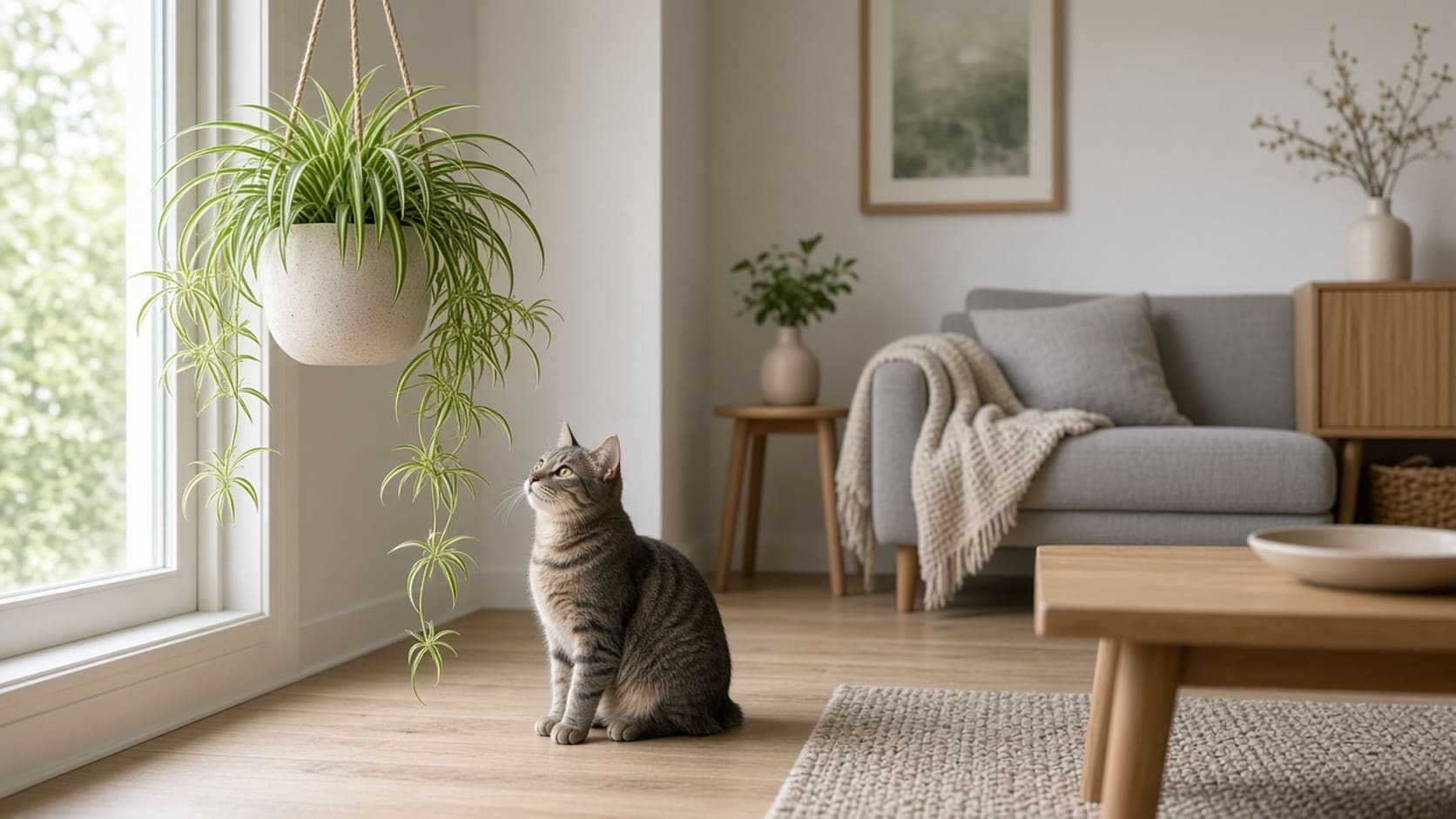
Quick answer: No. The ASPCA Animal Poison Control Center lists the spider plant (Chlorophytum comosum) as non-toxic to cats and dogs. It is one of the safest common houseplants to keep in a home with a cat.
What the ASPCA plant database says
- Scientific name: Chlorophytum comosum
- Family: Asparagaceae
- Other common names: ribbon plant, spider ivy, Anthericum
- ASPCA verdict: Non-toxic to cats
The verdict above comes straight from the ASPCA Animal Poison Control Center’s entry. ASPCA Poison Control is the reference most US veterinarians use for plant questions.
Why cats love chewing spider plants
Spider plants have long, arching, grass-like leaves that sway and dangle, which is exactly the kind of moving target cats like to bat and chew. Non-toxic does not mean “free to eat”: a cat that chews a lot of any plant can still bring it back up, and shredded leaves are a sign your cat may want more to do.
If your cat targets the plant:
- Hang it or put it on a shelf your cat cannot reach, and let the runners (“spiderettes”) trail out of paw range.
- Offer something better to chase. A short play session with a wand toy before you leave the room often does more than any deterrent; see how much playtime a cat needs.
- Check what else is nearby. A spider plant on a shelf next to a pothos or a peace lily is only as safe as its neighbour.
Don’t confuse it with these
The common name “ribbon plant” is also used for some dracaenas, and the ASPCA lists dracaena as toxic to cats. If a plant label just says “ribbon plant,” check the scientific name: Chlorophytum comosum is the spider plant; Dracaena species (including lucky bamboo) are not safe. See is lucky bamboo toxic to cats?
When to call the vet anyway
Non-toxic means the plant is not expected to poison your cat, not that it is food. Call your veterinarian if your cat vomits repeatedly, seems lethargic, stops eating, or if you are not sure the plant really was spider plant (look-alikes and nicknames cause a lot of confusion). If you think your cat ate something toxic, call the ASPCA Animal Poison Control Center at (888) 426-4435 (a consultation fee may apply).
More cat-safe plants
Other plants the ASPCA lists as non-toxic to cats: money tree, moth orchid (Phalaenopsis), calathea, basil, rosemary. For the full traffic-light list of plants, foods and essential oils, see our cat safety hub.
Paw & Sage is not a veterinary practice, and this page does not replace advice from your veterinarian or a poison control center. Verdicts reflect the ASPCA database as checked in November 2026.
Get our free indoor cat enrichment checklist
Plus seasonal picks and deals worth knowing about. No spam, unsubscribe anytime.
By subscribing you agree to receive emails from Paw & Sage. Double opt-in, unsubscribe anytime. See our privacy policy.
Sources
This article cites 2 sources in the text. They are linked below.
- Spider plant (ASPCA Animal Poison Control Center)
- Toxic and Non-Toxic Plant List: Cats (ASPCA Animal Poison Control Center)
Common questions
Are spider plants toxic to cats?
No. The ASPCA lists spider plant (Chlorophytum comosum) as non-toxic to cats and dogs.
Why does my cat eat my spider plant?
The long, dangling leaves move like prey and feel like grass, so many cats bat and chew them. A cat that chews a lot of any plant may still vomit, so keep it out of reach if your cat overdoes it.
Is a "ribbon plant" the same as a spider plant?
Not always. Spider plant is sometimes called ribbon plant, but the same nickname is used for some dracaenas, which the ASPCA lists as toxic to cats. Check the scientific name on the label.