Is Lavender Safe for Cats? The Plant, the Oil and Diffusers
Is lavender safe for cats? The ASPCA lists lavender as toxic to cats (linalool, linalyl acetate). What that means for lavender plants, essential oil and diffusers.
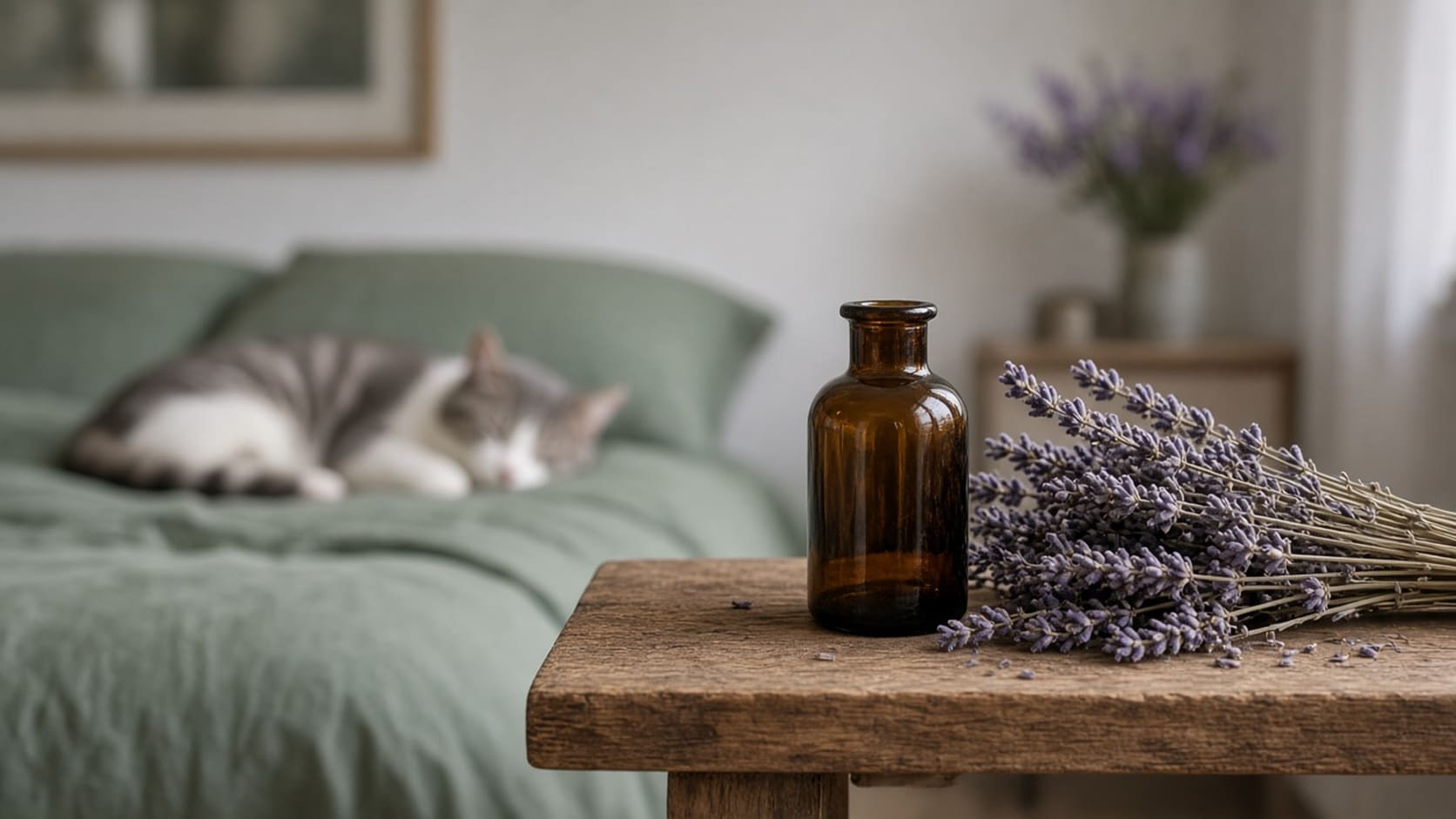
Quick answer: No, not for chewing and not as a concentrated oil. The ASPCA lists lavender (Lavandula angustifolia, common or English lavender) as toxic to cats, dogs and horses. The toxic principles are linalool and linalyl acetate, and the listed signs are nausea, vomiting and not wanting to eat. Lavender essential oil is far more concentrated than the plant.
The lavender plant
The ASPCA plant database gives the verdict above for the plant itself. A cat brushing past a pot of lavender is not the same as a cat chewing it, but because it is listed as toxic, keep potted lavender and dried lavender bundles out of reach, especially for cats that like to nibble greenery.
Lavender essential oil
Concentrated essential oil is where the bigger risk sits. The ASPCA says that in concentrated (100%) form, essential oils “can absolutely be a danger for pets,” and that pets who walk through oils, get oil on their coat or have it applied can show unsteadiness, depression and, in severe cases, low body temperature. Lavender is also on the Texas A&M veterinary college’s list of essential oils toxic to pets.
Lavender products made for people, such as pillow sprays, bath oils and room or linen mists, may contain essential oil. Don’t spray them on your cat’s bedding or use them on your cat.
Why cats are more sensitive than dogs or people
The Merck Veterinary Manual explains that cats are more sensitive to essential oils because they are deficient in the liver enzyme glucuronyl transferase, which makes them very sensitive to phenols and phenolic compounds some oils contain. Their grooming habit adds risk: oil on the fur ends up swallowed. VCA adds that both ingestion and skin exposure can be toxic and that these chemicals are rapidly absorbed.
Signs of essential oil poisoning in cats
VCA Animal Hospitals lists these signs of essential oil poisoning in cats:
- Scent of the oil on the coat, skin, breath or vomit
- Drooling, pawing at the mouth or face
- Vomiting
- Difficulty walking or an uncoordinated gait
- Lethargy or weakness, muscle tremors
- Difficulty breathing
- Redness or burns on the lips, gums, tongue or skin
The Merck Veterinary Manual adds that signs can develop within minutes to hours, and that severity depends on the type and concentration of the oil and the route of exposure.
What to do if your cat was exposed
- Call right away: your veterinarian, the ASPCA Animal Poison Control Center at (888) 426-4435 (a consultation fee may apply), or Pet Poison Helpline at (855) 764-7661 (an incident fee applies; the helpline says it is available 24/7).
- Have the details ready: the product or food, how much and when, and your cat’s weight and health conditions. Keep the packaging.
- Do not make your cat vomit and do not give activated charcoal unless a veterinarian tells you to. VCA Animal Hospitals warns it may worsen your cat’s condition, and the Merck Veterinary Manual notes the risk of aspiration with essential oils.
- If oil is on the fur or skin, VCA advises washing it off quickly with liquid dishwashing detergent, then calling for advice. Don’t let your cat groom it off first.
- Get your cat to fresh air if the exposure was from a diffuser or spill, and put the product packaging in a sealed container to take to the clinic.
Diffusers: what the experts actually say
- ASPCA Poison Control: using a diffuser for a short time in a secured area your cat cannot access is not likely to be an issue. If your cat has a history of breathing problems, avoid diffusers altogether.
- Merck Veterinary Manual: keep pets out of the room while a diffuser runs and ventilate afterward; run diffusers only for short periods; use diluted rather than concentrated oils. Passive diffusers (reed diffusers, candles) mainly pose a respiratory-irritation risk unless tipped over; active (nebulizing or ultrasonic) diffusers emit microdroplets of oil.
- Texas A&M veterinary college: inhaling diffused oils can cause respiratory irritation, with signs such as watery nose and eyes, drooling, vomiting and difficulty breathing, which in cats may be mistaken for a hairball attempt.
Never apply concentrated essential oils to a cat. Both the ASPCA and Merck say so directly.
Related safety guides
See the full traffic-light list of plants, foods and oils in our cat safety hub, including eucalyptus, peppermint oil and tea tree oil.
Paw & Sage is not a veterinary practice, and this page does not replace advice from your veterinarian or a poison control center. Facts reflect the cited sources as checked in November 2026.
Get our free indoor cat enrichment checklist
Plus seasonal picks and deals worth knowing about. No spam, unsubscribe anytime.
By subscribing you agree to receive emails from Paw & Sage. Double opt-in, unsubscribe anytime. See our privacy policy.
Sources
This article cites 5 sources in the text. They are linked below.
- Lavender (ASPCA Animal Poison Control Center)
- The Essentials of Essential Oils Around Pets (ASPCA)
- Toxicoses From Essential Oils in Animals (Merck Veterinary Manual)
- Essential Oil and Liquid Potpourri Poisoning in Cats (VCA Animal Hospitals)
- A Scent-sitive Subject: Essential Oil Diffusers and Your Cat (Texas A&M School of Veterinary Medicine & Biomedical Sciences)
Common questions
Is lavender safe for cats?
No. The ASPCA lists lavender as toxic to cats because of linalool and linalyl acetate, with nausea, vomiting and inappetence as listed signs. Concentrated lavender oil carries more risk than the plant.
Is it safe to diffuse lavender oil around cats?
ASPCA Poison Control says using a diffuser briefly in a secured area your cat cannot access is not likely to be an issue, but avoid diffusers entirely if your cat has breathing problems. Merck recommends keeping pets out of the room while it runs and ventilating afterward.
Can the smell of lavender hurt my cat?
Inhaled diffused oil can cause respiratory irritation in cats according to Texas A&M veterinary college. A plant in the room is different from concentrated oil in the air; keep diffusers out of rooms your cat uses.
What should I do if my cat licked lavender oil?
Call your veterinarian, ASPCA Animal Poison Control at (888) 426-4435 or Pet Poison Helpline at (855) 764-7661. Do not make your cat vomit unless a vet tells you to.