Is Chocolate Toxic to Cats? Symptoms, Types and What to Do
Is chocolate toxic to cats? Yes: the ASPCA and Pet Poison Helpline say methylxanthines (theobromine, caffeine) can cause vomiting, tremors and seizures. What to do now.
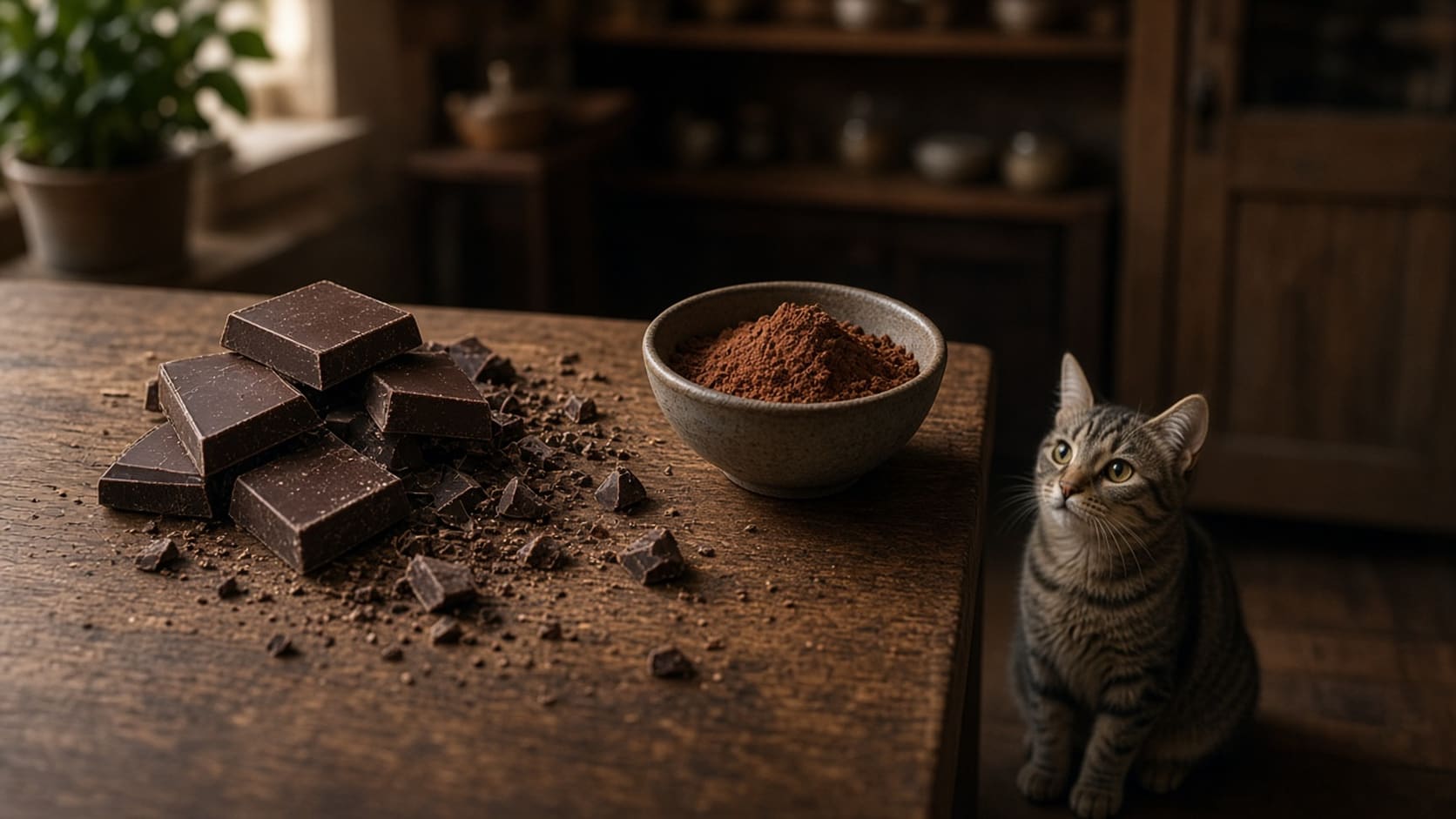
Quick answer: Yes. Chocolate contains methylxanthines, specifically theobromine and caffeine, according to Pet Poison Helpline. The ASPCA says methylxanthines can cause vomiting and diarrhea, panting, excessive thirst and urination, hyperactivity, abnormal heart rhythm, tremors, seizures and even death.
Darker means more dangerous
The ASPCA says the darker the chocolate (the higher the cacao percentage) or the higher the caffeine content, the greater the risk. White chocolate has the lowest methylxanthine content, while baking chocolate and cocoa powder have the highest. Pet Poison Helpline adds that severity depends on the amount and type of chocolate and the size and health of the animal.
The ASPCA groups coffee and caffeine with chocolate for the same reason: methylxanthines.
Watch the other ingredients
Pet Poison Helpline warns that chocolate candy and baked goods may also contain other poisons, including raisins and xylitol. Tell the vet everything that was in the treat.
Symptoms to watch for
Pet Poison Helpline groups the signs as:
- Gastrointestinal: vomiting, diarrhea
- Cardiovascular: elevated heart rate, high blood pressure
- Neurological: hyperactivity, tremor, seizure
What to do if your cat ate it
- Call right away: your veterinarian, the ASPCA Animal Poison Control Center at (888) 426-4435 (a consultation fee may apply), or Pet Poison Helpline at (855) 764-7661 (an incident fee applies; the helpline says it is available 24/7).
- Have the details ready: the product or food, how much and when, and your cat’s weight and health conditions. Keep the packaging.
- Don’t try home remedies or make your cat vomit unless a veterinarian tells you to.
- Watch your cat while you wait for advice, and go to an emergency clinic if you are told to.
More cat food safety
See the full traffic-light list of foods, plants and essential oils in our cat safety hub.
Paw & Sage is not a veterinary practice, and this page does not replace advice from your veterinarian or a poison control center. Facts reflect the cited sources as checked in November 2026.
Get our free indoor cat enrichment checklist
Plus seasonal picks and deals worth knowing about. No spam, unsubscribe anytime.
By subscribing you agree to receive emails from Paw & Sage. Double opt-in, unsubscribe anytime. See our privacy policy.
Sources
This article cites 3 sources in the text. They are linked below.
- People Foods to Avoid Feeding Your Pets (ASPCA Animal Poison Control Center)
- Chocolate (Pet Poison Helpline)
- Using Food and Treats for Training Cats (VCA Animal Hospitals)
Common questions
Is chocolate toxic to cats?
Yes. Chocolate contains methylxanthines (theobromine and caffeine), which the ASPCA says can cause vomiting, diarrhea, abnormal heart rhythm, tremors, seizures and even death.
Which chocolate is most dangerous for cats?
The darker the chocolate, the greater the risk, according to the ASPCA. White chocolate has the lowest methylxanthine content; baking chocolate and cocoa powder have the highest.
My cat licked chocolate. What should I do?
Call your veterinarian, the ASPCA Animal Poison Control Center at (888) 426-4435 or Pet Poison Helpline at (855) 764-7661, and have the wrapper ready to tell them the type and amount.
Is coffee toxic to cats?
Yes. The ASPCA groups coffee and caffeine with chocolate because they contain methylxanthines.