Is Basil Safe for Cats? The Plant vs Basil Essential Oil
Is basil safe for cats? The ASPCA lists the basil plant as non-toxic to cats. Basil essential oil is a different matter. What to know before you grow it in the kitchen.
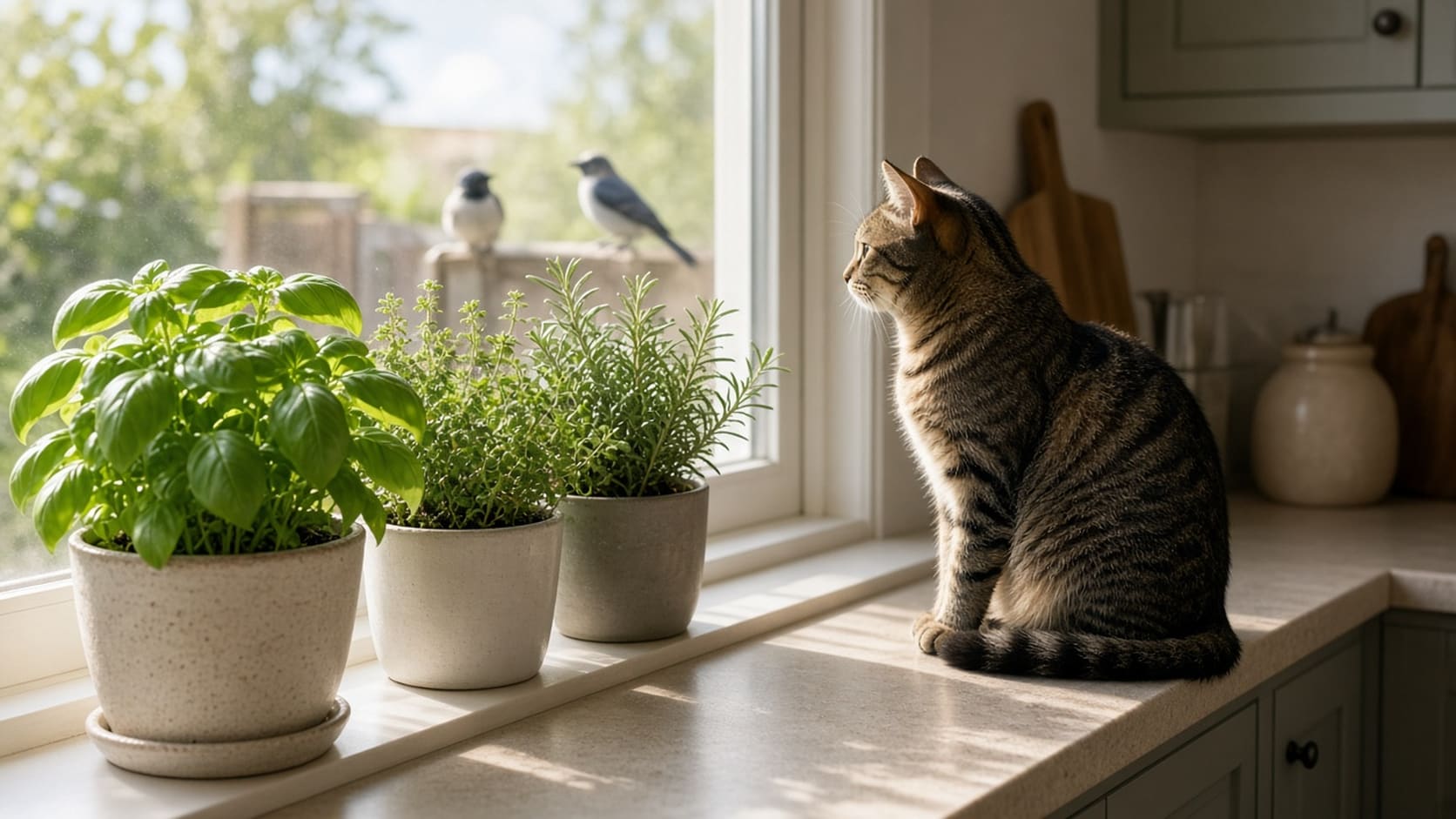
Quick answer: Yes, the plant. The ASPCA lists basil (Ocimum basilicum, including sweet basil and Thai basil) as non-toxic to cats and dogs. Concentrated basil essential oil is different: Texas A&M’s veterinary college includes basil on its list of essential oils that are toxic to pets.
What the ASPCA plant database says
- Scientific name: Ocimum basilicum
- Family: Lamiaceae
- Other common names: sweet basil, Thai basil, Saint Joseph’s wort
- ASPCA verdict: Non-toxic to cats
The verdict above comes straight from the ASPCA Animal Poison Control Center’s entry. ASPCA Poison Control is the reference most US veterinarians use for plant questions.
Kitchen herbs: what else is on the windowsill?
Basil often shares a windowsill with other herbs that are not equally safe. On the ASPCA list, rosemary is also non-toxic, but mint is listed as toxic in large amounts (is peppermint safe for cats?), and chives belong to the onion family, which Pet Poison Helpline lists as poisonous to cats (onions and garlic).
Basil in cooked food
The plant verdict does not cover a plate of pesto or a seasoned sauce. Those often contain garlic, onion and salt, which are a problem for cats. Keep human dishes away from your cat.
Essential oil
The Merck Veterinary Manual says cats are more sensitive to essential oils than dogs because they lack enough of a liver enzyme (glucuronyl transferase). Do not apply basil oil to a cat, and do not run a diffuser in a room your cat cannot leave.
When to call the vet anyway
Non-toxic means the plant is not expected to poison your cat, not that it is food. Call your veterinarian if your cat vomits repeatedly, seems lethargic, stops eating, or if you are not sure the plant really was basil (look-alikes and nicknames cause a lot of confusion). If you think your cat ate something toxic, call the ASPCA Animal Poison Control Center at (888) 426-4435 (a consultation fee may apply).
More cat-safe plants
Other plants the ASPCA lists as non-toxic to cats: spider plant, money tree, moth orchid (Phalaenopsis), calathea, rosemary. For the full traffic-light list of plants, foods and essential oils, see our cat safety hub.
Paw & Sage is not a veterinary practice, and this page does not replace advice from your veterinarian or a poison control center. Verdicts reflect the ASPCA database as checked in November 2026.
Get our free indoor cat enrichment checklist
Plus seasonal picks and deals worth knowing about. No spam, unsubscribe anytime.
By subscribing you agree to receive emails from Paw & Sage. Double opt-in, unsubscribe anytime. See our privacy policy.
Sources
This article cites 5 sources in the text. They are linked below.
- Basil (ASPCA Animal Poison Control Center)
- Toxic and Non-Toxic Plant List: Cats (ASPCA Animal Poison Control Center)
- A Scent-sitive Subject: Essential Oil Diffusers and Your Cat (Texas A&M School of Veterinary Medicine & Biomedical Sciences)
- Toxicoses From Essential Oils in Animals (Merck Veterinary Manual)
- Garlic (Pet Poison Helpline)
Common questions
Is basil safe for cats?
The basil plant is listed as non-toxic to cats by the ASPCA. Basil essential oil is a different product and appears on Texas A&M veterinary college's list of essential oils toxic to pets.
Can cats eat pesto or basil sauces?
No. Pesto and many sauces contain garlic or onion, which Pet Poison Helpline lists as poisonous to cats, plus salt and fats.
Which kitchen herbs are safe for cats?
On the ASPCA list, basil and rosemary are non-toxic to cats. Mint is listed as toxic (vomiting and diarrhea with large ingestions), and chives are in the onion family.