Are Roses Toxic to Cats? Petals, Leaves and Bouquets
Are roses toxic to cats? The ASPCA lists roses (Rosa species) as non-toxic to cats. What to check in rose bouquets, plus thorns, flower food and look-alike "roses".
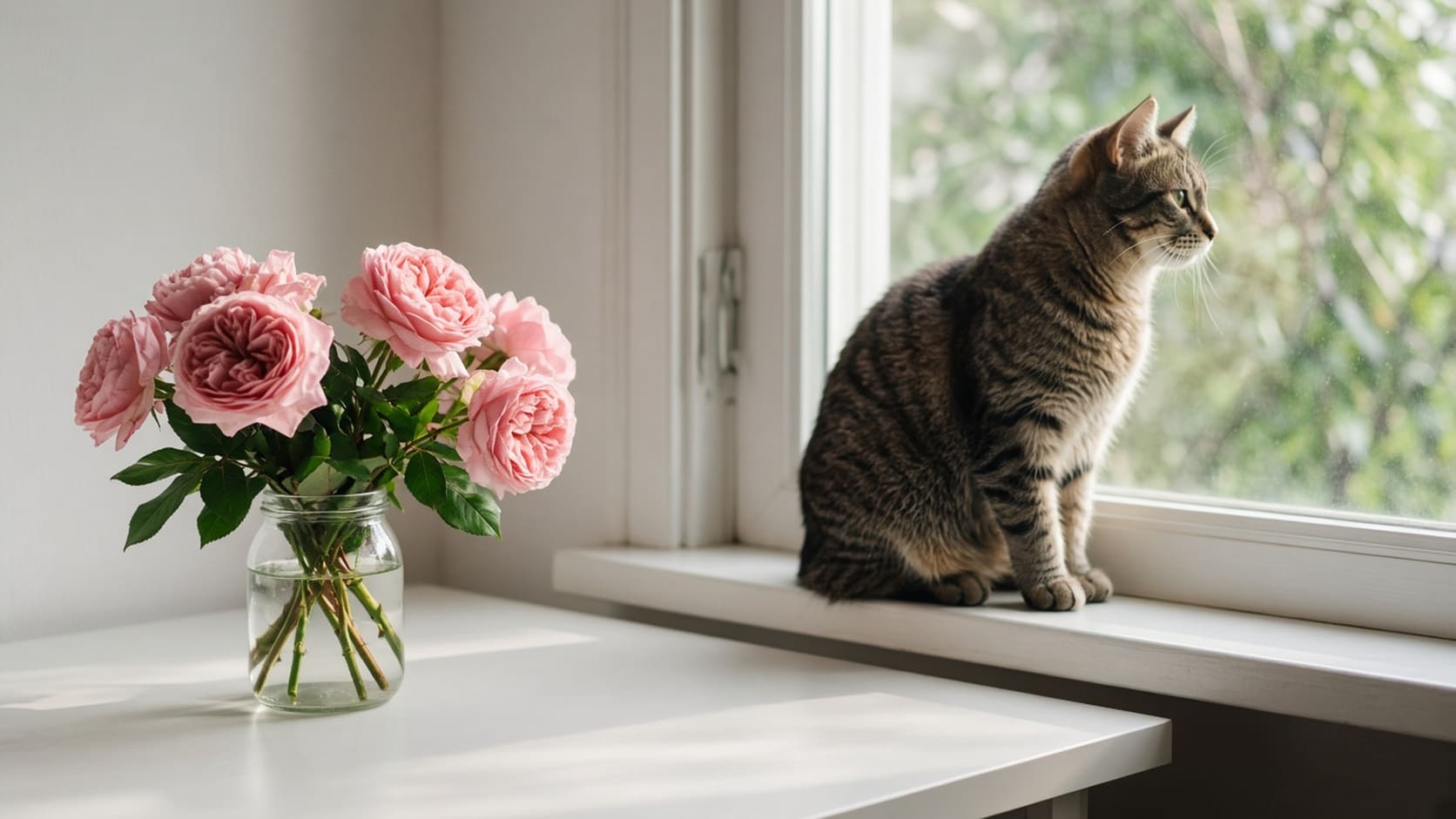
Quick answer: No. The ASPCA lists roses (Rosa species) as non-toxic to cats, dogs and horses. A cat nibbling rose petals is not a poisoning emergency.
What the ASPCA plant database says
- Scientific name: Rosa species
- Family: Rosaceae
- ASPCA verdict: Non-toxic to cats
The verdict above comes straight from the ASPCA Animal Poison Control Center’s entry. ASPCA Poison Control is the reference most US veterinarians use for plant questions.
The bouquet is the real risk
Roses usually arrive with company. Mixed bouquets can include true lilies, which the U.S. FDA warns can cause fatal kidney failure in cats, plus other flowers on the toxic list. Before a bouquet goes on the table, check every stem, and throw out lilies entirely if you have a cat. Our holiday plants chart lists the common bouquet offenders.
Also keep the little packet of cut-flower food and the vase water away from cats; the plant verdict covers the rose, not additives.
Not every “rose” is a rose
Plants like “rose of Sharon” and “rosebay” share the name but are different plants. The ASPCA lists them separately; rosebay appears on its toxic list. Check the scientific name (Rosa) if you are unsure.
Thorns
Thorny stems are a physical hazard rather than a toxic one. Strip thorns from stems in a vase your cat can reach, or keep roses out of jumping range.
When to call the vet anyway
Non-toxic means the plant is not expected to poison your cat, not that it is food. Call your veterinarian if your cat vomits repeatedly, seems lethargic, stops eating, or if you are not sure the plant really was roses (look-alikes and nicknames cause a lot of confusion). If you think your cat ate something toxic, call the ASPCA Animal Poison Control Center at (888) 426-4435 (a consultation fee may apply).
More cat-safe plants
Other plants the ASPCA lists as non-toxic to cats: spider plant, money tree, moth orchid (Phalaenopsis), calathea, basil, rosemary. For the full traffic-light list of plants, foods and essential oils, see our cat safety hub.
Paw & Sage is not a veterinary practice, and this page does not replace advice from your veterinarian or a poison control center. Verdicts reflect the ASPCA database as checked in November 2026.
Get our free indoor cat enrichment checklist
Plus seasonal picks and deals worth knowing about. No spam, unsubscribe anytime.
By subscribing you agree to receive emails from Paw & Sage. Double opt-in, unsubscribe anytime. See our privacy policy.
Sources
This article cites 4 sources in the text. They are linked below.
- Roses (ASPCA Animal Poison Control Center)
- Toxic and Non-Toxic Plant List: Cats (ASPCA Animal Poison Control Center)
- Lovely Lilies and Curious Cats: A Dangerous Combination (U.S. Food and Drug Administration)
- Easter Lily (ASPCA Animal Poison Control Center)
Common questions
Are roses toxic to cats?
No. The ASPCA lists roses (Rosa species) as non-toxic to cats, dogs and horses.
Are rose bouquets safe for cats?
Roses themselves are non-toxic, but bouquets often include true lilies, which the FDA warns can cause fatal kidney failure in cats. Check every flower and keep flower food and vase water away from cats.
Is rose of Sharon the same as a rose?
No. It is a different plant that the ASPCA lists separately. Always check the scientific name; true roses are Rosa species.