Can Cats Drink Milk? Why Most Vets Say Skip the Saucer
Can cats drink milk? Cornell and VCA say many cats are lactose intolerant, and the ASPCA warns dairy can cause diarrhea. What kittens should drink and what to offer instead.
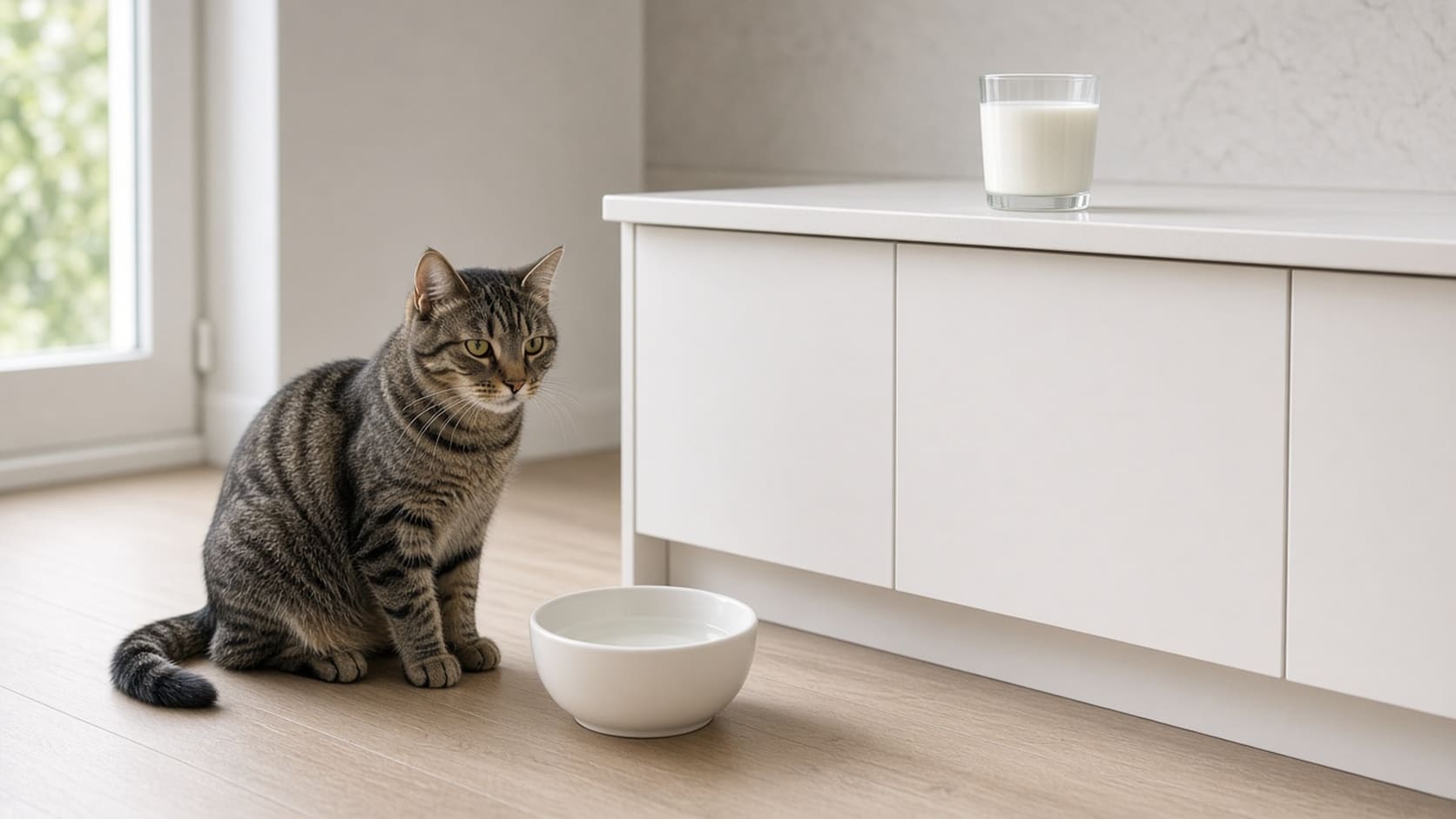
Quick answer: It is not recommended. Cornell Feline Health Center says milk is not generally recommended as a treat for cats because many cats are lactose intolerant and can develop gastrointestinal problems. The ASPCA says the same about dairy: it can cause diarrhea or other digestive upset.
The saucer-of-milk myth
The image of a cat lapping milk is a cultural classic, not veterinary advice. The ASPCA explains that pets lack significant amounts of lactase, the enzyme that breaks down lactose. VCA Animal Hospitals says most cats are lactose intolerant, and that kittens eating dairy can experience gastrointestinal upset.
WSAVA also counts milk toward your cat’s treat calories: about 27 calories in 2 fl oz (59 ml) of semi-skimmed cow’s milk, roughly an entire day’s treat allowance for many adult cats.
What about kittens?
If you are caring for an orphaned or very young kitten, call your veterinarian for advice on a kitten milk replacer and a feeding plan; see our new kitten checklist for first-week basics.
What to offer instead
Fresh, clean water. If you are worried your cat does not drink enough, ask your veterinarian.
If your cat drank some milk and now has diarrhea, it will often settle, but call your vet if it lasts, if there is vomiting or blood, or if your cat is a kitten, a senior or has other health problems.
How much is “a little”?
Human food counts toward your cat’s treat budget. VCA Animal Hospitals says treats and snacks should make up no more than 10% of daily calories, Cornell Feline Health Center gives a rule of thumb of 10 to 15%, and WSAVA says under 10%. WSAVA’s own table puts that at roughly 18 to 28 calories a day for a healthy adult cat weighing 2.5 to 7 kg (about 5.5 to 15 lb). Your veterinarian can tell you what your cat needs.
When to call the vet
Call your veterinarian if your cat vomits repeatedly, has diarrhea that does not settle, seems lethargic or stops eating, or if the food contained anything toxic such as onion, garlic, chocolate, grapes or xylitol. For a suspected poisoning, call the ASPCA Animal Poison Control Center at (888) 426-4435 (a consultation fee may apply) or Pet Poison Helpline at (855) 764-7661 (an incident fee applies).
More cat food safety
See the full traffic-light list of foods, plants and essential oils in our cat safety hub.
Paw & Sage is not a veterinary practice, and this page does not replace advice from your veterinarian or a poison control center. Facts reflect the cited sources as checked in November 2026.
Get our free indoor cat enrichment checklist
Plus seasonal picks and deals worth knowing about. No spam, unsubscribe anytime.
By subscribing you agree to receive emails from Paw & Sage. Double opt-in, unsubscribe anytime. See our privacy policy.
Sources
This article cites 4 sources in the text. They are linked below.
- Feeding Your Cat (Cornell Feline Health Center)
- People Foods to Avoid Feeding Your Pets (ASPCA Animal Poison Control Center)
- Human Foods That Kittens Should Avoid (VCA Animal Hospitals)
- Feeding Treats to Your Cat (World Small Animal Veterinary Association (WSAVA))
Common questions
Can cats drink milk?
It is not recommended. Cornell Feline Health Center says many cats are lactose intolerant and can develop gastrointestinal problems from dairy.
Is milk bad for kittens?
Cow's milk is not a replacement for a mother cat's milk. VCA says kittens eating dairy can get gastrointestinal upset. Ask your vet about a kitten milk replacer for orphaned kittens.
Why do cats like milk if it is bad for them?
Many cats like the fat and taste, but the ASPCA says pets lack enough lactase to digest lactose well, so milk can cause diarrhea or digestive upset.
What can cats drink besides water?
Water is all an adult cat needs. Ask your vet before adding anything else to your cat's diet.